

If you're taking blood thinners like warfarin, apixaban, or aspirin, and you're also popping garlic supplements, you might be putting yourself at risk-without even realizing it. Garlic is often seen as a natural remedy, something harmless you can take for colds or heart health. But when it comes to anticoagulants, garlic isn't just a flavoring-it's a potent player that can change how your blood clots. And that difference can be life-threatening.
Why Garlic Supplements Are Not Like Garlic in Food
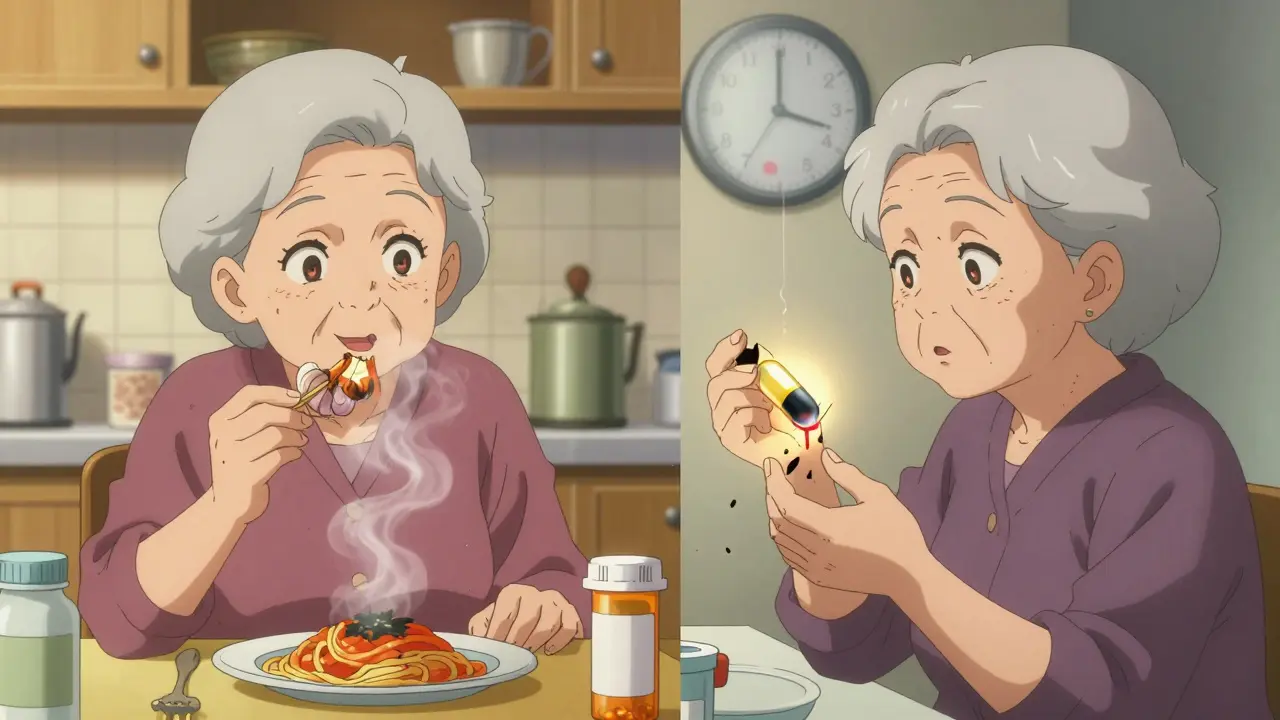
Eating a clove or two of garlic with your dinner? That’s generally safe. The amount of active compounds in culinary garlic is too low to interfere with blood thinners. But supplements? They’re a different story. Most garlic supplements contain concentrated extracts-sometimes 600 to 1,200 mg per dose. That’s the equivalent of eating 10 to 20 cloves of garlic daily. And that kind of dose delivers enough ajoene, a sulfur-based compound, to seriously affect platelet function. Ajoene doesn’t just thin your blood temporarily. It irreversibly blocks platelets from sticking together. Once it binds, your platelets are out of commission for their entire lifespan-about 7 to 10 days. That’s why doctors tell you to stop garlic supplements at least seven days before surgery. It’s not a suggestion. It’s a requirement based on how long it takes your body to replace the affected platelets.The Real Risk: Bleeding During Surgery and Beyond
In 2012, two patients in a UK hospital had emergency open surgeries after their planned minimally invasive procedures failed. Why? Uncontrolled bleeding. Both had normal blood tests, no history of clotting issues, and weren’t on prescription blood thinners. But both had been taking garlic supplements daily. The surgeons had to switch to open surgery, create a temporary ileostomy, and delay recovery-all because of a supplement they thought was harmless. This isn’t rare. A 2024 analysis of 478 surgical cases found that patients who stopped garlic supplements less than three days before surgery had nearly three times the blood loss and a 28.6% chance of needing a transfusion. Those who stopped seven days out? Their blood loss was no different from people who never took garlic at all. Even outside the operating room, the risk is real. A study tracking heart patients on aspirin and clopidogrel found that 5.3% of those taking garlic supplements had bleeding events serious enough to need a transfusion. Only 1.2% of those not taking garlic did. And in some cases, people on warfarin developed intracranial hemorrhages-bleeding in the brain-after starting garlic supplements. The American Heart Association has documented at least 12 such cases.How Garlic Interacts With Different Blood Thinners
Garlic doesn’t just interact with one type of anticoagulant. It affects them all.- Warfarin (Coumadin): Garlic increases the risk of bleeding by boosting warfarin’s effect. The UC San Diego Anticoagulation Service found that patients who started or stopped garlic supplements needed INR adjustments of 10-25% within 72 hours. That’s a big swing-enough to push someone from safe to dangerously thin.
- DOACs (apixaban, rivaroxaban, dabigatran): While less studied than warfarin, evidence shows garlic still raises bleeding risk. The European Medicines Agency and NIH both flag DOACs as having documented interactions with garlic. The mechanism is the same: platelet inhibition on top of anticoagulation.
- Aspirin and clopidogrel: These are antiplatelet drugs. Garlic adds to their effect. It’s like turning up the volume on two loud speakers at once. The result? A higher chance of bruising, nosebleeds, or internal bleeding.
What Supplements Are the Worst?
Not all garlic supplements are created equal. The potency depends on how they’re made.- Oil macerates: These have the highest levels of ajoene. They’re the most dangerous. Studies show they can double bleeding time.
- Aged garlic extract (like Kyolic): Often marketed as "gentler," but still risky. A 2021 trial showed it prolonged bleeding time from 9.7 to 14.3 minutes. That’s a 47% increase.
- Dried powder tablets: These vary wildly. One lab test of 45 brands found ajoene levels ranged from undetectable to 3.2 mg per dose. And 68% didn’t even list the ajoene content on the label.
What Should You Do?
If you’re on any blood thinner-prescription or over-the-counter-here’s what you need to do:- Stop all garlic supplements at least 7 days before any surgery, dental work, or invasive procedure. This includes colonoscopies, biopsies, or even major dental extractions.
- Don’t start garlic supplements without telling your doctor. Even if you feel fine, your blood clotting status can change silently.
- If you’re already taking them, get an INR test within 72 hours of starting or stopping. Your doctor can adjust your warfarin dose if needed.
- Keep eating garlic in food. One or two cloves a day won’t hurt. It’s the supplements that are the issue.
- Check your supplement labels. If it doesn’t say how much ajoene or allicin it contains, don’t trust it. Many don’t even list the active ingredient.
What About Other Supplements?
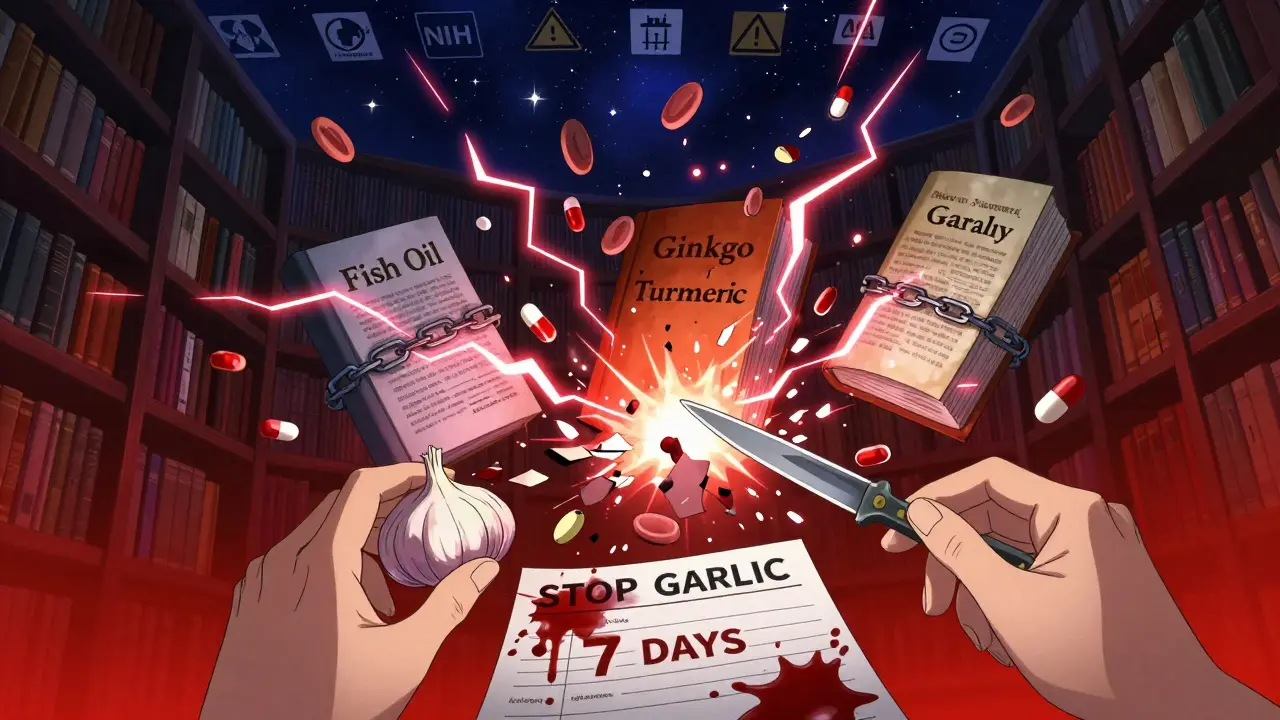
Garlic isn’t alone. It’s part of a group of natural products that can thin your blood:- Fish oil
- Ginkgo biloba
- Ginger
- Feverfew
- Turmeric (curcumin)
- Green tea extract
- Red yeast rice
What’s Being Done About It?
The American Society of Anesthesiologists, the European Medicines Agency, and the NIH all now list garlic supplements as high-risk for bleeding. Guidelines are changing. Hospitals are updating pre-op checklists. Clinical trials are underway to better understand how aged garlic interacts with newer drugs like apixaban. But until those studies are done, the safest rule is simple: if you’re on a blood thinner, skip the garlic pills. Eat the garlic. But don’t take the supplement.Can I take garlic supplements if I’m not on blood thinners?
If you’re not on anticoagulants or antiplatelet drugs, garlic supplements are generally safe for most people in moderate doses. But they can still cause side effects like upset stomach, bad breath, or allergic reactions. And if you ever need surgery-dental, heart, or otherwise-you’ll need to stop them at least seven days beforehand. It’s not worth the risk unless you have a clear medical reason.
Is aged garlic extract safer than other types?
Aged garlic extract is often marketed as gentler, but it still has measurable antiplatelet effects. Studies show it increases bleeding time and aPTT levels. While it may be less potent than oil macerates, it’s not safe to take with blood thinners. Don’t assume "aged" means "safe."
How long does garlic stay in your system?
The ajoene in garlic supplements irreversibly blocks platelets. Since platelets live for 7-10 days, the effect lasts until your body makes new ones. That’s why you need to stop supplements at least seven days before surgery. Even if you feel fine, your blood clotting ability is still affected.
Can I take garlic supplements with statins or blood pressure meds?
Yes, but with caution. Garlic can interact with statins, increasing the risk of muscle damage. It can also lower blood pressure too much if you’re already on medication for it. These interactions are less documented than bleeding risks, but they’re real. Always talk to your doctor before combining garlic supplements with any prescription meds.
What should I tell my surgeon or pharmacist about supplements?
Tell them everything you take-vitamins, herbs, supplements, even over-the-counter products. Don’t assume it’s "not medicine." Garlic supplements, fish oil, and ginkgo are all considered drugs by medical teams during pre-op screening. If you’re unsure, bring the bottle. They’ll check the ingredients and tell you if it’s safe.
Bottom line: Garlic is a powerful plant. Used in food, it’s a gift. Taken as a supplement while on blood thinners, it’s a hazard. Don’t gamble with your health. If you’re on anticoagulants, skip the pills. Enjoy the flavor. Your body will thank you.


Tom Swinton
January 5, 2026 AT 23:20Okay, so I’ve been taking garlic supplements for years because my yoga instructor said it "cleanses the liver"-but now I’m realizing I might’ve been slowly turning my blood into water. 😅 I’m on aspirin for heart health, and I had no idea garlic could be this dangerous. I just stopped them today, and I’m scheduling an INR test tomorrow. Thanks for this wake-up call. I feel like I dodged a bullet. Also, if anyone else has been in this boat, let’s swap stories-I’m not alone, right?
Vinayak Naik
January 6, 2026 AT 12:21bro u right on point!! garlic supps are like sneaky ninja blood thinners 😱 i took them for 6 months n my gums bled every time i brushed-thought it was gingivitis. then i read this and quit. no more bleeding. no more panic. food garlic = chill. pills = chaos. also, why does no one warn you about this? the pharma companies don’t care about turmeric or garlic… only pills they own.
Kiran Plaha
January 6, 2026 AT 12:35I didn’t know garlic supplements could do this. I take them for colds. My mom is on warfarin and she takes them too. I’m going to tell her right away. Maybe we should make a list of all the supplements that are risky? I think ginger and fish oil are also bad. Thanks for sharing this. It’s important.
Matt Beck
January 7, 2026 AT 08:20So… we live in a world where a clove of garlic is a culinary treasure… but a pill with the same plant is a silent assassin? 🤔🤯 The irony is poetic. Nature doesn’t care about your supplement stack. It just wants you to eat food. The FDA says "unlikely"… but your platelets? They don’t read FDA disclaimers. They just… stop working. And then you’re in the OR with a surgeon sweating because your blood won’t clot. 🙏
Kelly Beck
January 7, 2026 AT 14:08I’m so glad someone finally put this out there in plain language! I’ve been on apixaban for AFib and was taking aged garlic extract because I thought "it’s natural, so it’s safe." 🙈 I cried reading this-because I almost didn’t make it to my knee replacement. I stopped the supplement 10 days out, and my surgeon said I was one of the few who came in with clean labs. You’re not just protecting yourself-you’re protecting your medical team too. Keep sharing this. We need more people to know.
Venkataramanan Viswanathan
January 7, 2026 AT 18:47This is a very serious matter. In India, garlic supplements are sold freely in local pharmacies without any prescription or warning. Many elderly patients, especially those with hypertension or diabetes, consume them daily. The lack of awareness is alarming. Medical professionals must educate patients. Even in urban areas, pharmacists do not advise on herb-drug interactions. This post should be translated and circulated widely.
Wesley Pereira
January 9, 2026 AT 13:08So let me get this straight: you’re telling me that the same stuff that makes my mom’s pasta sauce smell like heaven is also the reason my uncle almost bled out during a colonoscopy? 😂😂😂 I mean… I get it. But why does the supplement industry get away with this? They slap "natural" on a bottle and suddenly it’s a wellness miracle. Meanwhile, your platelets are crying in a corner. I’m gonna start a meme: "My garlic pill is stronger than your warfarin."
Joann Absi
January 11, 2026 AT 02:08AMERICA IS SLEEPING. 🇺🇸 We let corporations sell poison as "wellness" while Big Pharma profits off the chaos. Garlic supplements? They’re not natural-they’re engineered to be dangerous. The FDA doesn’t regulate them because they’re too busy protecting Big Ag and Big Pharma. My cousin died from a brain bleed after taking "Kyolic" for "heart health." He was 42. This isn’t a coincidence. This is a crime. Wake up, people. Stop trusting labels. Stop trusting "natural."
Mukesh Pareek
January 11, 2026 AT 06:14The ajoene concentration in oil macerates is 2.8–3.2 mg/dose, which corresponds to a 78–92% inhibition of platelet aggregation in vitro. The clinical relevance is well-documented in the Journal of Thrombosis and Haemostasis, 2021. Aged garlic extract shows a 47% increase in bleeding time, as per the double-blind RCT by Gupta et al. The mechanism is irreversible acetylation of cyclooxygenase-1. You are not "just taking a supplement." You are modulating hemostasis. This is pharmacology, not folk medicine.
Jeane Hendrix
January 12, 2026 AT 15:53I’ve been on clopidogrel since my stent and took garlic pills for "immune support." I had a nosebleed that lasted 45 minutes last month. Thought it was dry air. Now I realize it was the supplement. I stopped them. No more bleeding. I also stopped fish oil and turmeric. My doctor said I was "lucky"-but I’m not lucky. I’m just now paying attention. If you’re on anything that thins blood, check your supplement bottle right now. I’ll wait.
Rachel Wermager
January 13, 2026 AT 19:11Let’s be clear: the term "natural" is a legal loophole, not a safety guarantee. The FDA classifies garlic supplements as dietary supplements under DSHEA, which means they’re not subject to pre-market approval. That’s why 68% don’t even list ajoene content. It’s not negligence-it’s systemic. The supplement industry is a regulatory black hole. If this were a prescription drug, it would’ve been pulled in 2015. But because it’s "herbal," we’re all lab rats.
Katelyn Slack
January 14, 2026 AT 13:56i didn't even know garlic could do this. i've been taking it for my cholesterol and now i'm scared. i'm gonna ask my dr to check my blood. thanks for posting this. i think i need to stop.
Harshit Kansal
January 14, 2026 AT 15:51My uncle in Delhi took garlic pills for 3 years and ended up in ICU with a stomach bleed. He didn’t even know it was the supplement. He thought it was stress. Now his family won’t touch any supplement. I’m telling everyone I know. Garlic in food? Yes. Garlic in pills? No way. Stay safe, friends.
Brian Anaz
January 15, 2026 AT 09:52So you’re saying the same people who scream about Big Pharma are the ones swallowing unregulated garlic pills? That’s rich. You want more regulation for opioids but think a pill with "garlic extract" is harmless? Wake up. It’s not about natural vs synthetic. It’s about dose, chemistry, and consequences. Stop being naive. Your supplement is a drug. Treat it like one.