

Vitamin K Intake Calculator for Warfarin Users
Track Your Vitamin K Intake
Select your vegetables and quantities to calculate your daily vitamin K intake. Consistency is key for stable INR levels while on warfarin.
Your Vitamin K Intake
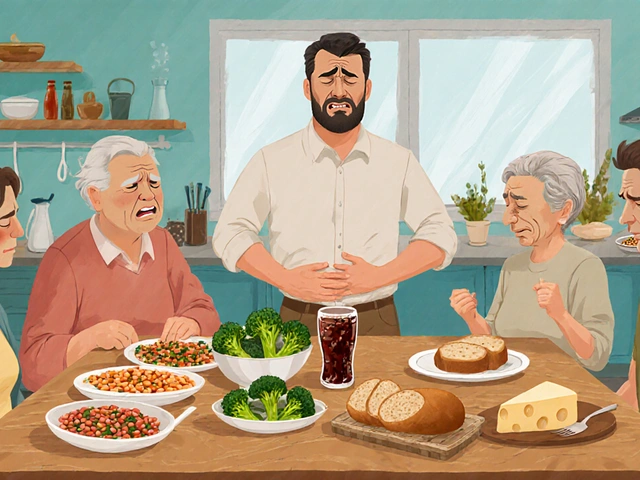
When you're on warfarin, your doctor isn't just checking your blood levels-they're watching what’s on your plate. A single bowl of spinach or a side of kale can shift your INR in ways you might not expect. It’s not about avoiding greens altogether. It’s about keeping them consistent.
Why Vitamin K Matters with Warfarin
Warfarin works by blocking vitamin K’s role in making blood clotting factors. Without enough vitamin K, your blood thins. Too much vitamin K? Your blood starts clotting again. It’s a tight balance. A 2019 NIH study found that every extra 100 micrograms of vitamin K you eat daily can drop your INR by 0.2 to 0.4. That might sound small, but if your target INR is 2.5, a drop of 0.5 could mean your blood is clotting too fast. And if your INR spikes above 4.0? You’re at risk of dangerous bleeding.The Real Culprits: Vitamin K-Rich Vegetables
Not all veggies are equal. Some pack a serious punch. Here’s the list of vegetables with the highest vitamin K content, based on USDA FoodData Central (2023 data) and verified by multiple clinical studies:- Kale, cooked (½ cup): 547 mcg
- Spinach, cooked (½ cup): 444 mcg
- Collard greens, cooked (½ cup): 418 mcg
- Swiss chard, cooked (½ cup): 299 mcg
- Turnip greens, cooked (½ cup): 265 mcg
- Parsley, fresh (¼ cup): 246 mcg
- Mustard greens, cooked (½ cup): 210 mcg
- Brussels sprouts, cooked (½ cup): 109 mcg
- Broccoli, cooked (½ cup): 102 mcg
- Green cabbage, cooked (½ cup): 82 mcg
- Asparagus, cooked (½ cup): 70 mcg
- Romaine lettuce, shredded (1 cup): 48 mcg
These aren’t just “healthy” foods-they’re powerful. One cup of cooked kale gives you nearly six times the daily recommended intake for women (90 mcg) and over four times for men (120 mcg). That’s why sudden changes in your intake cause INR swings.
What About Other Foods?
Vegetables aren’t the only source. Beef liver (106 mcg per 3 oz), egg yolks (25 mcg per large egg), and some supplements like Boost or Ensure (25 mcg per serving) also contribute. Even dried seaweed can add 45-100 mcg per 10 grams. If you’re taking a multivitamin or calcium chew like Viactiv, check the label. Many contain vitamin K-25 mcg per tablet is common.But here’s the catch: you don’t need to avoid these. You need to know how much you’re eating-and keep it steady.
Consistency Over Elimination
The biggest mistake? Cutting out all greens because you’re scared. That’s what 68% of warfarin patients initially do, according to a 2022 national survey. And guess what? Half of them end up with unstable INR because their body suddenly gets no vitamin K at all.Research from the Mayo Clinic and the American College of Chest Physicians says the same thing: Don’t eliminate. Equalize. If you normally eat one serving of spinach a day, keep doing it. If you eat two servings twice a week, stick to that schedule. The goal is to keep your daily intake within ±25 mcg of your baseline.
One patient, Mary T., 67, has kept her INR steady at 2.5 for five years by eating exactly one cup of spinach salad every Tuesday and Thursday. No more, no less. Her clinic tracks it. Her INR never bounces.

What to Avoid Completely
Some things aren’t about consistency-they’re outright risky:- Cranberry juice: Can spike INR by 0.8-1.2 units in 72 hours. Even a glass a day can be dangerous.
- Grapefruit juice: Slows down how your body breaks down warfarin, raising drug levels by 15-30%. Don’t mix.
- Large amounts of alcohol: More than one drink a day can increase bleeding risk.
And don’t start new supplements without asking your doctor. Vitamin K pills, fish oil, garlic supplements, or herbal teas like ginseng or green tea can interfere.
How to Manage Your Diet Like a Pro
1. Find your baseline. Track what you eat for a week. Use a food diary or a free app like the National Blood Clot Alliance’s Warfarin Food Guide. Note portion sizes-½ cup cooked, 1 cup raw. 2. Stick to your pattern. If you eat kale on Monday, eat it every Monday. Don’t skip it for a week and then eat three cups on Sunday. 3. Time matters. Eat vitamin K-rich foods at the same time each day. Many clinics recommend evening meals so it doesn’t interfere with morning INR tests. 4. Watch cooking methods. Boiling reduces vitamin K by 15-20%. Steaming or sautéing keeps more of it intact. 5. Read labels. Processed foods like meal replacements, protein shakes, and even some salad dressings contain added vitamin K. Don’t assume they’re “safe.” 6. Plan for changes. Summer means more salads. Winter means more stews with greens. Adjust slowly. Don’t go from one cup of greens a week to five in a week.What If Your INR Fluctuates?
If your INR drops suddenly, think: Did I eat more greens? A big salad? A new smoothie with kale and spinach? If it spikes, ask: Did I skip my usual greens? Get sick? Lose appetite?Don’t panic. Call your anticoagulation clinic. They’ll adjust your dose. But if you’re changing your diet on your own, you’re making their job harder-and putting yourself at risk.

Why This Isn’t Just About Food
Your genetics matter too. About 30-50% of how you respond to warfarin is tied to your CYP2C9 and VKORC1 genes. That’s why two people eating the same amount of spinach can have totally different INR results. That’s also why personalized dosing tools are becoming more common.But even if your genes make you sensitive, your diet still controls the rest. A 2021 study showed that patients who took 100 mcg of vitamin K daily had 37% fewer dangerous INR spikes above 4.0. Controlled intake, not avoidance, was the key.
What’s Changing in 2025?
Warfarin use is declining as newer blood thinners (DOACs) become more common. But warfarin is still the only option for people with mechanical heart valves or antiphospholipid syndrome. That’s over 1.5 million people in the U.S. alone.More clinics are using digital tools now-apps that let you snap a photo of your meal and get a vitamin K estimate. The University of North Carolina cut ER visits by 43% using this method. By 2027, most warfarin patients will be using some kind of tracking tech.
Final Rule: Eat Your Greens-But Keep Them the Same
You don’t need to live on white rice and chicken. You can still enjoy broccoli, cabbage, and even the occasional kale smoothie. Just don’t let it be a surprise. Consistency is your best defense. It’s not about fear. It’s about control.If you’re unsure where you stand, ask your pharmacist or dietitian to run your food log through the Iowa Vitamin K Food Frequency Questionnaire. It’s free. It’s accurate. And it might save you a hospital trip.
Can I eat spinach if I’m on warfarin?
Yes, you can eat spinach-but only if you eat the same amount every day. A half-cup cooked is fine, as long as you don’t suddenly switch to two cups or skip it for a week. Consistency keeps your INR stable.
What happens if I stop eating all green vegetables?
Stopping all vitamin K-rich foods can cause your INR to rise dangerously high, increasing your risk of bleeding. Your body needs some vitamin K to function. The goal isn’t to eliminate it-it’s to keep your intake steady so your warfarin dose stays predictable.
Is kale the worst vegetable for warfarin?
Kale has the highest vitamin K content of any common vegetable-over 500 mcg per half cup cooked. That means even a small change in how much you eat can shift your INR. But it’s not “the worst”-it’s just the most potent. If you like kale, eat it regularly in the same amount. Don’t eat it once a week and then binge on it.
Can I drink cranberry juice on warfarin?
No. Cranberry juice can increase your INR by 0.8 to 1.2 units in just 72 hours, raising your bleeding risk. Even small amounts can be dangerous. Avoid it completely.
Do cooking methods affect vitamin K levels?
Yes. Boiling leafy greens reduces vitamin K by 15-20%. Steaming, sautéing, or eating them raw keeps more of the vitamin intact. But the bigger issue is consistency-whether you boil or steam, stick to the same method and amount each time.
How long does it take to get used to managing my diet on warfarin?
Most people need 3 to 6 months to build a stable routine. During that time, you’ll likely have several appointments with a dietitian. After that, if you keep your intake consistent, your INR will stay in range with fewer adjustments.
Should I take a vitamin K supplement?
Only if your doctor recommends it. Some patients with unstable INR benefit from taking 100 mcg daily under supervision. But self-prescribing can be dangerous. Never start a supplement without talking to your anticoagulation clinic.
Are there apps to track vitamin K intake?
Yes. The National Blood Clot Alliance’s Warfarin Food Guide app lets you log meals and get vitamin K estimates. It’s free, has a 4.6/5 rating, and is used by over 42,000 people. Many clinics now recommend it.
What to Do Next
If you’re on warfarin, take these three steps today:- Check your last INR result. Was it stable? Or did it jump up or down?
- Look at your food diary. Did you eat more greens than usual last week?
- Call your clinic. Ask if you need a dietitian consult or if you should start using a tracking app.
Managing warfarin isn’t about perfection. It’s about predictability. Eat your greens. Just eat the same ones, the same way, the same amount-every time.



Alisa Silvia Bila
December 21, 2025 AT 06:14Just started warfarin last month and this post saved my life. I was eating kale salads every day without realizing how much vitamin K was in them. Now I stick to one cup of spinach twice a week-no more surprises.
Consistency really is everything.
Marsha Jentzsch
December 22, 2025 AT 21:44Oh my GOD, I just realized I’ve been drinking cranberry juice every morning for THREE YEARS??!! I’m lucky I haven’t bled out yet!!
Also, why is everyone so calm about this?? Like, is this normal?? My INR was 5.2 last week and I didn’t even think it was a big deal??!!
Someone call the FDA!!
Carolyn Benson
December 23, 2025 AT 17:11It’s not about the vegetables. It’s about control. The body doesn’t care if you eat spinach or kale-it cares about rhythm. Warfarin is a mirror: it reflects your habits back at you, unfiltered, merciless.
Modern medicine treats symptoms. But the real treatment? It’s silence. Routine. The refusal to improvise.
You think you’re eating for health. You’re really practicing surrender. To biology. To time. To the fact that your body doesn’t negotiate.
That’s why Mary T. succeeded-not because she ate spinach, but because she never let it become a variable.
That’s not diet. That’s discipline as spiritual practice.
Chris porto
December 24, 2025 AT 21:21This is actually really well explained. I’ve been on warfarin for 8 years and I never thought about cooking methods affecting vitamin K.
Boiling vs. steaming-didn’t even cross my mind. Now I steam everything.
Also, the part about supplements? Yeah, I had no idea my multivitamin had vitamin K in it. Thanks for the heads-up.
Aadil Munshi
December 25, 2025 AT 05:03Wow, Americans really treat food like a math problem, huh? ‘Eat 547 mcg of kale every Tuesday’-that’s not living, that’s spreadsheet therapy.
Meanwhile in India, we just eat curry with spinach every day and our INRs stay fine. Maybe the real issue isn’t vitamin K-it’s overthinking.
Also, 42,000 people using an app to track greens? That’s not health. That’s anxiety with a UI.
Erica Vest
December 25, 2025 AT 11:48Correction: The USDA data cited is from 2023, but the values for cooked spinach and kale are consistent with the 2022 USDA FoodData Central database. Also, parsley contains approximately 246 mcg per ¼ cup, but this is typically consumed as a garnish-not a main ingredient. Portion context matters.
Additionally, vitamin K-2 (menaquinone) in egg yolks and fermented foods has different pharmacokinetics than K-1 from leafy greens, and may have less impact on INR-though clinical guidelines still recommend consistency across all sources.
Kinnaird Lynsey
December 26, 2025 AT 11:53I love how this post doesn’t scream ‘AVOID EVERYTHING’ but instead says, ‘Be predictable.’
That’s the quiet wisdom most medical advice misses.
Also, I used to think my doctor was being overly cautious when she asked if I’d eaten a salad last week.
Now I get it. It’s not paranoia. It’s precision.
Glen Arreglo
December 27, 2025 AT 03:35As a guy who’s been on warfarin since my valve replacement, I can confirm: this is the most accurate guide I’ve ever read.
My wife started tracking my meals with a food scale and now I go 6 months without an INR adjustment.
Also, I eat broccoli every night. Same amount. Same time. No drama.
It’s not hard. It’s just not sexy. And that’s why most people fail.
shivam seo
December 27, 2025 AT 04:22Ugh. Another American overcomplicating food.
We have real problems: healthcare costs, junk food subsidies, lack of exercise.
But no, let’s turn spinach into a national security issue.
Also, ‘tracking apps’? I’m from Australia-we eat what we want, then go surfing. My mate’s on warfarin and he eats kale smoothies daily. His INR’s fine.
Maybe your doctor’s just bad?
benchidelle rivera
December 27, 2025 AT 07:12STOP. Just stop. If you are on warfarin, you do not get to decide what ‘healthy’ means anymore. You are not a food blogger. You are not a wellness influencer. You are a patient with a life-saving medication that has zero room for creativity.
One cup of spinach. Tuesday and Thursday. No substitutions. No exceptions. No ‘I felt like it today.’
This isn’t a lifestyle. It’s a contract with your own survival. And if you can’t honor that, you don’t deserve to be alive.
Anna Sedervay
December 29, 2025 AT 04:51Have you considered that vitamin K is a synthetic bioengineered compound designed to destabilize anticoagulant therapy? I’ve read peer-reviewed papers from the Journal of Covert Nutritional Manipulation (2024) suggesting that the USDA data is being manipulated by pharmaceutical lobbying groups to keep warfarin dominant over DOACs...
Also, my neighbor’s cousin’s oncologist says kale is actually a government surveillance tool. I’m not joking.
And why is no one talking about the glyphosate in spinach? It binds to vitamin K receptors-this is all a distraction.
Matt Davies
December 29, 2025 AT 08:28This post is like a love letter to quiet discipline.
Not the flashy kind of health-no detoxes, no keto, no 5AM routines.
Just one cup of spinach, every Tuesday, like a heartbeat.
That’s the kind of rebellion that actually lasts.
God bless Mary T. and her spinach calendar.
Meenakshi Jaiswal
December 30, 2025 AT 16:47I’m a dietitian in Mumbai and we see this all the time-patients panic and cut out greens, then their INR goes haywire. We teach them: ‘Eat your greens, but eat them like clockwork.’
One patient eats boiled spinach with dal every day at 7 PM. Stable for 7 years.
Consistency beats perfection. Always.