

Nephrotic syndrome isn’t a disease on its own-it’s your body’s way of screaming that something’s seriously wrong with your kidneys. You might notice your socks leaving deep marks around your ankles, your face puffy in the morning, or your urine looking foamy like beer. These aren’t just inconveniences. They’re signs your kidneys are leaking protein like a sieve. When more than 3.5 grams of protein escape into your urine each day, your blood loses its ability to hold water where it belongs. That’s when swelling-called edema-shows up, usually around the eyes, legs, or belly. This is nephrotic syndrome, and it affects thousands every year, from toddlers to seniors.
What Causes Nephrotic Syndrome?
The problem starts in the glomeruli-the tiny filters in your kidneys. Normally, they keep big proteins like albumin inside your blood. But when the filtration barrier breaks down-often because of damaged podocytes, the cells that act like gatekeepers-proteins spill out. In kids, the most common cause is minimal change disease, where the kidney looks normal under a microscope but still leaks protein. It’s mysterious, but it responds well to steroids. In adults, it’s more complex. Focal segmental glomerulosclerosis (FSGS), membranous nephropathy, and diabetes are the usual suspects. About 30% of adult cases come from diabetes, especially if blood sugar has been poorly controlled for years. Other triggers include lupus, hepatitis B or C, and even some medications like NSAIDs or penicillamine. Rarely, genetic mutations like those in the NPHS1 gene cause congenital nephrotic syndrome, where babies start leaking massive amounts of protein within weeks of birth.
How Is It Diagnosed?
Doctors don’t guess-they measure. The first clue is often foamy urine. But confirmation needs hard numbers. A 24-hour urine collection is the gold standard: if you’re excreting over 3.5 grams of protein in a day, that’s a red flag. Blood tests show low albumin (below 3.0 g/dL), high cholesterol (often above 300 mg/dL), and sometimes high triglycerides. Swelling alone isn’t enough; many people mistake it for weight gain or heart issues. That’s why nearly 80% of parents of affected children report being told it was allergies or a cold before the real diagnosis came. A kidney biopsy is usually needed in adults or if steroids don’t work. It tells you whether it’s FSGS, membranous, or something else-critical because treatment changes completely depending on the cause.
Edema: Why You Swell and How to Reduce It
When albumin drops, your blood can’t hold onto water anymore. Fluid leaks into tissues, causing swelling. It starts subtly-puffy eyes in the morning-and can become severe: swollen legs that leave indentations when pressed, fluid in the abdomen (ascites), or even around the lungs (pleural effusion). Reducing salt intake is the first and most effective step. Cutting sodium to under 2,000 mg per day can shrink swelling by 30-50% in just three days. That means no processed foods, no canned soups, no soy sauce. Cook from scratch. Drink less fluid if your doctor says so, but don’t cut water entirely-dehydration can make things worse. Diuretics like furosemide help push out extra fluid, but they’re a band-aid. Without fixing the protein leak, the swelling will come back.
Medication: Steroids and Beyond
For children with minimal change disease, prednisone is the go-to. Most respond within 4 weeks-up to 90% go into remission. The dose? About 60 mg per square meter of body surface area, up to 80 mg a day, for 4 to 6 weeks, then slowly tapered over months. Adults get similar drugs but respond less reliably-only 60-70% improve, and half relapse. That’s where second-line drugs come in. Calcineurin inhibitors like tacrolimus or cyclosporine are common next steps. For steroid-resistant cases, rituximab (a monoclonal antibody) is now used more often, especially in FSGS. It’s expensive-$1,200 to $2,500 a month-but studies show it can cut proteinuria by over 50% in some patients. Newer drugs like sparsentan, a dual blocker of angiotensin and endothelin, reduced proteinuria by nearly 48% in clinical trials compared to older blood pressure meds. And in 2023, budesonide (Tarpeyo) got FDA approval for certain kidney conditions, offering a targeted steroid with fewer side effects.

Managing Side Effects
Steroids work, but they come with a price. Kids gain weight fast-sometimes 10-20% of their body weight-because steroids crank up appetite. Moon face, stretch marks, acne, and mood swings are common. Parents often report behavioral changes: irritability, sleeplessness, or even aggression. These aren’t “bad behavior”-they’re drug effects. Managing them means eating balanced meals, keeping active, and talking to your doctor about tapering speed. Long-term steroid use can also weaken bones, raise blood sugar, and increase infection risk. That’s why vaccines are checked before treatment: live vaccines like MMR or chickenpox are off-limits during high-dose steroids. Inactivated shots (flu, pneumonia, COVID) are safe and strongly recommended.
Thrombosis Risk: The Silent Danger
One of the most overlooked dangers of nephrotic syndrome is blood clots. When albumin drops below 2.0 g/dL, your blood becomes thick and sticky. The risk of clots in the renal vein, legs, or lungs jumps 2 to 4 times. About 1 in 5 adults with severe nephrotic syndrome develop a clot. Symptoms? Sudden leg swelling, chest pain, shortness of breath. If you’re in this zone, your doctor may prescribe blood thinners like warfarin or low-molecular-weight heparin. Don’t ignore this. A pulmonary embolism can be fatal. Regular monitoring of protein levels and clotting markers is part of good care.
Diet and Lifestyle: More Than Just Salt
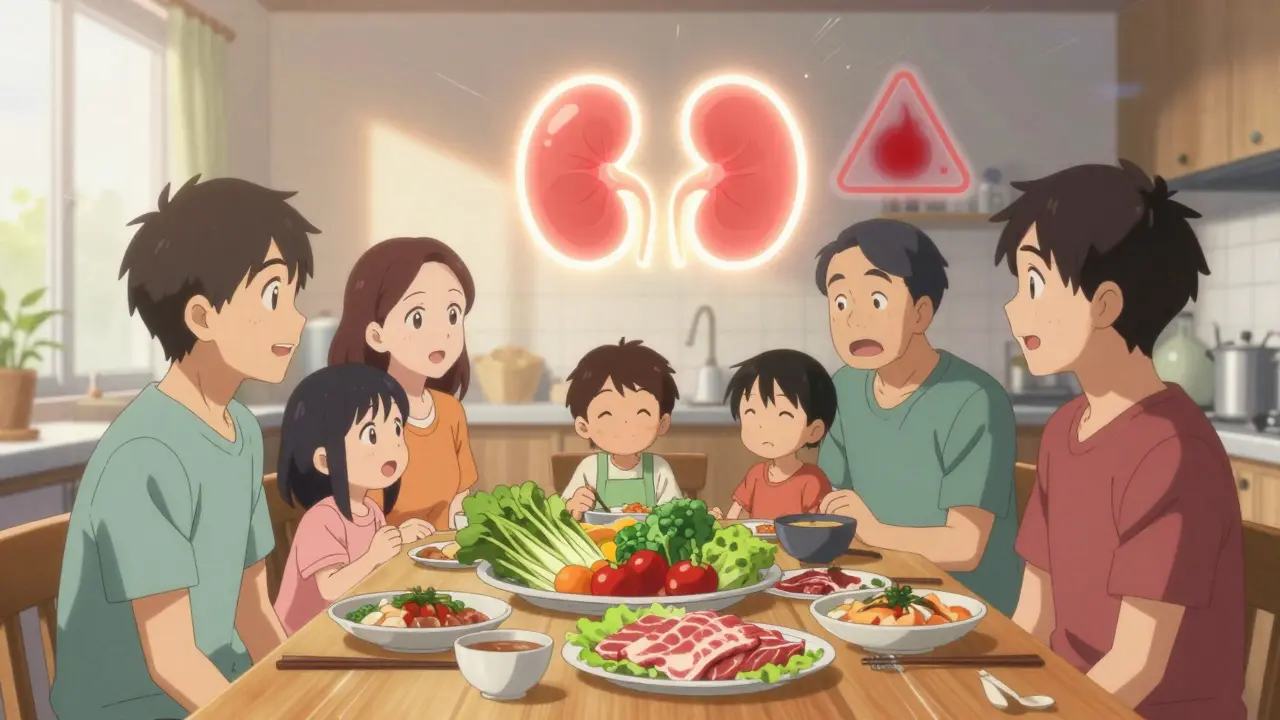
Protein intake needs balance. Too little won’t help your body repair itself. Too much stresses your kidneys. The sweet spot? 0.8 to 1.0 gram of protein per kilogram of body weight per day. That’s about 50-70 grams for most adults. Focus on high-quality sources: eggs, lean meats, fish, dairy. Avoid high-fat foods to manage cholesterol. Omega-3s from fish oil may help lower triglycerides. Exercise is encouraged unless you’re severely swollen or have high blood pressure. Walking, swimming, light yoga-all fine. Avoid heavy lifting or intense workouts during active disease. And don’t smoke. Smoking speeds up kidney damage.
Monitoring Progress: What Remission Looks Like
Remission isn’t just feeling better-it’s measured. Three days in a row of negative or trace protein on a urine dipstick test means remission. Relapse? Three days of 2+ or 3+ protein. Parents are taught to check urine daily during flare-ups. Weekly checks are standard. Blood pressure must stay under 130/80 mmHg. ACE inhibitors or ARBs aren’t just for blood pressure-they directly reduce protein leakage by 30-50%. They’re recommended for nearly everyone with nephrotic syndrome, even if blood pressure is normal. Kidney function (eGFR) is tracked every 3-6 months. If proteinuria stays above 1 gram per day after treatment, your risk of kidney failure jumps 4.2 times. That’s why getting to full remission isn’t optional-it’s life-saving.
Long-Term Outlook: Survival Rates by Cause
Your prognosis depends on what’s causing the syndrome. Minimal change disease? Almost everyone keeps good kidney function for 10 years or more-95% survival. FSGS? Roughly half will need dialysis or transplant within 10 years. Membranous nephropathy has a 60-80% survival rate, but it’s slow. Diabetes-related nephrotic syndrome? Only 40-50% keep their kidneys working after a decade. That’s why controlling blood sugar, blood pressure, and weight is non-negotiable. New research is changing the game. The NEPTUNE study found three molecular subtypes of FSGS, each with different outcomes. This means future treatment won’t be one-size-fits-all. Genetic testing is now recommended for kids under 1 or those with family history-avoiding unnecessary steroids in congenital cases. Drugs targeting the podocyte’s internal skeleton (like Rho kinase inhibitors) are in early trials and show 60-70% proteinuria reduction in animals. Human trials are coming.
What Comes Next?
Nephrotic syndrome is manageable, but it’s not curable-at least not yet. For many, it’s a lifelong dance between remission and relapse, often triggered by colds or flu. Vaccines, hygiene, and early treatment of infections are key. The goal isn’t just to reduce swelling-it’s to protect your kidneys for decades. With modern drugs, careful diet, and close monitoring, most people live full lives. But ignoring symptoms or skipping follow-ups can turn a treatable condition into kidney failure. If you or your child has nephrotic syndrome, stay informed. Track protein in urine. Know your numbers. Ask about new therapies. And never assume the swelling is just “water weight.” It’s your kidneys asking for help.
What does heavy proteinuria mean in nephrotic syndrome?
Heavy proteinuria means your kidneys are leaking more than 3.5 grams of protein per day-far beyond the normal amount (under 150 mg). This happens because the filters in your kidneys (glomeruli) are damaged, allowing albumin and other proteins to escape into your urine. It’s the defining feature of nephrotic syndrome and leads directly to low blood protein levels and swelling.
Is nephrotic syndrome the same as nephritic syndrome?
No. Nephrotic syndrome is defined by massive protein loss, low blood protein, swelling, and high cholesterol. Nephritic syndrome involves inflammation of the kidney filters, leading to blood in the urine, high blood pressure, reduced kidney function, and red blood cell casts in the urine. They’re different conditions with different causes and treatments.
Can nephrotic syndrome be cured?
In children with minimal change disease, remission is common and often long-lasting. Many outgrow it by adolescence. In adults, especially with FSGS or diabetic kidney disease, it’s often chronic. While it can’t always be cured, it can be controlled. The goal is to reduce proteinuria, prevent complications, and protect kidney function for as long as possible.
Why do people with nephrotic syndrome get blood clots?
When albumin drops below 2.0 g/dL, the liver makes more clotting factors, and anticoagulant proteins are lost in the urine. This makes blood thicker and more likely to clot. The risk is highest in the kidneys, legs, and lungs. Doctors often prescribe blood thinners if protein loss is severe.
What foods should be avoided with nephrotic syndrome?
Avoid high-sodium foods: canned soups, processed meats, chips, fast food, soy sauce, and pickles. Also limit saturated fats and cholesterol-rich foods like fried items, butter, and full-fat dairy to manage high lipid levels. Focus on fresh vegetables, lean proteins, whole grains, and unsalted snacks.
How long does steroid treatment last for nephrotic syndrome?
In children, prednisone is typically given for 4-6 weeks at full dose, then slowly tapered over 2-5 months. Adults may take it for 8-16 weeks. Tapering too fast can cause relapse. Some patients need low-dose steroids for months or even years to stay in remission.
When is a kidney biopsy necessary?
A biopsy is usually done in adults with new-onset nephrotic syndrome, in children who don’t respond to steroids within 4 weeks, or if there are signs of kidney damage like high blood pressure or blood in the urine. It helps identify the exact cause-like FSGS or membranous nephropathy-which determines the best treatment.
Can nephrotic syndrome come back after remission?
Yes. Relapses are common, especially in children with minimal change disease. About 60-70% have at least one relapse, often after a viral infection like a cold or flu. Each relapse is treated again with steroids or other medications. Frequent relapses may require long-term immunosuppressants.
What are the signs of kidney failure in nephrotic syndrome?
Signs include worsening swelling, fatigue, nausea, poor appetite, shortness of breath, confusion, and decreased urine output. Blood tests will show rising creatinine and falling eGFR. If proteinuria stays above 1 gram per day despite treatment, the risk of kidney failure increases dramatically. Early intervention is key to preventing this.
Are there new treatments on the horizon for nephrotic syndrome?
Yes. Drugs like sparsentan and abatacept are showing promise in reducing proteinuria more effectively than older options. Budesonide (Tarpeyo) is now approved for some forms. Research into podocyte-protecting drugs, gene therapies for congenital forms, and personalized treatment based on molecular subtypes is advancing quickly. Clinical trials are ongoing, offering hope for more targeted, less toxic therapies in the next 5-10 years.




Andy Heinlein
January 2, 2026 AT 07:17Just read this after my cousin got diagnosed-mind blown. I thought swelling was just water weight until now.
Ann Romine
January 2, 2026 AT 22:38So the foamy urine thing isn’t just from drinking too much protein shake? I’ve been ignoring it for months. Time to book a doctor.
gerard najera
January 3, 2026 AT 09:45Protein leak. Not kidney failure. Big difference.
Matthew Hekmatniaz
January 3, 2026 AT 16:21My niece had minimal change disease at 3. Steroids turned her into a little moon-faced tornado for six months, but she’s 16 now and running track. It’s brutal, but it’s not the end. Stay consistent. The body remembers how to heal.
Richard Thomas
January 5, 2026 AT 12:47I’ve been reading up on podocytes since my dad’s diagnosis last year. It’s wild how these microscopic cells-smaller than a red blood cell-hold the entire balance of fluid in your body together. When they fail, it’s not just a leak, it’s a collapse of biological architecture. And what’s heartbreaking is how little most people know about them. We treat symptoms like swelling or high cholesterol like the problem, but the real crisis is happening at the cellular level, where the gatekeepers are crumbling. Modern medicine is starting to see this-drugs like sparsentan aren’t just lowering protein, they’re trying to rebuild the filter. That’s not just treatment, that’s restoration. And if we keep going, maybe one day we won’t just manage nephrotic syndrome-we’ll prevent it before the first protein escapes.
Phoebe McKenzie
January 5, 2026 AT 16:59Of course the medical industry wants you to take steroids for months-they make billions. And now they’re pushing $2,500/month monoclonal antibodies? Wake up. Natural healing, low-carb diets, and turmeric cure this. You don’t need Big Pharma’s poison to fix your kidneys.
Liam George
January 6, 2026 AT 20:04Did you know the WHO quietly removed nephrotic syndrome from their list of ‘treatable conditions’ in 2021? They’re redirecting funding to ‘more scalable’ diseases. That’s why your doctor pushes expensive drugs-because insurance won’t cover the real solution. The real cure is in the soil. Soil-based probiotics rebuild the gut-kidney axis. But you won’t hear that on WebMD.
Paul Ong
January 6, 2026 AT 20:45Just cut the salt and drink lemon water. Done. No drugs needed. My uncle did it in 3 weeks
Austin Mac-Anabraba
January 8, 2026 AT 12:49Let’s be honest-this post is a glorified drug commercial disguised as medical education. You cite clinical trials like they’re gospel, but you ignore the fact that 60% of steroid responders relapse within a year. You glorify Rituximab’s $2,500 monthly price tag like it’s a miracle, but you don’t mention the infection risks or the fact that it’s only FDA-approved for a subset of FSGS. You’re not informing-you’re marketing. And for those of us who’ve watched loved ones get caught in the endless cycle of remission-relapse-steroid-bloat-steroid-relapse? This reads like corporate propaganda wrapped in jargon. If you really cared, you’d talk about the systemic failures in nephrology: the lack of long-term data, the underfunded research on podocyte regeneration, the fact that most guidelines are based on trials with fewer than 200 patients. But no. You sell hope. And hope is the most profitable drug of all.