
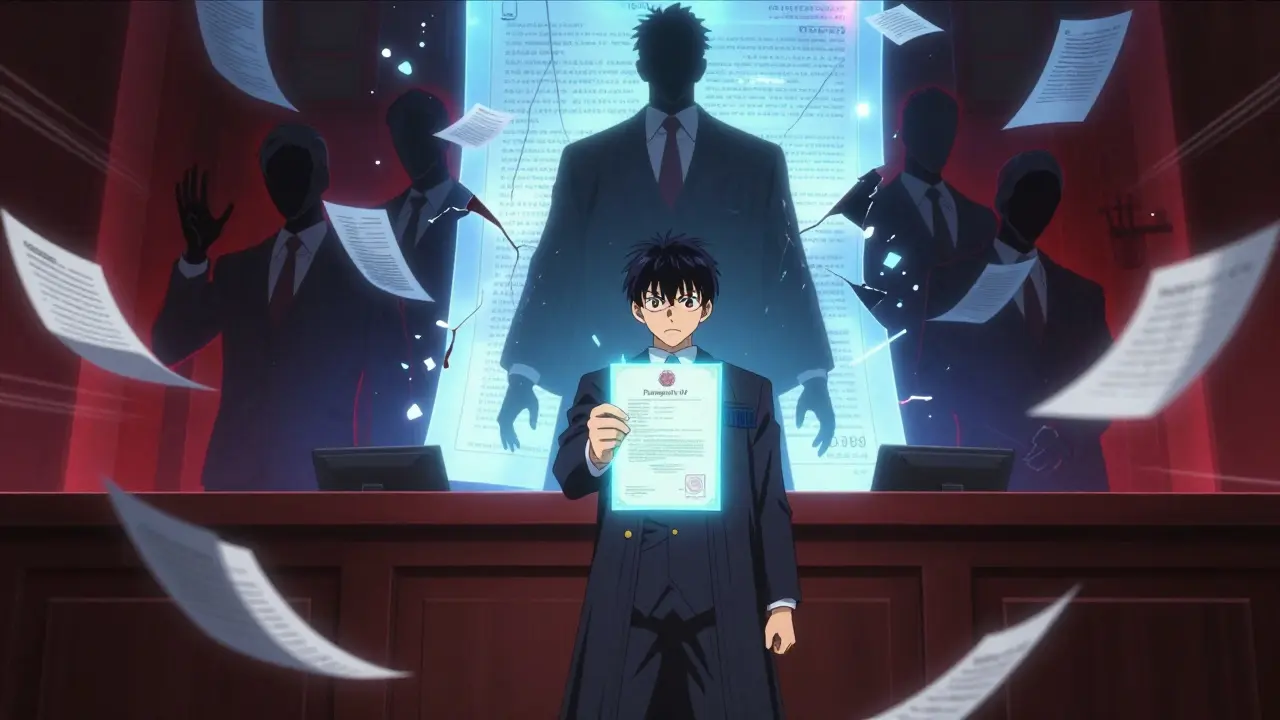
When a brand-name drug company holds a patent, it usually has a monopoly on selling that medicine for up to 20 years. But what happens when a generic version is ready to hit the market years before that patent expires? That’s where Paragraph IV certification comes in - a legal tool built into U.S. drug law that lets generic manufacturers challenge those patents before anyone even starts selling the cheaper version.
What Is a Paragraph IV Certification?
A Paragraph IV certification is a formal statement filed by a generic drug company as part of its Abbreviated New Drug Application (ANDA) to the FDA. It says: "This patent is either invalid, unenforceable, or our drug won’t infringe it." This isn’t just a claim - it’s a legal trigger. Under the Hatch-Waxman Act of 1984, this single document opens the door to court battles, 180-day market exclusivity, and massive cost savings for patients.
It’s not a simple notice. The generic company must provide a detailed legal and factual basis for why they believe the patent doesn’t hold up. That means citing prior art, pointing out flaws in the patent’s claims, or proving their manufacturing process doesn’t copy the patented method. The FDA doesn’t judge whether the claim is right - it just checks that the statement meets basic requirements. The real fight happens in court.
Why This Matters: The 180-Day Exclusivity Prize
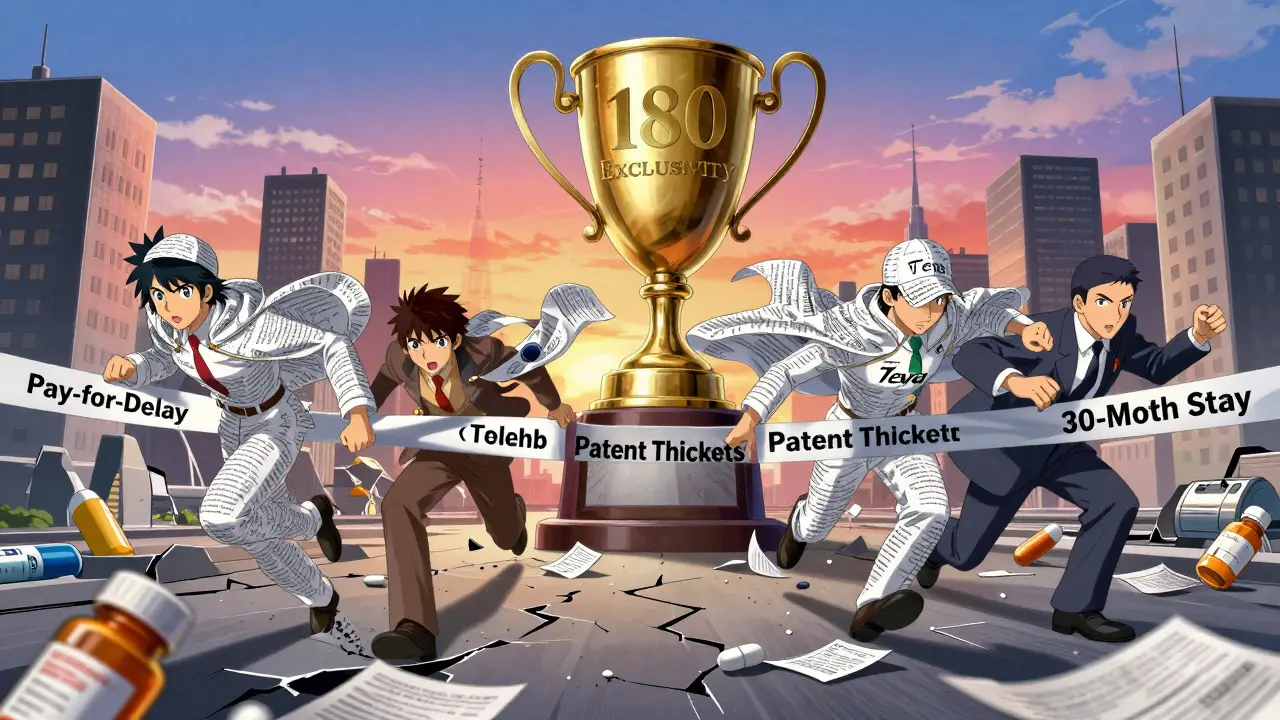
There’s a huge reward for the first generic company to file a successful Paragraph IV challenge: 180 days of exclusive rights to sell their version of the drug. No other generic can enter the market during that time. That’s not just a head start - it’s a financial jackpot.
Take Mylan’s challenge to Gilead’s HIV drug Viread in 2019. The patent was set to expire in 2022, but Mylan won its case and launched its generic 27 months early. During its 180-day exclusivity window, it captured nearly the entire U.S. market for that drug. For a blockbuster drug selling for $2 billion a year, that exclusivity period could mean over $500 million in revenue.
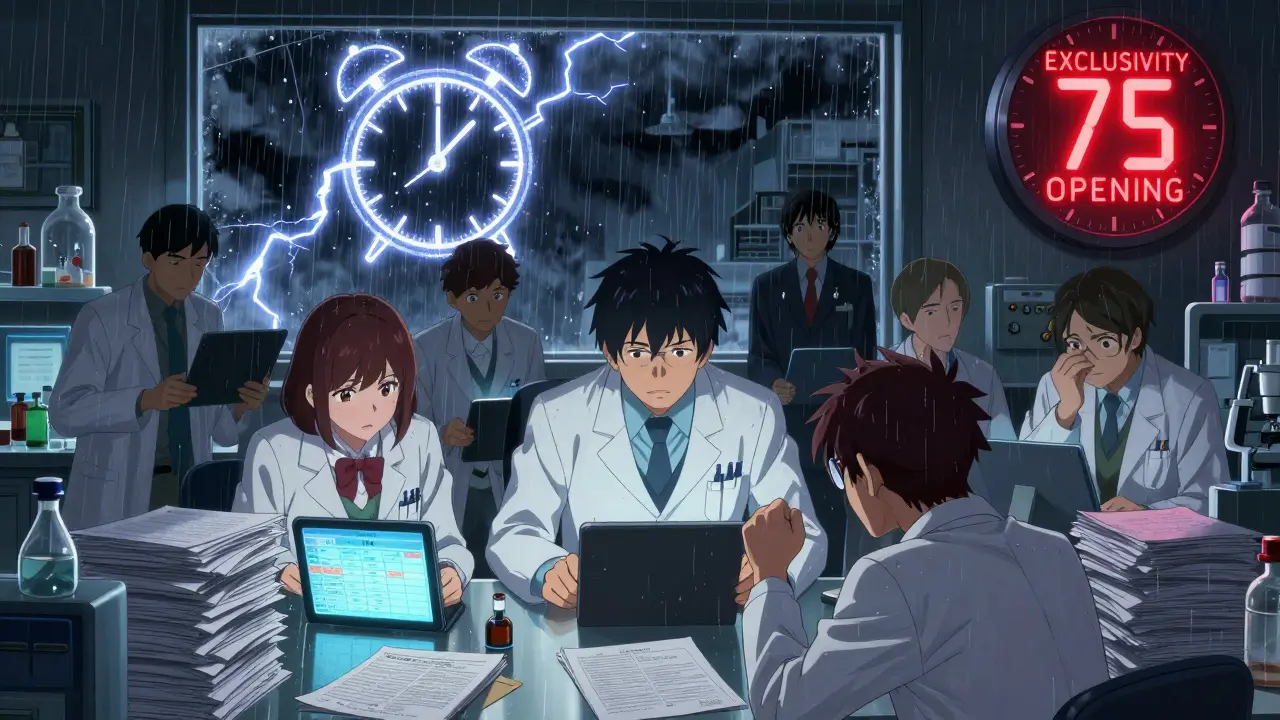
But here’s the catch: only the first company to submit a complete ANDA with a Paragraph IV certification gets this prize. If two companies file on the same day, they split the exclusivity. If the first filer doesn’t launch within 75 days of FDA approval - or if they withdraw their application - they lose it. That’s why timing, paperwork, and legal strategy are everything.
The Legal Trap: The 30-Month Stay
When a brand-name company gets the Paragraph IV notice, they have 45 days to sue for patent infringement. If they do, the FDA is legally forced to delay approval of the generic drug for 30 months - unless a court rules sooner. This is called the "30-month stay."
This isn’t a guarantee of victory for the brand. It’s just a pause button. Many patents challenged this way are eventually found invalid. But the 30-month delay is a powerful deterrent. It costs millions just to keep the case going. For smaller generic companies, the financial risk can be overwhelming.
Brand companies know this. That’s why nearly 92% of them file suit within the 45-day window, according to DrugPatentWatch’s 2023 data. The goal isn’t always to win in court - sometimes it’s to delay, to drain the challenger’s resources, or to push them into a settlement.
How It Compares to Other Patent Certifications
There are four types of patent certifications in the ANDA process. Paragraph IV is the most aggressive - and the most common.
- Paragraph I: "This drug has no patents." Used in about 5% of applications. Low risk, no reward.
- Paragraph II: "The patent expires on X date." Used in 15% of cases. Simple. No litigation. Just wait.
- Paragraph III: "We won’t launch until the patent expires." Used in 20% of cases. Safe, but no early entry.
- Paragraph IV: "This patent is invalid or we don’t infringe it." Used in 60-70% of ANDAs. High risk. High reward.
Most generic companies don’t file Paragraph IV certifications because they’re easy. They file them because the payoff is worth the fight. When a drug brings in over $1 billion a year, even a 10% chance of winning 180 days of exclusivity can justify a $12 million legal bill.
Real-World Wins and Losses
Apotex beat GlaxoSmithKline in 2004 by challenging the patent on Paxil, an antidepressant. Their Paragraph IV challenge succeeded, and during their 180-day exclusivity window, they earned over $1.2 billion. That’s one case. One drug. One legal filing.
But not every story ends in victory. Teva tried to launch a generic version of Copaxone, a multiple sclerosis drug, in 2017. They filed a Paragraph IV challenge and won the court case - but they missed a regulatory deadline. Their ANDA didn’t get tentative approval within 30 months. So they lost their 180-day exclusivity. Within days, six other generics entered the market. Teva’s big win turned into a financial loss.
That’s why legal teams don’t just focus on winning in court. They track FDA timelines, monitor patent listings, and make sure every document is perfect. One typo in the notice letter can get your entire application rejected.
The Hidden Costs: Pay-for-Delay and Patent Thickets
There’s a dark side to this system. Sometimes, instead of fighting in court, brand companies pay generic makers to delay their launch. These "pay-for-delay" deals were so common between 1999 and 2009 that the FTC documented 197 of them. In 2013, the Supreme Court ruled in FTC v. Actavis that these deals could violate antitrust laws - but they’re still happening.
Another problem is "patent thickets." Brand companies file dozens of secondary patents - on packaging, dosing schedules, or minor formulation changes - just to block generics. In 2022, the Generic Pharmaceutical Association found that 63% of manufacturers said patent thickets made Paragraph IV challenges harder than ever.
Some companies now use parallel challenges at the Patent Trial and Appeal Board (PTAB), filing for Inter Partes Review (IPR) to knock out patents before even filing the Paragraph IV certification. In 2022-2023, 42% of Paragraph IV cases involved IPR proceedings, according to USPTO data. It’s a two-front war.
What’s Changing Now?
The FDA’s 2023 Orange Book Modernization rules made it harder for brand companies to list weak or irrelevant patents. That should help generics. But the 2023 Supreme Court decision in Amgen v. Sanofi raised the bar for proving a patent is invalid. Now, generic companies must show the patent doesn’t just cover a narrow use - it must be impossible to make the drug without infringing the full scope of the claims. That’s a tougher standard, especially for biologics.
Meanwhile, the FTC is cracking down on "authorized generics" - when a brand company launches its own generic version during the 180-day exclusivity window. That’s a loophole that lets them keep most of the profits while technically complying with the law. The 2021 FTC v. Shire case challenged this practice. Expect more of these fights.
Who’s Doing This? The Big Players
The top five generic manufacturers - Teva, Viatris, Sandoz, Hikma, and Amneal - filed 58% of all Paragraph IV certifications between 2022 and 2023. These companies have legal teams, patent analysts, and financial reserves to play the long game. Smaller generics struggle to compete.
But the numbers don’t lie: 90% of top-selling branded drugs face at least one Paragraph IV challenge. If a drug makes over $1 billion a year, it’s almost guaranteed someone will try to challenge its patents. That’s the reality of modern pharma.
What This Means for Patients
Since 1984, Paragraph IV certifications have saved U.S. healthcare systems over $1.7 trillion. That’s not a guess. It’s from the FDA’s 2021 report. Without this mechanism, many life-saving drugs would still cost hundreds or thousands of dollars a month.
Imagine a cancer drug that costs $10,000 a month. A generic version that costs $200? That’s what Paragraph IV made possible. It’s not just legal strategy - it’s public health.
But the system is fragile. If courts start upholding every patent, or if pay-for-delay becomes common again, those savings vanish. That’s why the next few years will be critical. More challenges will target complex drugs - inhalers, injectables, biosimilars. The rules are changing. The stakes are higher. And the race to file that first Paragraph IV certification? It’s still on.
What happens if a generic company files a Paragraph IV certification but doesn’t win the lawsuit?
If the brand company wins the lawsuit, the FDA cannot approve the generic drug until the patent expires. The generic company loses its chance for 180-day exclusivity and must wait like everyone else. They also face potential damages if the court finds they acted in bad faith - though that’s rare.
Can a generic company file a Paragraph IV certification on any patent?
No. The patent must be listed in the FDA’s Orange Book - the official registry of patents for brand-name drugs. Only patents covering the drug substance, formulation, or method of use can be challenged this way. Method-of-use patents (like "for treating migraines") are common targets, but method-of-manufacture patents are harder to challenge.
How long does a Paragraph IV challenge usually take?
From filing to final court decision, it typically takes 3 to 5 years. The 30-month stay delays FDA approval, but courts often rule before then. If the case goes to appeal, it can stretch beyond five years. That’s why many companies settle - even if they believe they’re right.
Is a Paragraph IV certification the same as a patent lawsuit?
No. The certification is the trigger. The lawsuit is the consequence. The certification is part of the FDA application. The lawsuit is filed in federal court by the brand company after they receive the notice. The two are legally connected but handled by different systems.
Why do some Paragraph IV applications get rejected by the FDA?
The FDA rejects applications if the notice letter lacks a "detailed statement of the factual and legal basis" for the challenge. Many fail because the statement is too vague - saying "the patent is obvious" without explaining why, or not citing prior art. Even if a company wins in court, if the FDA finds the notice inadequate, they’ll reject the ANDA.
Can a company file a Paragraph IV certification before the patent expires?
Yes. In fact, most are filed 3 to 5 years before the patent expires. The law allows it. The goal is to get the legal fight started early so the generic can launch as soon as the patent ends - or even earlier if the patent is invalidated.

Meina Taiwo
December 22, 2025 AT 07:53Paragraph IV is the backbone of generic drug access. Without it, we’d still be paying $10K/month for insulin. The system works - when it’s not gamed.
Southern NH Pagan Pride
December 23, 2025 AT 19:12soo like… the fda just lets big pharma write their own rules? and then the gernics have to fight in court for years?? 😭 i mean… who’s really in charge here? the patent lawyers? the stockholders? or the people who need the meds??
Orlando Marquez Jr
December 24, 2025 AT 20:10The structural incentives embedded within the Hatch-Waxman Act create a remarkable equilibrium between innovation and accessibility. The Paragraph IV certification mechanism, while legally robust, operates within a framework that disproportionately favors entities with substantial litigation capital. This raises profound questions regarding equitable access to therapeutics in a market-driven healthcare ecosystem.
Jackie Be
December 26, 2025 AT 18:21OMG this is wild like imagine fighting a billion dollar company just to make a pill cheaper?? and they get 180 days to make bank?? why is this even legal?? i feel like we’re all just pawns in some pharma game and no one’s telling us the truth
Jon Paramore
December 28, 2025 AT 10:14Key nuance: Paragraph IV filings spike when a drug’s revenue exceeds $500M/year. The legal cost to challenge (~$10M) becomes viable only when the 180-day exclusivity window can generate $500M+. It’s pure ROI calculus - not ethics. Most small generics can’t even afford the filing fee, let alone the discovery phase.
Swapneel Mehta
December 29, 2025 AT 20:48This is fascinating. In India, generics are made without this legal chess game - we just copy the molecule and sell it cheap. But I see how the U.S. system tries to balance innovation and access. Still, the 30-month stay feels like a loophole for big pharma.
Cameron Hoover
December 31, 2025 AT 19:12It’s not just about saving money - it’s about dignity. People shouldn’t have to choose between rent and their medication. The fact that one legal filing can drop a drug’s price from $10,000 to $200? That’s not business. That’s justice.
Teya Derksen Friesen
January 2, 2026 AT 03:51Canada doesn’t have Paragraph IV, but we do have price controls. The trade-off is slower generic entry, but no one goes bankrupt paying for insulin. Maybe we’re missing the innovation part - but we’re not missing the humanity.
Jason Silva
January 3, 2026 AT 12:49Big Pharma is literally paying off generics to NOT sell cheap drugs 💸🤯 and the feds let them? this is why america is broke. they’re not fighting patents - they’re buying silence. and you think your insurance is expensive? imagine if this wasn’t happening 😤
Michael Ochieng
January 4, 2026 AT 22:55Love how this shows the power of collective action. One small company, one well-written legal filing, and suddenly a life-saving drug becomes affordable. It’s not magic - it’s law in action. We need more of this.
Dan Adkins
January 6, 2026 AT 20:32It is axiomatic that the patent system, as codified under 35 U.S.C. § 271(e)(2), constitutes a statutory exception to antitrust principles. The 180-day exclusivity provision, while ostensibly designed to incentivize litigation, in practice functions as a regulatory monopoly. The FTC’s enforcement posture remains inconsistent with its statutory mandate.
Erika Putri Aldana
January 7, 2026 AT 17:00so like… if the patent is stupid why dont they just cancel it?? why make everyone go to court?? this feels like a scam
Grace Rehman
January 8, 2026 AT 02:53we call it capitalism but really its just who can afford the best lawyers… and the people who need the medicine? they just wait… and die… slowly
Jerry Peterson
January 9, 2026 AT 08:22My dad’s on a generic version of his heart med now - costs $12 a month instead of $800. I’ll never forget how he cried when he saw the receipt. This isn’t policy. This is people.
Adrian Thompson
January 10, 2026 AT 20:47So the government lets foreign companies (looking at you, Teva) destroy American patents and then gives them a monopoly? That’s not free market - that’s surrender. We’re outsourcing our innovation and then paying them to sell it back. 🇺🇸💀