
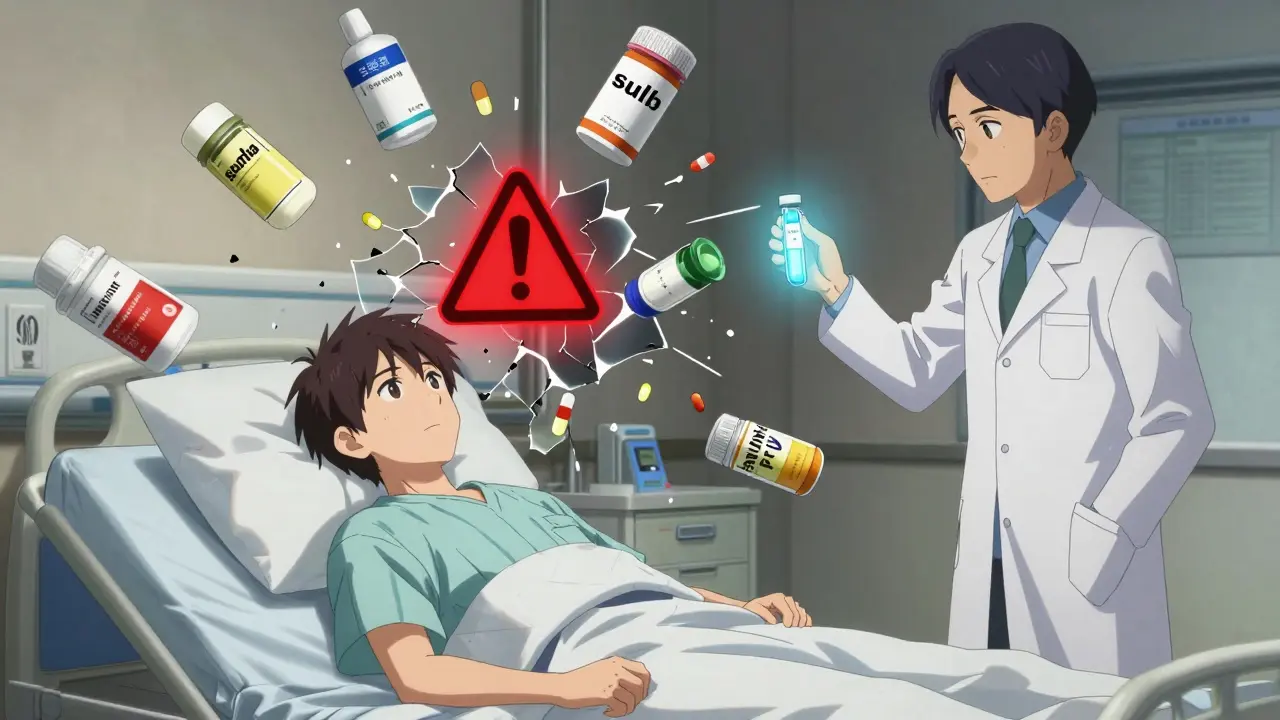
When you’ve had a severe reaction to a drug, it’s natural to want to avoid anything similar. But not every reaction means you need to avoid an entire class of medications. Many people are told to steer clear of whole families of drugs after a single bad experience-only to later find out they could have safely used one of them. The truth is, severe drug reaction doesn’t always mean lifelong avoidance. Knowing when to draw the line-and when to question it-can change your treatment options forever.
What Counts as a Severe Drug Reaction?
A severe drug reaction isn’t just a rash or upset stomach. According to the FDA, it’s something that’s life-threatening, requires hospitalization, causes lasting disability, or leads to birth defects. These reactions are rare but serious. The most dangerous ones include anaphylaxis (a full-body allergic shock), Stevens-Johnson syndrome (SJS), toxic epidermal necrolysis (TEN), and DRESS syndrome (drug reaction with eosinophilia and systemic symptoms). These aren’t just uncomfortable-they can kill. TEN, for example, has a death rate between 30% and 50%.Most reactions aren’t this extreme. About 80-90% of reported drug reactions are predictable side effects-like nausea from NSAIDs or dizziness from blood pressure meds. These don’t require avoiding the whole family. But when your body goes into overdrive-itching, swelling, blisters, trouble breathing-it’s a red flag that your immune system is involved. That’s when you need to pause and think carefully about what comes next.
Not All Reactions Are Allergies
Here’s where things get tricky: most people who say they’re allergic to penicillin aren’t. Studies show only about 10% of those labeled with a penicillin allergy actually have a true IgE-mediated allergy. Many were misdiagnosed after a mild rash as a child, or had a reaction that wasn’t immune-driven at all. Yet, that label sticks for decades. One patient on HealthUnlocked went 20 years without penicillin-until skin testing proved she wasn’t allergic. She took amoxicillin for a sinus infection without issue.True allergic reactions involve your immune system. They happen fast-minutes to hours after taking the drug-and include hives, swelling of the face or throat, wheezing, or a drop in blood pressure. If you’ve had any of these, you should avoid the drug class until you’ve been evaluated. But if you got a slow-developing rash that didn’t involve breathing or swelling? That’s often not an allergy. It’s a side effect. And side effects don’t always mean cross-reactivity.
Which Drug Families Have the Highest Cross-Reactivity Risk?
Some drug families are notorious for cross-reactivity. If you reacted to one, you’re more likely to react to others in the same group.- Beta-lactam antibiotics (penicillins, cephalosporins, carbapenems): Cross-reactivity between penicillin and cephalosporins is low-only 0.5% to 6.5%, depending on the specific drugs. But if you had anaphylaxis to penicillin, avoid all beta-lactams until tested.
- Sulfa antibiotics (like Bactrim or Septra): True sulfa allergy is rare. Most people who react to sulfonamide antibiotics don’t react to non-antibiotic sulfa drugs like diabetes or diuretic meds. But if you had SJS or TEN from Bactrim, avoid all sulfonamide antibiotics. The risk is too high.
- NSAIDs (ibuprofen, naproxen, aspirin): If you have aspirin-exacerbated respiratory disease (AERD), 70% of you will react to other NSAIDs. But if you just got a stomach ache from ibuprofen, switching to a different NSAID or using a COX-2 inhibitor like celecoxib may be fine.
- Anticonvulsants (carbamazepine, phenytoin, lamotrigine): These are linked to SJS/TEN/DRESS. If you had one of these reactions, avoid the entire class. There’s no safe gray area here.
- Allopurinol: Used for gout, this drug causes about 17% of TEN cases. If you had a severe skin reaction to it, never take it again-and avoid other xanthine oxidase inhibitors cautiously.
For SCARs-like SJS, TEN, and DRESS-avoidance of the entire drug class is almost always permanent. The European Medicines Agency found that 95% of TEN cases come from just six drug classes. Once you’ve survived one, you’re at higher risk for another. No gamble worth taking.
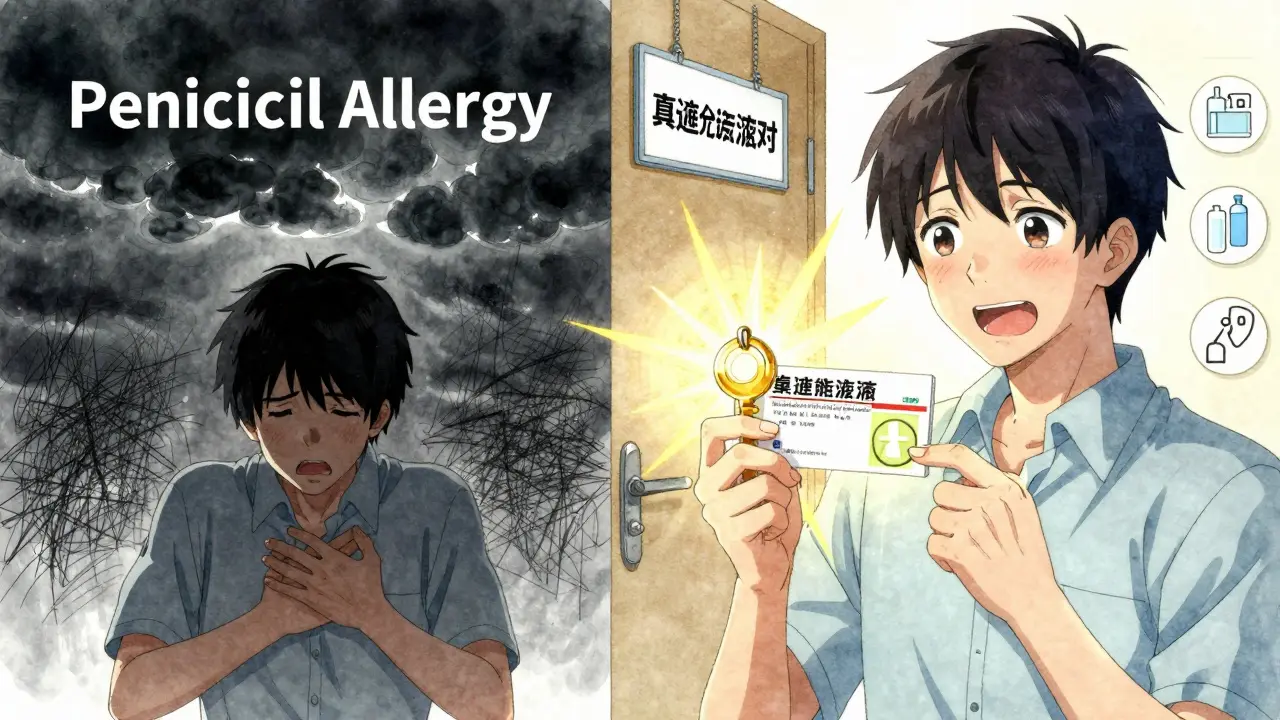
When You Might Not Need to Avoid the Whole Family
Not every bad reaction means you’re allergic to everything in the class. Take statins, for example. If you got muscle pain from one statin, only 10-15% of people will have the same issue with another. Your doctor can switch you to a different one without fear.Same with antibiotics. A maculopapular rash from amoxicillin? That’s common in kids and usually not an allergy. You can often try another penicillin later without issue. The key is distinguishing between a mild, delayed rash and a true allergic reaction. If you didn’t need epinephrine, didn’t have swelling or trouble breathing, and the rash faded after stopping the drug-it’s probably not a life-threatening allergy.
Even with penicillin, many people can safely take cephalosporins if they’ve only had a mild reaction. Guidelines from the American College of Allergy, Asthma, and Immunology now say: don’t assume cross-reactivity. Test first.
How to Get the Right Diagnosis
Don’t rely on a label from 10 years ago. If you’ve had a severe reaction, you deserve a proper evaluation. Here’s how:- Document everything. Write down the drug name, when you took it, what symptoms you had, how long they lasted, and what treatment you needed.
- Ask for a referral. See an allergist or immunologist who specializes in drug reactions. They can do skin tests or blood tests to check for true IgE-mediated allergies.
- Consider a drug challenge. Under controlled conditions, a specialist may give you a tiny dose of the drug to see if you react. Success rates for beta-lactam challenges are 70-85% in low-risk patients.
- Get genetic testing if relevant. For drugs like abacavir (used for HIV), the HLA-B*57:01 gene test can tell you with 99% accuracy whether you’re at risk for a severe reaction. If you’re negative, you can take it safely.
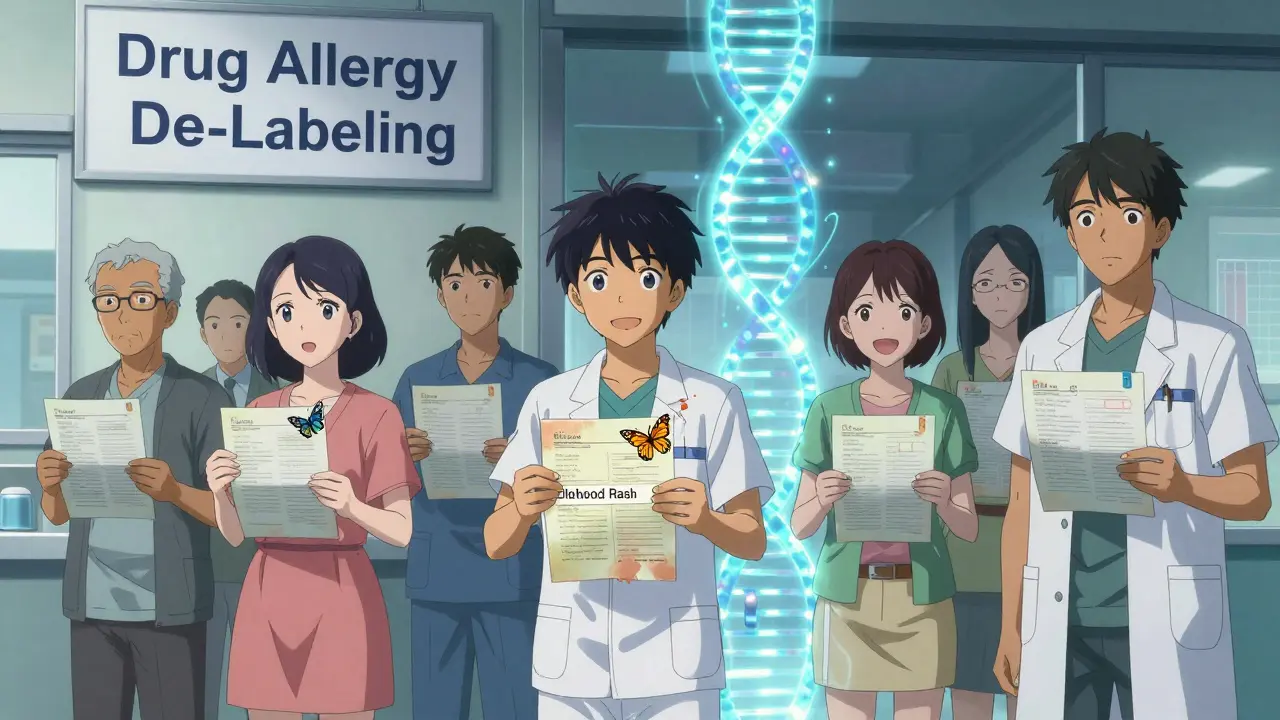
Many hospitals now have formal penicillin de-labeling programs. If you’re told you’re allergic, ask: “Can I be tested to confirm this?”
What Happens If You Avoid Too Much?
Over-avoidance isn’t harmless. It leads to delays in treatment, more expensive drugs, and higher risk of complications. A 2022 survey by the Asthma and Allergy Foundation of America found that 42% of patients with drug allergy labels experienced treatment delays-on average, 3.2 days longer than needed. That’s time lost to pain, infection, or worsening illness.Patients labeled with penicillin allergy are more likely to get broad-spectrum antibiotics like vancomycin or clindamycin. These are more expensive, harder on your gut, and increase the risk of C. diff infections. One study found that patients with a penicillin allergy label had a 23% higher risk of developing a resistant infection.
And let’s not forget the psychological toll. People live in fear of their own medical records. They avoid emergency care. They skip dental work. They turn down life-saving surgeries because they’re afraid of anesthesia or antibiotics. That fear is often based on outdated or incorrect information.
What You Can Do Right Now
If you’ve had a severe reaction:- Don’t panic. Not every reaction means lifelong avoidance.
- Don’t assume. Ask for a specialist referral.
- Don’t ignore your record. Make sure your EHR has accurate details-not just “penicillin allergy.”
- Don’t delay. If you need antibiotics and you’re avoiding everything, ask: “Is there a test I can take to find out what’s safe?”
If you’ve never had a severe reaction but were labeled allergic as a child? Get tested. You might be surprised.
Medication families aren’t all the same. Reactions aren’t all the same. And avoiding a whole class because of one bad experience might be doing more harm than good.
Final Thought: Trust Science, Not Labels
The goal isn’t to avoid drugs at all costs. It’s to use the right drug safely. Modern medicine has tools to tell us who’s truly at risk-and who isn’t. If you’ve had a severe reaction, you deserve more than a blanket warning. You deserve answers. And with the right evaluation, you might find out you can take that drug after all.If I had a rash from penicillin, do I need to avoid all antibiotics?
No. Most rashes from penicillin are not allergic. If it was a mild, non-itchy rash that appeared days after starting the drug and went away after stopping, you likely don’t have a true allergy. Up to 90% of people with this type of reaction can safely take penicillin or other beta-lactams after proper evaluation. Skin testing or a supervised drug challenge can confirm this.
Can I take sulfa-based diuretics if I’m allergic to sulfa antibiotics?
Yes, usually. Sulfa antibiotics (like Bactrim) and sulfa diuretics (like hydrochlorothiazide) have different chemical structures. True cross-reactivity between them is rare-less than 5%. If you had a mild reaction to Bactrim, you can likely take hydrochlorothiazide safely. But if you had Stevens-Johnson syndrome or anaphylaxis from a sulfa antibiotic, avoid all sulfa-containing drugs until evaluated by an allergist.
What’s the difference between a side effect and an allergic reaction?
A side effect is a predictable, non-immune response-like nausea, dizziness, or diarrhea. It’s often dose-related and doesn’t involve your immune system. An allergic reaction is immune-driven: your body mistakes the drug for a threat. Symptoms include hives, swelling, wheezing, or anaphylaxis. These happen quickly, often within minutes to hours, and can be life-threatening. Side effects can be managed or avoided by switching drugs. Allergies require true avoidance until proven otherwise.
Are drug allergy tests reliable?
For some drugs, yes. Skin testing and blood tests for penicillin are highly accurate-over 90% for detecting true IgE-mediated allergies. For other drugs like NSAIDs or anticonvulsants, testing isn’t available. In those cases, a supervised drug challenge is the gold standard. The FDA-approved ImmunoCap Specific IgE test improved accuracy from 60% to 89% for drug allergies in 2022. Genetic tests, like for HLA-B*57:01 and abacavir, are nearly 100% reliable for predicting risk.
What if I can’t get tested right away?
If you’re in an emergency and need treatment, doctors will choose the safest available option. But if you’re not in crisis, don’t accept avoidance as the only answer. Ask your doctor: “Can I see an allergist?” or “Is there a safer alternative I can try?” Many hospitals now have drug allergy clinics that can evaluate you within weeks-not years. Don’t wait until you’re sick again.
Severe drug reactions are scary. But the best way to protect yourself isn’t by avoiding everything-it’s by knowing exactly what you’re reacting to, and why. With the right testing and knowledge, you can take back control of your treatment-and your health.

Max Sinclair
January 18, 2026 AT 05:49Finally, someone breaks down the difference between a side effect and a true allergy without sounding like a medical textbook. I had a rash on amoxicillin at 7 and spent 15 years avoiding all penicillins-until an allergist did a skin test and I took amoxicillin like it was candy. No hives, no swelling, no drama. Why do doctors still treat every rash like a death sentence?
Ryan Otto
January 19, 2026 AT 10:39Let’s be honest: the pharmaceutical industry thrives on fear. They push blanket avoidance protocols because it’s easier to prescribe vancomycin than to invest in proper allergy testing infrastructure. The 23% higher risk of resistant infections? That’s not a side effect-it’s a corporate profit margin. And don’t get me started on how insurance companies refuse to cover de-labeling tests. This isn’t medicine-it’s risk-averse capitalism dressed in white coats.
Praseetha Pn
January 20, 2026 AT 06:54Oh, so now we’re supposed to trust ‘allergists’ who get paid by Big Pharma to say it’s ‘safe’? I’ve seen patients get re-challenged with penicillin and end up in the ICU-then the docs blame ‘idiosyncratic reactions’ and move on. That’s not science, that’s gambling with human lives. And don’t even get me started on how HLA-B*57:01 testing is only available in fancy urban hospitals-rural folks? They just get labeled allergic and stuck with clindamycin forever. This whole system is rigged.
Nishant Sonuley
January 21, 2026 AT 02:51Look, I get it-people are scared of drugs, and doctors are scared of lawsuits. But here’s the thing: we’ve been treating drug allergies like they’re permanent tattoos when they’re more like temporary scribbles. I had a cousin who was told she was allergic to NSAIDs after a stomach ache at 12. Ten years later, she took naproxen for a sprained ankle-nothing happened. Turns out, her ‘allergy’ was just a bad case of dehydration and bad timing. We need to stop treating every weird reaction like a cosmic warning sign. Most of the time, it’s just biology being messy, not a divine indictment.
Emma #########
January 22, 2026 AT 08:04This is so important. I’ve been avoiding penicillin since childhood because of a rash, and I never questioned it-until I needed antibiotics after surgery and realized how many alternatives were worse. I finally saw an allergist last year. It was the best medical decision I’ve ever made. Thank you for writing this.
Andrew Short
January 22, 2026 AT 22:24Anyone who thinks a mild rash doesn’t mean avoiding a drug class is either dangerously naive or actively endangering lives. You think you’re being ‘scientific,’ but you’re just gambling with your immune system. If your body reacted once, it remembers. And next time? It might not be a rash-it might be your lungs shutting down. Stop playing doctor with your own health.
christian Espinola
January 23, 2026 AT 17:28Oh, so now we’re supposed to believe that 90% of penicillin ‘allergies’ are fake? Where’s the data? The FDA doesn’t even require labs to validate these claims. This whole article reads like a marketing pamphlet for a startup that sells ‘drug allergy de-labeling’ packages. Meanwhile, real people die from anaphylaxis because someone trusted a ‘test’ they got from a clinic that doesn’t even have an epinephrine auto-injector on-site. This isn’t science-it’s snake oil.
Naomi Keyes
January 25, 2026 AT 02:47It is, however, critically important to note-indeed, to emphasize-that the distinction between a delayed, non-immune-mediated rash and an immediate, IgE-driven anaphylactic reaction is not merely a semantic one; it is a life-or-death diagnostic imperative. Furthermore, the assertion that 90% of penicillin ‘allergies’ are mislabeled? That statistic is derived from a meta-analysis conducted by the American Academy of Allergy, Asthma & Immunology in 2021-and it is, in fact, corroborated by multiple peer-reviewed studies, including those published in JAMA Dermatology and The Lancet Infectious Diseases. To dismiss this as ‘marketing’ is not only scientifically unsound-it is a dangerous form of medical misinformation. And yes, if you’ve had Stevens-Johnson syndrome from allopurinol-you absolutely, unequivocally, never take it again. No exceptions. No gambles. No ‘maybe’s.