

Antidepressant Discontinuation Risk Calculator
Find Your Antidepressant Risk Level
Select your medication to see your discontinuation risk and get a safe tapering plan.
Your Risk Assessment
Recommended Tapering Plan
Expected Symptom Timeline
Stopping antidepressants isn’t as simple as just skipping a pill. For many people, the moment they decide to quit - whether because they feel better, are pregnant, or are tired of side effects - their body reacts in ways they never expected. Fatigue, dizziness, nausea, and strange electric-shock sensations in the head can hit within hours. These aren’t signs of relapse. They’re not in their head. They’re antidepressant discontinuation syndrome.
What Exactly Is Antidepressant Discontinuation Syndrome?
Antidepressant discontinuation syndrome happens when your body has adapted to having a medication in your system, and then you suddenly remove it. It’s not addiction. You don’t crave the drug. You don’t use it to get high. But your brain changed. Over weeks or months, your neurons adjusted to the presence of serotonin or norepinephrine boosters. When the drug leaves, those neurons are out of sync. That’s what causes the symptoms. This isn’t new. The American Academy of Family Physicians recognized it in 2006. The National Institutes of Health confirmed it in 2017. Even pharmaceutical companies coined the term - not because they wanted to downplay it, but because they needed to separate it from addiction. Still, many doctors don’t talk about it. Patients are left confused when they feel awful after stopping their meds.The Symptoms: More Than Just Feeling Off
Symptoms show up fast. Usually within 2 to 4 days after stopping, sometimes even within hours if you were on a short-acting drug like paroxetine or venlafaxine. The most common pattern is remembered by the acronym FINISH:- Flu-like symptoms: Fatigue, muscle aches, chills, headaches, diarrhea - reported in up to 78% of cases.
- Insomnia: Trouble sleeping, vivid dreams, or nightmares - affects 65% of people.
- Nausea: Feeling sick to your stomach, sometimes vomiting - happens in nearly 6 out of 10 people.
- Ibalance: Dizziness, vertigo, unsteady walking. Some describe it like being on a boat.
- Sensory disturbances: The infamous “brain zaps” - brief, sharp electrical sensations in the head, often triggered by eye movement. Also tingling, ringing in the ears, or feeling like your skin is crawling. About 63% report these.
- Hyperarousal: Anxiety, irritability, panic attacks, restlessness, or even anger outbursts.
Not All Antidepressants Are the Same
The risk and severity of withdrawal depend heavily on the drug’s half-life - how long it stays in your system.- Short half-life drugs like paroxetine (21 hours) and venlafaxine (5-11 hours) are the worst offenders. Up to 47% of venlafaxine users report significant withdrawal. Paroxetine is notorious for causing intense brain zaps and dizziness.
- Long half-life drugs like fluoxetine (4-6 days) are much gentler. Withdrawal is rare and mild, if it happens at all. That’s why doctors sometimes switch people to fluoxetine before stopping - to make the transition smoother.
- Tricyclic antidepressants (TCAs) can cause movement issues: tremors, stiff muscles, or even parkinsonian symptoms.
- MAOIs are the most dangerous. Stopping suddenly can lead to severe agitation, psychosis, catatonia, or myoclonus (involuntary jerking). These cases need emergency psychiatric care.
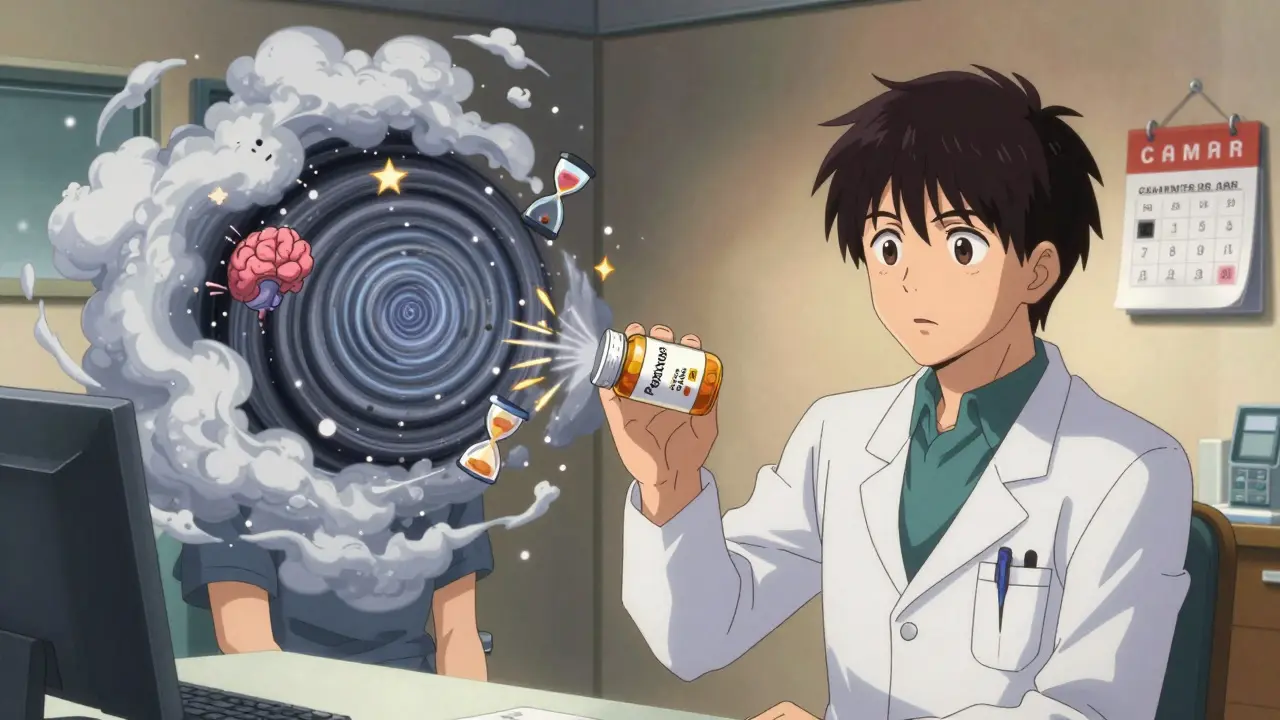
Discontinuation vs. Relapse: The Critical Difference
This is where things go wrong. Many patients are told they’re “relapsing” when they’re actually experiencing withdrawal. Here’s how to tell them apart:- Discontinuation symptoms appear within days of stopping. They’re physical, strange, and unlike your original depression. Brain zaps? Nausea? Electric shocks? Those aren’t signs of depression returning.
- Relapse symptoms develop slowly. They’re the same as before you started the medication: low mood, hopelessness, loss of interest, sleep changes that linger for weeks.
- If you restart the antidepressant, discontinuation symptoms vanish within 72 hours. Relapse doesn’t improve that fast.
How to Stop Safely: Tapering Is Everything
The only reliable way to avoid severe withdrawal is to taper slowly. No shortcuts.- For most SSRIs: A minimum 4-week taper. Some experts recommend 6-8 weeks, especially if you’ve been on it over a year.
- For venlafaxine or paroxetine: 8 weeks or longer. Some patients need to reduce by 10% every 2-3 weeks.
- For fluoxetine: You may not need a taper at all. Its long half-life acts as a natural buffer.
What If You Already Stopped and Feel Terrible?
If you’ve already stopped and are having symptoms, don’t panic. You’re not broken. You’re not weak. You’re experiencing a known physiological reaction.- Call your prescriber immediately. Tell them exactly what you’re feeling - brain zaps, nausea, dizziness. Don’t say “I think I’m depressed again.”
- Restarting your original medication usually clears symptoms within 1-3 days.
- If you can’t get back on the same drug, ask about switching to fluoxetine temporarily. It’s a bridge.
- Don’t try to “tough it out.” Symptoms can last weeks or months. You don’t have to suffer alone.

Special Cases: Pregnancy, Long-Term Use, and Protracted Withdrawal
Pregnancy is a major reason people stop antidepressants. But 41% of pregnant women stop without medical guidance. That’s risky. Untreated depression during pregnancy carries its own dangers. The best approach? Work with a psychiatrist who specializes in perinatal care. Don’t quit cold turkey. Protracted withdrawal - symptoms lasting months or even years - is increasingly recognized. While older sources say it lasts 1-2 weeks, newer studies and patient data show otherwise. A 2022 Journal of Clinical Psychiatry study found 18.7% of SSRI users had symptoms beyond 3 months. The Royal College of Psychiatrists updated their guidelines in 2022 to include management strategies for long-term cases. There’s no cure for protracted withdrawal. But time, support, and slow re-adaptation help. Some people find relief with low-dose fluoxetine, mindfulness, or gentle exercise. Others need years. It’s not failure. It’s biology.What You Can Do Now
If you’re thinking about stopping:- Don’t decide alone. Talk to your doctor - even if you think you’re fine.
- Ask: “What’s the half-life of this drug?” and “What’s your tapering plan?”
- Keep a symptom journal. Note when things start, how bad they are, and what helps.
- Don’t trust online “quick detox” guides. They’re dangerous.
- If you’ve already stopped and feel awful, reach out. You’re not alone.
Can you get addicted to antidepressants?
No, antidepressants are not addictive. You won’t crave them or need more to get the same effect. But your body can become physically dependent on them. That means if you stop suddenly, you can get withdrawal symptoms - not because you’re addicted, but because your brain changed its chemistry to adapt to the drug. This is a biological response, not a behavioral one.
How long do antidepressant withdrawal symptoms last?
For most people, symptoms last 1-2 weeks and fade on their own. But for some, especially those on short-acting drugs like venlafaxine or paroxetine, symptoms can last 4-8 weeks. In rare cases, they persist for months or even over a year - what’s called protracted withdrawal. Studies now show up to 1 in 5 people experience symptoms longer than 3 months. This is more common than old medical guides suggest.
Why do I get brain zaps when I stop antidepressants?
Brain zaps - sudden, brief electrical shock sensations in the head - happen because your brain’s serotonin system is readjusting. When you’ve been on an SSRI or SNRI for a while, your brain reduces its natural serotonin production and receptor sensitivity. When you stop, serotonin levels drop quickly, and the nervous system misfires. Eye movements can trigger them because the brainstem pathways involved in vision are linked to serotonin regulation. They’re harmless but very unsettling. They usually go away within weeks.
Is it safe to stop antidepressants cold turkey?
No. Stopping abruptly increases the risk of severe withdrawal symptoms by over 3 times. You could experience intense dizziness, nausea, panic attacks, or even seizures in rare cases. Even if you’ve only been on the medication for a few months, your body has adapted. Tapering slowly - over weeks or months - is the only safe way to stop.
Which antidepressants cause the worst withdrawal?
The worst withdrawal symptoms are typically linked to drugs with short half-lives: paroxetine (Paxil), venlafaxine (Effexor), and desvenlafaxine (Pristiq). These leave your system quickly, causing a sharp drop in neurotransmitters. Fluoxetine (Prozac) has a very long half-life and rarely causes withdrawal. SNRIs and MAOIs also tend to be harder to stop than SSRIs. Always ask your doctor about your specific drug’s risk profile.
Can switching generic brands cause withdrawal symptoms?
Yes. Not all generic versions of the same drug are absorbed the same way. A patient might switch from brand-name sertraline to a generic and suddenly feel dizzy or nauseous - not because they’re relapsing, but because the new version delivers the drug at a slightly different rate. This can mimic withdrawal. Always tell your doctor if you notice new symptoms after a generic switch.
What should I do if my doctor says my symptoms are just anxiety or relapse?
Ask for a second opinion. Withdrawal symptoms are real and well-documented. If your symptoms started within days of stopping or reducing your dose - especially if they’re physical (brain zaps, nausea, dizziness) - they’re likely withdrawal. Relapse takes weeks to develop and feels like your original depression. Bring printed guidelines from the Royal College of Psychiatrists or NIH to your appointment. You’re not overreacting. You’re advocating for accurate care.



Joe Jeter
December 22, 2025 AT 17:40Look, I get the whole 'brain zaps' thing, but let’s be real - if you’re taking antidepressants long-term, you’re already trading one set of problems for another. The pharmaceutical industry loves to sell you a solution, then act shocked when you can’t quit. They don’t warn you because they don’t want you to know how hard it is to get off. This isn’t biology - it’s corporate negligence wrapped in medical jargon.
bharath vinay
December 24, 2025 AT 13:58They say it’s not addiction, but if your body rebels when you stop, that’s dependence. And dependence = addiction by any other name. The FDA knows this. The WHO knows this. But they won’t admit it because SSRIs are a $30 billion industry. They rebrand withdrawal as 'discontinuation syndrome' so you don’t panic and stop buying pills. Wake up. This is chemical control disguised as treatment.
claire davies
December 26, 2025 AT 03:14Oh my gosh, I’m so glad someone finally wrote this with such clarity. I was on paroxetine for five years - and when I tried to quit cold turkey after a bad breakup, I swear I thought I was having a stroke. The brain zaps felt like someone was tapping my skull with a tiny hammer. I cried for three days straight, couldn’t eat, and my dog just stared at me like I’d lost my mind. But here’s the thing: when I finally found a doctor who actually listened and helped me taper over 14 weeks? I felt like myself again. Not medicated. Not broken. Just… me. If you’re reading this and scared? You’re not alone. Taper slowly. Find your person. And please, for the love of all things holy, don’t trust a Reddit detox guide. I tried one. It was like trying to run a marathon after a two-week nap.
Rachel Cericola
December 27, 2025 AT 11:57Let me cut through the noise: this post is accurate, evidence-based, and desperately needed. The myth that antidepressants are 'safe' to stop abruptly is killing people - not with overdoses, but with misdiagnosed withdrawal. I’m a psych nurse and I’ve seen patients get prescribed new SSRIs because their doctor thought they were 'relapsing' - when they were just suffering from paroxetine withdrawal. The fact that 38% of these cases get misdiagnosed is criminal. Tapering isn’t optional. It’s medical necessity. If your doctor doesn’t know the half-life of your drug, find a new one. And yes, generic switches can absolutely trigger symptoms - bioequivalence is a myth in practice. I’ve had patients switch from brand to generic sertraline and develop vertigo within 48 hours. It’s not 'in their head.' It’s pharmacokinetics.
Blow Job
December 28, 2025 AT 00:37Been there. Done that. Got the brain zaps T-shirt. I stopped venlafaxine after 3 years because I was tired of feeling like a zombie. Thought I could just quit. Lasted 36 hours before I was shaking, nauseous, and hearing phantom alarms. Called my doc. Got switched to fluoxetine for two weeks - total game-changer. No more zaps. No more panic. Just quiet. Don’t be proud. Don’t tough it out. Your brain isn’t weak - it’s just recalibrating. And honestly? The Reddit communities like r/antidepressants saved my life. Real people, real stories, no BS. You’re not broken. You’re just human.
EMMANUEL EMEKAOGBOR
December 28, 2025 AT 10:30It is with profound respect for the scientific rigor presented in this post that I offer my humble acknowledgment. In my home country of Nigeria, access to accurate mental health information remains scarce, and the stigma surrounding antidepressants is deeply entrenched. Many individuals discontinue their medications due to cultural beliefs or fear of dependency, unaware of the physiological consequences. This document serves as a vital educational resource, and I intend to share it with our local community health workers. The distinction between discontinuation syndrome and relapse is not merely clinical - it is a matter of dignity for those who suffer in silence. Thank you for illuminating this critical path.
Pankaj Chaudhary IPS
December 29, 2025 AT 07:11As a mental health advocate in India, I’ve seen too many patients stop their meds because they were told 'it’s just anxiety' or 'you’re overreacting.' This post is a lifeline. I’ve distributed it to my patients, especially young mothers who fear medication during pregnancy. The data on protracted withdrawal is alarming - and yet, most doctors still treat it as a myth. I’ve started a support group called 'Mindful Tapers' where we share tapering schedules and symptom logs. One woman tapered off paroxetine over 10 months. She now runs yoga classes for others going through this. Hope is real. And so is recovery - if we do it right.
Katie Taylor
December 30, 2025 AT 22:38Stop making this sound so complicated. If you don’t want to feel like crap, don’t take the damn pills in the first place. People act like antidepressants are magic wands, but they’re just chemical crutches. You think your brain 'adapts'? It’s called dependency. And now you’re crying about brain zaps? Grow up. Take responsibility. Quit being a victim. There are therapy apps, exercise, sunlight, and real human connection - not just another pill. This whole 'protracted withdrawal' narrative is just another way to keep people hooked. Stop blaming the system. Start taking control.