
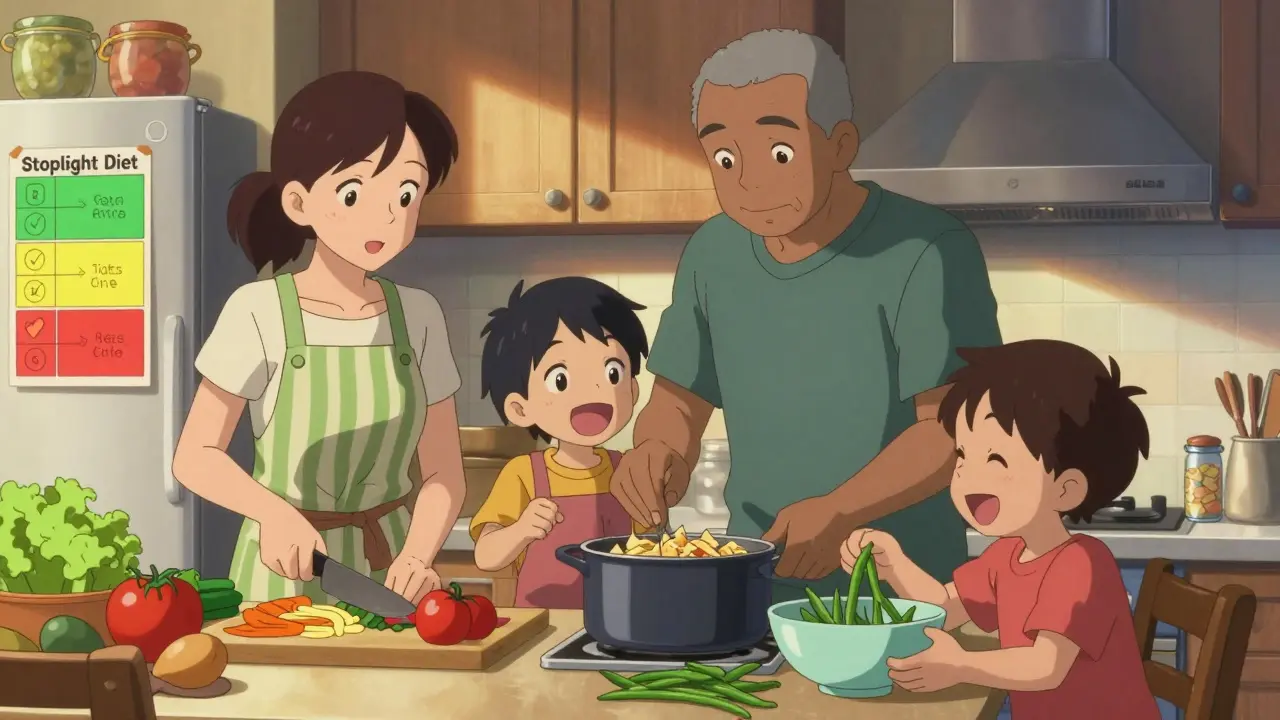
One in five U.S. children and teens now has obesity. That’s not a distant statistic-it’s your neighbor’s kid, your child’s classmate, maybe even your own child. The numbers haven’t just gone up; they’ve exploded since the 1970s. And the truth is, waiting for your child to "outgrow it" doesn’t work. By the time obesity is obvious, the body’s habits are already locked in. The good news? There’s a proven way to turn this around-not with diets, not with pills, but with the whole family working together.
Why Family-Based Treatment Is the Only Real Solution
Most people think childhood obesity is about willpower. Eat less, move more. But that’s like trying to fix a leaky roof by mopping the floor. The real problem isn’t the child. It’s the environment. The meals. The screen time. The lack of play. The stress. The sleep. And none of those things can be fixed if only the child is told to change. Family-based behavioral treatment (FBT) flips the script. Instead of blaming the child, it asks: What can the family do differently? This isn’t a new idea. It was developed in the 1980s by Dr. Leonard Epstein and his team at the University at Buffalo. Their Stoplight Diet became the blueprint: green foods (eat freely), yellow foods (eat in moderation), red foods (eat rarely). But the real breakthrough wasn’t the food labels-it was including parents as active participants, not just enforcers. Today, every major medical group agrees: FBT is the gold standard. The American Academy of Pediatrics, the American Psychological Association, and the NIH all say the same thing: if your child has obesity, start here. And it works. In a major 2023 trial published in JAMA Network Open, kids in FBT lost 12.3% more of their excess weight than those getting usual care. Parents lost weight too. And here’s the part no one talks about: siblings who weren’t even in the program lost weight just by being in the same home. Healthy habits spread.How FBT Actually Works (Step by Step)
FBT isn’t magic. It’s structured. Most programs run 16 to 32 sessions over 6 to 24 months. You don’t need to see a specialist in a fancy clinic. The most successful models are built right into your child’s pediatric office. A trained health coach works with you and your child, not against you.- Food changes using the Stoplight Diet: Green foods-fruits, veggies, whole grains, lean proteins-are always okay. Yellow foods-dairy, starchy carbs, nuts-need portion control. Red foods-sugary drinks, fried snacks, candy-are off-limits most days. It’s not about cutting out treats forever. It’s about making them rare, not routine.
- Move more, sit less: Kids need at least 60 minutes of active play every day. That doesn’t mean running laps. It means dancing, biking, climbing, playing tag. Screen time? Cut it to under two hours a day. Studies show this alone reduces BMI by 0.8 units.
- Track, don’t punish: Families keep simple logs: what was eaten, how long they moved, how they felt. Not to shame, but to spot patterns. Did your child binge after a bad day at school? Did you reach for soda because you were tired? Awareness changes behavior.
- Parenting skills: This is where most programs fail. Parents need help setting limits without yelling. Rewarding effort, not just results. Modeling healthy habits themselves. When a parent stops drinking soda, the child is 3x more likely to quit too.
- Social skills: How do you handle birthday parties? School lunches? Sports snacks? FBT teaches families how to navigate these without guilt or shame. It’s about planning, not avoiding.
Why Waiting Makes Everything Harder
Some doctors still say, "Let’s watch and wait." That’s dangerous advice. By age 8, a child’s weight trajectory is often set. The earlier you act, the easier it is. A child with a BMI just above the 85th percentile at age 5 has a 50% chance of being obese as an adult. If that same child is obese at age 12? That jumps to 80%. Dr. Stephen Cook from the University of Rochester puts it plainly: "If you make a slight change now, you will have a much better long-term projection for the child than when they have severe obesity later and small changes won’t matter as much." That’s why the AAP now recommends starting FBT as early as age 4 or 5. You don’t need to wait for a child to be "overweight" to act. If your child is gaining weight faster than their peers-even if they’re still "normal" weight-you’re already in the danger zone.
The Real Cost of Doing Nothing
FBT costs about $3,200 per family over two years. That’s less than a new smartphone. Compare that to the lifetime cost of obesity: higher risk of type 2 diabetes, heart disease, sleep apnea, joint problems, and depression. The economic burden? Over $14 billion a year in the U.S. alone. But the cost isn’t just financial. It’s emotional. Kids with obesity face bullying, low self-esteem, and social isolation. Parents feel guilt, shame, and helplessness. FBT doesn’t just change weight-it changes family dynamics. Parents report feeling more confident. Kids report feeling less alone. And here’s the kicker: FBT saves money. The 2023 JAMA study found it cost only $18,400 per quality-adjusted life year gained. That’s well under the $50,000 threshold experts say is worth it. Insurance covers it. Medicare and Medicaid have a billing code (G0447) for intensive behavioral therapy. Yet fewer than 5% of eligible kids get it. Why? Because most pediatricians don’t know how to offer it.Barriers No One Talks About
FBT works-but it’s not easy. Families juggle work, school, and multiple kids. Scheduling 20+ sessions over two years is hard. Some parents resist changing their own habits. One study found 29% of parents didn’t want to give up sugary drinks or fast food themselves. There’s also a huge equity gap. Hispanic and Black children make up 54% of cases in the U.S., but only 31% of FBT participants. Language barriers, lack of culturally tailored materials, and mistrust in the medical system keep families out. Programs that hire bilingual coaches and use community centers see much higher participation. And then there’s the myth that "it’s just genetics." Yes, genes play a role. But genes don’t cause epidemics. The environment does. If two siblings have the same DNA but one lives in a home with daily fruit, no soda, and family walks after dinner, and the other lives in a home with takeout three nights a week and screens until midnight? The difference isn’t genes. It’s habits.
What Comes Next? Digital Tools and Bigger Changes
The future of FBT isn’t just in-person sessions. It’s hybrid. Apps that let families log meals and activity. Text reminders. Video check-ins. A 2023 pilot found families using an app alongside coaching had 32% more engagement. That’s huge. The NIH is now funding studies that look beyond food and movement. They’re testing Family Systems Therapy-how family communication, conflict, and emotional support affect weight. Because if a child eats because they’re anxious, and the parent doesn’t know how to respond, no amount of broccoli will fix it. And insurance? It’s starting to catch up. The Inflation Reduction Act of 2023 included funding for community obesity prevention programs. CMS now pays for FBT. But until pediatricians routinely screen for weight trends at every checkup-and have a coach on standby-most families won’t even know it’s an option.What You Can Do Today
You don’t need a program to start. Here’s how to begin right now:- Remove sugar-sweetened drinks. No more soda, juice, sports drinks. Water, milk, or unsweetened tea only.
- Make one family meal a day. No screens. Just talking. Studies show this lowers obesity risk by 12%.
- Get outside together for 30 minutes every day. Walk, bike, play catch. Doesn’t matter what you do-just move.
- Stop labeling foods as "good" or "bad." Use the Stoplight system instead. It reduces guilt and builds awareness.
- Ask your pediatrician: "Is my child’s weight gain on track? Can you refer us to a family-based program?"
When FBT Isn’t Enough
For some kids-especially those with severe obesity (BMI above 120% of the 95th percentile)-FBT alone doesn’t lead to major weight loss. That’s not failure. It’s a signal. The American Academy of Pediatrics now says: if FBT hasn’t helped after 6 months, consider medications like semaglutide (Wegovy) for teens 12 and older. For the most severe cases, metabolic surgery may be an option. But here’s the key: even in these cases, FBT still comes first. Medications work better when paired with family habits. Surgery lasts longer when the whole home supports healthy choices. You can’t skip the foundation.Is childhood obesity just a phase?
No. While some children naturally slim down during growth spurts, most who are obese by age 6 will remain obese into adulthood. Waiting doesn’t make it better-it makes it harder. Early intervention with family-based treatment cuts long-term health risks in half.
Can I do FBT at home without a program?
You can start with the core principles: use the Stoplight Diet, cut out sugary drinks, get 60 minutes of daily movement, and eat meals together. But for lasting results, especially if your child’s BMI is above the 95th percentile, professional guidance increases success by over 50%. Coaches help you navigate setbacks, avoid burnout, and adjust strategies.
Does FBT work for toddlers?
Yes. The American Academy of Pediatrics now recommends FBT for children as young as 2 years old. At this age, the focus is on healthy feeding practices, responsive parenting, and avoiding pressure to eat. The goal isn’t weight loss-it’s setting the right trajectory before habits become fixed.
Why don’t more doctors offer FBT?
Most pediatricians aren’t trained in behavioral coaching, and clinics lack the staffing or time. Only 12% of children with obesity see a specialist. But integrated models-where a health coach works right in the pediatric office-are proving successful. Ask if your clinic has a behavioral health team. If not, request it.
Is FBT covered by insurance?
Yes. Medicare and Medicaid cover intensive behavioral therapy for obesity under code G0447. Private insurers are catching up. The 2023 Inflation Reduction Act also funds community-based programs. If your doctor says it’s not covered, ask them to check again-coverage is expanding fast.





Natasha Rodríguez Lara
March 24, 2026 AT 02:27I grew up in a home where soda was the default drink and dinner was always drive-thru. I didn’t realize how much that shaped me until I became a mom. My 6-year-old is already at the 90th percentile for BMI. We started the stoplight diet last month-no more juice boxes, no more fries after soccer. We eat together now. It’s not perfect. Some nights we order pizza. But we talk about why we chose it. And my kid actually asks for strawberries now. I didn’t think that was possible.
It’s not about being perfect. It’s about being consistent. And yes, it’s hard. But I’d rather my kid remember our family dinners than their BMI number.
peter vencken
March 25, 2026 AT 22:56frankly this whole fbt thing sounds like a scam. my kid’s got a big frame-his grandpa was 6’5” and weighed 250. genetics. we don’t force him to eat salad. he’s active. plays basketball 5x a week. why are we making this a moral issue? kids grow. let them.
also who the hell is dr. epstein? sounds like some 80s diet guru who got rich off guilt trips.
James Moreau
March 26, 2026 AT 01:55I work in pediatric care. I’ve seen FBT work more times than I can count. The biggest myth is that it’s about restriction. It’s not. It’s about rhythm. Regular meals. Predictable snacks. No food as reward. No food as punishment. The stoplight system works because it removes the moral judgment. Green = safe. Yellow = okay sometimes. Red = special. Kids get it. Parents don’t have to be cops.
And yes, parents lose weight too. Because you can’t ask your kid to eat veggies if you’re still scarfing down donuts at 2am. It’s systemic. Not personal.
J. Murphy
March 26, 2026 AT 03:04Jesse Hall
March 27, 2026 AT 20:33Just wanted to say THANK YOU for writing this. I’ve been trying to get my pediatrician to refer us to an FBT program for 8 months. They said ‘he’s just a big kid.’
My 7-year-old cried last week because someone called him ‘fat boy’ at recess. I didn’t know where to turn. We started the stoplight diet at home last week. We’re doing 30-minute walks after dinner. No screens after 8pm.
I feel like I’m finally doing something right. <3
Sean Bechtelheimer
March 29, 2026 AT 03:08Who’s funding this? Big Pharma? The CDC? Let me guess-there’s a grant behind this. They want us to think obesity is a ‘behavioral issue’ so they can push meds later. Semaglutide? That’s a weight-loss drug for adults. Why are they giving it to kids?
And why is the AAP suddenly pushing this? Coincidence that the same people who pushed vaccines also pushed this? Think about it.
My kid eats a lot. So what? He’s healthy. He runs. He laughs. He’s not sick. Why are we pathologizing childhood?
And who says a 5-year-old needs a ‘health coach’? That’s creepy.
Brandon Shatley
March 30, 2026 AT 04:10my daughter is 4. we don’t have a program. we just stopped buying soda. started eating dinner together. no tv. we walk after dinner. it’s simple.
she asked me yesterday why we don’t have candy anymore. i said ‘we save it for birthdays.’ she said ‘oh ok’ and went to play. no drama.
maybe we don’t need all this fancy stuff. just be present. and don’t eat junk in front of them.
Kenneth Jones
March 31, 2026 AT 20:08Mihir Patel
April 1, 2026 AT 19:27OMG I’m from India and I’m so shocked. In our village, kids are chubby because they eat home-cooked food. No soda. No fries. Just rice, dal, and mangoes.
Here in the US, my daughter eats processed snacks every day. I cried last night. I didn’t even know we were doing this to her.
We started the stoplight thing. She loves green foods now. She says ‘I’m a green girl!’ 😭
My mom would be so proud. Thank you for this post. I’m sharing it with my whole family.
Kevin Y.
April 1, 2026 AT 23:57As a pediatrician who has implemented FBT in our clinic for the past year, I can confirm: engagement rates have doubled since we integrated a health coach into our workflow. We use telehealth for missed sessions. Parents report less stress. Kids report feeling supported, not shamed.
The real barrier isn’t cost-it’s awareness. Most families don’t know this exists. And insurance? Yes, G0447 covers it. If your provider says no, ask them to check the CMS website. It’s real.
And yes-we’ve seen siblings lose weight. It’s not magic. It’s environment.
Raphael Schwartz
April 2, 2026 AT 22:24