
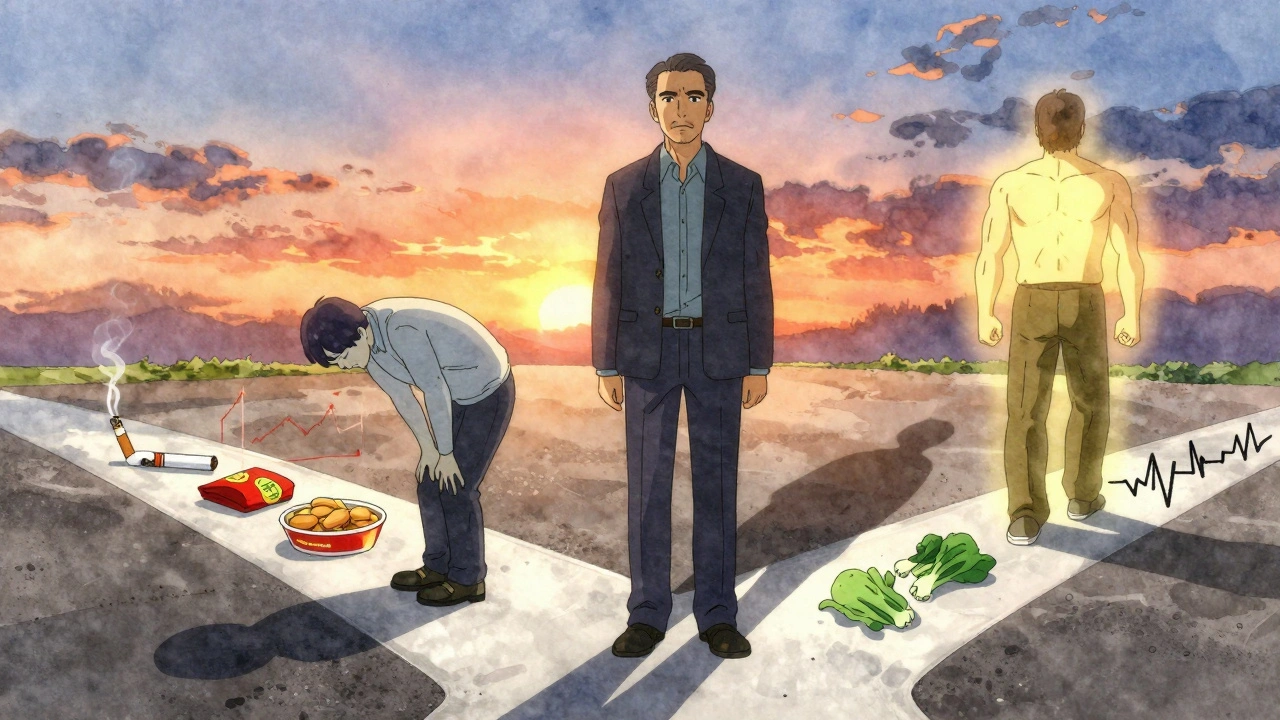
Heart disease doesn’t strike randomly. It builds quietly over years, often with no warning until it’s too late. But here’s the truth: heart disease risk factors aren’t a mystery. We know exactly what pushes people toward it - and more importantly, what we can change.
Age Isn’t Just a Number - It’s a Real Risk
You can’t turn back time, but you can understand how time affects your heart. For men, risk starts climbing noticeably after 45. For women, it’s around 55 - right around menopause. That’s not coincidence. Estrogen offers some protection before then. Once it drops, so does the shield. The Framingham Heart Study shows this clearly: at age 40, a man has a 50% chance of developing heart disease in his lifetime. By 70? That jumps to 70%. Women start lower - 40% at 40 - but climb to 60% by 70. Each decade adds about 10% more risk, even if you’re otherwise healthy. That doesn’t mean aging = doom. It means you need to be smarter as you get older. Blood pressure checks, cholesterol tests, and activity levels become non-negotiable after 45. Ignoring them because you “feel fine” is like ignoring a check engine light because the car still drives.Family History: Your Genetic Hand
If your dad had a heart attack at 52, or your mom was diagnosed with blocked arteries at 58, you’re not just unlucky - you’re at higher risk. A first-degree relative (parent or sibling) with heart disease before age 55 for men or 65 for women raises your risk by 60% to 75%. It’s not just about who got sick. It’s about when. Early onset means stronger genetic influence. Studies show that if two close relatives had heart disease before 60, your risk can double. And some conditions are inherited outright - like familial hypercholesterolemia. One in 250 people have this. Their LDL (“bad”) cholesterol is sky-high from birth. Without treatment, half of men with it have a heart attack by 50. Women aren’t far behind. This isn’t fate. It’s a red flag. If you know your family history, you get screened earlier. You test cholesterol in your 20s, not your 40s. You don’t wait for symptoms. You act before the damage starts.Smoking: The Single Most Preventable Killer
Smoking isn’t just bad for your lungs. It’s a direct attack on your arteries. Every cigarette damages the lining of your blood vessels. It makes blood stickier. It raises blood pressure. It lowers good cholesterol. And it makes plaque - the gunk that clogs arteries - form faster. If you smoke, your risk of coronary heart disease is 2 to 4 times higher than a non-smoker’s. Even if you only smoke 1 to 5 cigarettes a day, your risk goes up by 50%. That’s not a typo. Five cigarettes. Half the risk of a pack-a-day habit. The CDC says smoking causes 1 in every 4 heart disease deaths in the U.S. That’s more than diabetes, obesity, and high cholesterol combined. And it’s the only one of these that you can quit - today. Here’s the good news: quit smoking, and your body starts healing fast. After one year, your heart disease risk drops by half. After 15 years, it’s nearly the same as someone who never smoked. No other single change comes close to that payoff.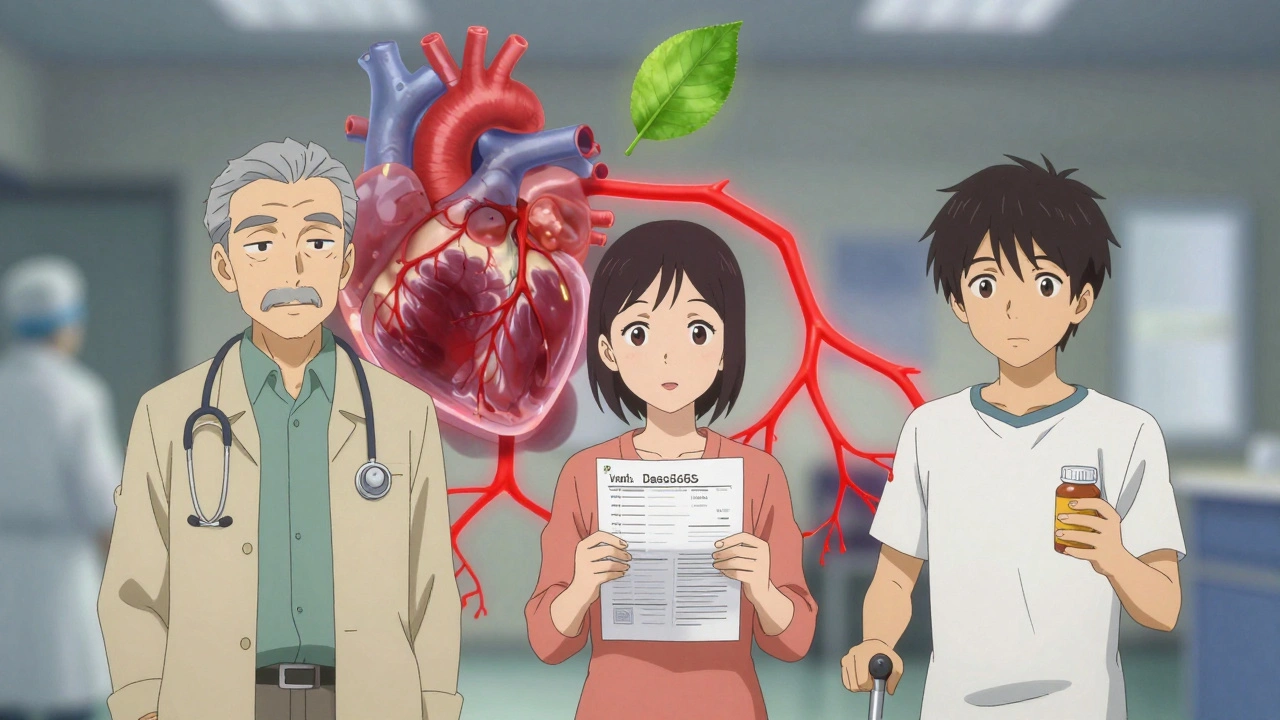
The Other Big Players: Blood Pressure, Cholesterol, and Sugar
These three are the silent assassins. You won’t feel them. But they’re doing damage every day. High blood pressure affects nearly half of American adults. When it’s uncontrolled, it increases your heart disease risk by 3 to 4 times. It’s like forcing your heart to run a marathon 24/7. Eventually, it gives out. Cholesterol? 94 million adults in the U.S. have levels too high. LDL above 130 mg/dL? That’s a 50% higher risk than if it’s under 100. And it’s not just about the number - it’s about inflammation. That’s why doctors now look at more than just LDL. They check HDL, triglycerides, and even CRP (a marker of inflammation). Diabetes is the worst of the trio. If you have it, your heart disease risk jumps 2 to 4 times. And here’s the kicker: 68% of people with diabetes over 65 die from heart disease, not kidney failure or nerve damage. The heart pays the price first. These aren’t separate issues. They feed each other. High blood pressure + high cholesterol + being overweight? That combo multiplies your risk. Not adds. Multiplies.It’s Not Just About You - It’s About Where You Live
Your zip code matters. The CDC found African Americans have a 30% higher death rate from heart disease than non-Hispanic whites. Mexican Americans, American Indians, and some Asian groups face higher risks too. Why? It’s not genetics alone. Access to healthy food, safe places to walk, stress from financial strain, lack of healthcare - these are social determinants. They’re not medical conditions. But they shape your risk more than you think. People in the lowest income groups have 2 to 3 times higher heart disease death rates than those in the highest. Air pollution is now officially a risk factor. A 10 μg/m³ increase in PM2.5 (tiny particles from traffic and factories) raises heart disease death risk by 10 to 15%. That’s not just a city problem. It’s everywhere.What Can You Actually Do?
You can’t change your age. You can’t rewrite your family tree. But you can change everything else. The American Heart Association says 80% of premature heart disease is preventable. That’s not a guess. It’s based on decades of data. Start here:- Quit smoking - now. Even if you’ve tried before. This time, get help. Medications, counseling, apps - they work.
- Move more. 150 minutes a week of brisk walking cuts risk by 30%. That’s 30 minutes, five days a week. No gym needed.
- Eat real food. Cut processed snacks, sugary drinks, and fried stuff. Focus on vegetables, beans, whole grains, fish, nuts. You don’t need to be perfect. Just better than before.
- Know your numbers. Get your blood pressure, cholesterol, and blood sugar checked yearly after 40. If you have family history, start in your 20s or 30s.
- Ask about statins. If your risk is high, a daily statin can cut your chance of a heart attack by 25 to 35%. It’s not a magic pill - but it’s a powerful tool when combined with lifestyle changes.

One Real Story
A 48-year-old man in Ohio had it all: dad had a heart attack at 51, he smoked a pack a day, his blood pressure was 150/95, he was 40 pounds overweight, and his cholesterol was sky-high. His 10-year heart disease risk? 18.2% - high risk. He quit smoking. Started walking 30 minutes a day. Cut out soda and fast food. Took a low-dose statin. Lost 35 pounds. Eighteen months later? His risk dropped to 6.3%. He’s not “cured.” But he’s no longer on the path to disaster.Bottom Line
Heart disease isn’t inevitable. It’s not just for older men. It’s not just for people who “eat badly.” It’s the result of choices - some made over decades, some made yesterday. You can’t control your genes or your age. But you can control whether you smoke. You can control how much you move. You can control what’s on your plate. You can control whether you get checked. The next 10 years of your heart? That’s still yours to write.Can you have heart disease with no symptoms?
Yes. Many people have silent heart disease - especially those with diabetes. Damage can build for years without chest pain or shortness of breath. That’s why regular checkups and knowing your numbers are so important. A routine blood pressure or cholesterol test can catch problems before they become emergencies.
Is family history the same as genetics?
Not exactly. Family history means your relatives had heart disease - which could be due to shared genes, shared habits (like diet or smoking), or both. Genetics play a big role - up to 60% of risk variation comes from inherited traits. But even with strong family history, lifestyle changes can cut your risk by 50% or more. It’s not a sentence - it’s a warning.
How soon after quitting smoking does heart risk drop?
Within 24 hours, your heart rate and blood pressure begin to normalize. After one year, your risk of heart disease drops by half. After 15 years, it’s nearly the same as someone who never smoked. The healing starts immediately - you don’t have to wait years to see benefits.
Do I need a stress test if I have risk factors?
Not automatically. Most guidelines don’t recommend routine stress tests for people without symptoms, even with risk factors. Instead, doctors use risk calculators - like the Pooled Cohort Equations - that combine age, cholesterol, blood pressure, smoking, and diabetes status to estimate your 10-year risk. If it’s high, they may recommend statins or more frequent monitoring, not a stress test.
Can diet alone lower heart disease risk without medication?
Yes - but it depends. For many people, switching to a whole-food, plant-heavy diet can lower LDL cholesterol by 20-30% and reduce blood pressure significantly. That’s enough to drop risk from high to moderate. But if your genetic risk is high - like with familial hypercholesterolemia - diet alone won’t be enough. Medication is often needed. The goal isn’t to choose between diet and pills - it’s to use both.
Are heart disease risk factors different for women?
The core risks are the same - smoking, high blood pressure, cholesterol, diabetes, obesity. But women face unique triggers. Pregnancy complications like preeclampsia or gestational diabetes raise long-term risk. Autoimmune diseases like lupus are more common in women and increase heart disease risk. And after menopause, the drop in estrogen removes a protective layer. Women also tend to have different symptoms - not always chest pain - which can lead to delayed diagnosis.
Ethan McIvor
December 3, 2025 AT 02:26Man, this hit different. I lost my dad at 56 to a silent heart attack. No warning. Just... gone. I’m 49 now. Started walking every morning. Cut out the soda. Took the statin. Feels like I’m fighting ghosts, but better than burying someone else. ❤️
Mindy Bilotta
December 4, 2025 AT 00:14my mom had a heart attack at 58 and we had no clue she was even at risk. now i get my cholestrol checked every year like clockwork. dont wait til you feel somethin. its already too late. 🙏
Michael Bene
December 4, 2025 AT 22:27Let me stop you right there. You think quitting smoking cuts risk by half? Please. The real hero is statins. That’s the nuclear option. Smoking’s just the appetizer. The real silent killer is insulin resistance disguised as ‘normal cholesterol.’ And don’t even get me started on how the AHA ignores gut microbiome inflammation. You’re all playing checkers while the real game’s chess. 😎
Brian Perry
December 5, 2025 AT 16:11so i quit smoking last year and now my wife says i smell like a pine forest?? i mean… i dont know if that’s a win or if shes just being nice. also i think my heart is beating louder now?? is that normal?? 🤔
Katherine Gianelli
December 7, 2025 AT 03:04you’re not behind if you’re just starting. you’re right on time. one walk. one less soda. one chat with your doc. that’s enough. you’re already doing better than 90% of people who read this and scrolled past. i believe in you. 💪
Joykrishna Banerjee
December 8, 2025 AT 04:59As a PhD in cardiovascular epigenetics from Cambridge, I must clarify: the Framingham data is obsolete. Modern polygenic risk scores (PRS) with GWAS-derived SNP panels demonstrate that 78% of risk variance is attributable to non-modifiable loci on chr9p21. Lifestyle interventions are statistically negligible unless your LDL exceeds 190 mg/dL with heterozygous FH. Also, air pollution is a distraction. The real issue? Glyphosate-induced endothelial dysfunction. 🧪
Myson Jones
December 8, 2025 AT 22:39Just wanted to say thank you for writing this. I’m 62, had a stent last year, and I’m trying to do better. It’s hard. But reading this made me feel like I’m not alone in the mess. I appreciate the honesty. No fluff. Just facts. That’s rare these days.
parth pandya
December 9, 2025 AT 13:14my uncle died at 47 from heart attack. he was vegan. so what does that mean? maybe its not diet. maybe its stress. or maybe its just bad luck. i dont trust doctors anymore. i check my pulse every day. that’s my only medicine.
Albert Essel
December 9, 2025 AT 21:37I’ve read dozens of articles on heart disease. This is the first one that didn’t feel like a sales pitch for pharmaceuticals or a guilt trip. The tone, the data, the balance - it’s refreshing. Especially the part about zip codes and social determinants. That’s the real public health crisis. Thank you.
Charles Moore
December 10, 2025 AT 07:09My mom had a heart attack at 54. I’m 38 now. I got my first lipid panel last month. LDL was 145. I started walking. I’m cutting sugar. I’m not trying to be perfect. Just better than yesterday. And I’m not ashamed to say I’m scared. But I’m acting. That’s what matters.
Archie singh
December 11, 2025 AT 05:43Everyone’s so obsessed with smoking and statins. But nobody talks about the real enemy: government propaganda. The FDA and AHA are in bed with Big Pharma. You think they want you healthy? No. They want you dependent. Your ‘risk’ is a product. Wake up.
Albert Essel
December 11, 2025 AT 17:10Gene, your conspiracy theories are doing more harm than cigarettes. If you’re scared of statins, fine. But don’t mislead people who actually need them. My brother had a heart attack at 41. He’s alive today because he took his meds and changed his diet. Not because he ‘woke up’ to some Instagram doctor.