
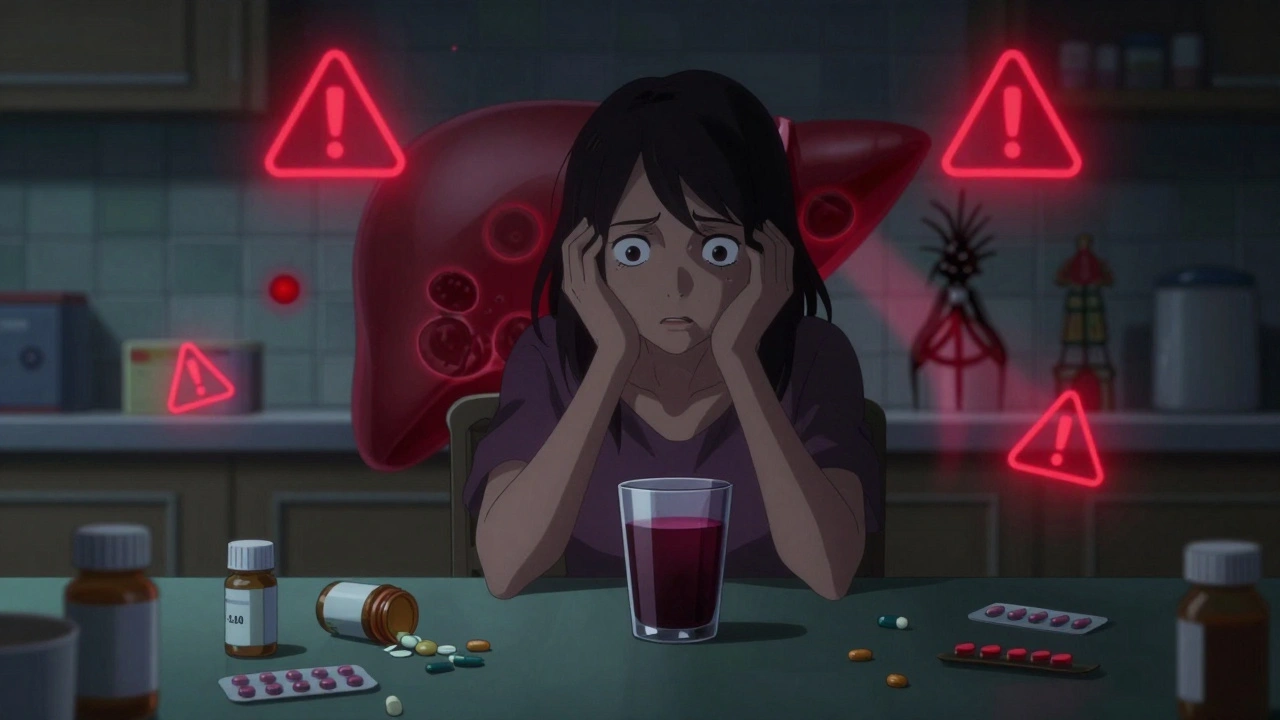
Many people turn to kava for anxiety relief, drawn by its reputation as a natural alternative to prescription anti-anxiety meds. But here’s the hard truth: kava isn’t harmless, especially when mixed with other drugs. If you’re taking anything for sleep, blood pressure, depression, or even pain, combining it with kava could put your liver at serious risk.
What Exactly Is Kava?
Kava comes from the roots of Piper methysticum, a plant native to Pacific islands like Fiji, Vanuatu, and Samoa. For over 3,000 years, people there have prepared it as a ceremonial drink using cold water to extract the active compounds-kavalactones. These compounds calm the nervous system without causing addiction, which is why kava gained traction in the U.S. and Europe as a herbal remedy for stress and insomnia.
But there’s a big difference between traditional kava and what you find on a store shelf today. Most commercial supplements use alcohol or acetone to pull out kavalactones faster. These “organic extracts” are far more dangerous than the water-based versions used in the Pacific. Studies show nearly all documented cases of liver damage came from these solvent-based products, not traditional preparations.
Why Kava Can Hurt Your Liver
Kava doesn’t just relax you-it interferes with your liver’s ability to process chemicals. It blocks key enzymes called cytochrome P450 (CYP3A4, CYP2C9, CYP2C19), which are responsible for breaking down about 80% of all prescription drugs. When these enzymes are suppressed, medications build up in your system, increasing toxicity.
On top of that, kava depletes glutathione, your liver’s main antioxidant. Without enough glutathione, your liver can’t defend itself against toxins. The result? Liver cells start dying. In extreme cases, this leads to acute liver failure.
A documented case from UCLA Health involved a patient taking 240 mg of kavalactones daily along with birth control pills, a migraine med, and acetaminophen. Within 17 weeks, their liver enzymes skyrocketed: ALT jumped from normal levels (<17 U/L) to over 2,400 U/L. Bilirubin hit 40 mg/dL (normal is under 1.2). They needed a liver transplant.
Medications That Are Especially Dangerous with Kava
If you’re on any of these, don’t take kava-even if you feel fine.
- Antidepressants (SSRIs, SNRIs, tricyclics): Kava increases sedation and raises risk of serotonin syndrome.
- Anxiolytics (benzodiazepines like Xanax or Valium): Combining them with kava can cause extreme drowsiness, slowed breathing, or coma.
- Painkillers (acetaminophen, NSAIDs): Both kava and these drugs stress the liver. Together, they’re a recipe for damage.
- Blood pressure meds (beta-blockers, ACE inhibitors): Kava can lower blood pressure further, causing dizziness or fainting.
- Anticoagulants (warfarin, aspirin): Kava may interfere with clotting, increasing bleeding risk.
- Birth control pills: Estrogen-containing contraceptives are linked to higher liver injury rates when taken with kava.
- Antifungals and antibiotics (ketoconazole, erythromycin): These are already hard on the liver. Kava makes it worse.
The FDA and WHO both warn that kava’s interaction risk isn’t theoretical-it’s been proven in real patients. One German study found 26 cases of liver injury linked to kava, and 24 of those involved people who were also taking other medications.

Who’s at Highest Risk?
Not everyone who takes kava gets hurt. But certain factors make liver damage far more likely:
- Using alcohol-based extracts: These are the most toxic. Stick to water-extracted kava if you insist on using it.
- High doses: Anything over 250 mg of kavalactones per day increases risk.
- Pre-existing liver disease: Hepatitis, fatty liver, or even past alcohol use makes your liver more vulnerable.
- Genetic differences: Some people naturally have slower CYP enzyme activity. They’re more sensitive to kava’s effects.
- Long-term use: Taking kava for more than 4 weeks raises the chance of damage.
One study of 171 people found liver enzyme abnormalities were twice as common in those taking kava compared to placebo-even without other medications. That’s not a fluke. It’s a signal.
What If You’ve Already Taken Kava With Medications?
If you’ve been mixing kava with your prescriptions, stop immediately. Don’t wait for symptoms. Liver damage can happen silently.
Get a simple blood test: ALT and AST levels. If they’re elevated-even slightly-your liver is under stress. Jaundice (yellow skin or eyes), dark urine, nausea, or unexplained fatigue are red flags. Don’t ignore them.
Case reports show that in many patients, liver function returned to normal after stopping kava. But if damage is advanced, transplant may be the only option. Eleven people in the U.S. alone required liver transplants due to kava-induced injury between 1998 and 2002.
What About Natural or “Safe” Kava?
Some sellers claim their kava is “pure,” “organic,” or “traditional.” That doesn’t mean it’s safe. Even water-extracted kava has been linked to liver issues in rare cases. The FDA and WHO don’t consider any form of kava safe for long-term use, especially with medications.
And here’s the catch: supplements aren’t regulated like drugs. There’s no guarantee what’s in the bottle. One brand might contain 100 mg of kavalactones; another might have 280 mg-and no label says which. You’re guessing.

Alternatives to Kava for Anxiety
If you’re using kava for stress or anxiety, there are safer options:
- Therapy: CBT (cognitive behavioral therapy) is proven to reduce anxiety without side effects.
- Exercise: Just 30 minutes of walking daily lowers cortisol and boosts mood.
- Magnesium glycinate: Helps calm the nervous system with no liver risk.
- L-theanine: Found in green tea, it promotes relaxation without sedation.
- Prescription alternatives: If your anxiety is severe, talk to your doctor about SSRIs or buspirone-they’re monitored, tested, and regulated.
None of these carry the same risk profile as kava. None have caused liver transplants.
What Should You Do?
If you’re taking any medication and considering kava: don’t.
If you’re already using it:
- Stop immediately.
- Get a liver panel (ALT, AST, bilirubin, ALP) from your doctor.
- Tell your doctor you’ve been taking kava-even if you think it’s “just a herb.”
- Don’t restart it, even if you feel better.
There’s no safe dose of kava if you’re on other meds. No amount of “natural” makes it risk-free. The science is clear: kava + medications = liver danger.
Can kava cause liver damage even without other medications?
Yes. While interactions with other drugs greatly increase the risk, cases of liver injury from kava alone have been documented. The FDA and WHO have both confirmed that kava itself can cause hepatotoxicity, especially with prolonged use or high doses. Even water-extracted kava has been linked to rare but serious liver damage.
Is there a safe type of kava supplement?
There is no proven safe form of kava supplement. Water-based extracts are considered less risky than alcohol-based ones, but they still carry danger. The World Health Organization and FDA do not endorse any kava product as safe for long-term use. No supplement is regulated for purity or dosage, so even “traditional” products may contain harmful contaminants or inconsistent kavalactone levels.
How long does it take for kava to damage the liver?
Liver damage can appear as early as 2-4 weeks after starting kava, but in many documented cases, symptoms began between 8 and 16 weeks. Some people develop severe injury after just a few months. There’s no way to predict who will be affected, which is why avoiding kava entirely is the only safe choice if you’re on other medications.
Should I get my liver tested if I’ve taken kava in the past?
Yes, if you’ve taken kava within the last year-especially if you used it regularly or combined it with other drugs. A simple blood test for ALT, AST, and bilirubin can detect early liver stress. Many people have no symptoms until damage is advanced. Testing is the only way to know if your liver is affected.
Why is kava still sold if it’s so dangerous?
In the U.S., kava is sold as a dietary supplement, which means it’s not reviewed or approved by the FDA before being sold. The FDA has issued warnings since 2002, but it cannot ban supplements without conclusive proof of harm in a large population-which is hard to prove due to inconsistent reporting. Meanwhile, the global kava market is worth over $1 billion, and consumer demand remains high despite known risks.
Final Thought
Kava might seem like a gentle, natural fix for stress. But nature doesn’t mean safe. When it comes to your liver, there’s no room for guesswork. If you’re on medication, kava isn’t worth the risk. There are better, proven ways to manage anxiety-without putting your health on the line.


Paul Dixon
December 12, 2025 AT 03:43Ive been taking kava for months now for anxiety and honestly never thought twice about it until this post. My doctor never mentioned risks, and I just assumed natural = safe. Kinda scary to realize I might be cooking my liver slowly.
Im switching to chamomile tea from now on. No drama, no liver stress.
Sylvia Frenzel
December 12, 2025 AT 18:49So now were blaming herbal supplements for the broken healthcare system? If you cant handle mixing meds with anything, maybe dont take so many pills in the first place. Kava has been used for millennia. Its the pharmaceutical industry that wants you scared so you keep buying their overpriced SSRIs.
matthew dendle
December 13, 2025 AT 04:11lol kava kills livers yeah right next thing youll say is water gives you kidney stones
everyone knows the real problem is american supplement companies cutting corners with chemicals
traditional kava from fiji? totally fine
your bottle from walmart? thats your problem not kavas
Monica Evan
December 14, 2025 AT 11:30As someone who lived in Vanuatu for two years, I can tell you the ceremonial kava is nothing like what you buy in capsules. They use only noble kava root, cold water, and strain it through cloth. No alcohol, no acetone, no shortcuts.
Most liver cases? From cheap extracts made with stems or leaves - which are toxic. Even the FDA admits this. The real issue is regulation, not the plant itself.
If you want to try it, find a reputable source that labels the kava variety and extraction method. Not all kava is created equal.
Courtney Blake
December 15, 2025 AT 12:28Of course you’re telling people to avoid kava. Because the pharmaceutical industry owns your brain. You think your liver is safe because you take 12 different prescriptions? Those are the real silent killers. Kava’s been around for 3000 years. Your statins? 40. Who’s the experiment here?
Lisa Stringfellow
December 16, 2025 AT 22:55I took kava for six months and my ALT went from 28 to 187. I didn’t even know it was possible to feel that awful - fatigue, jaundice, nausea. My doctor said it was the only case he’d seen in five years. But it happened. And now I’m on a liver transplant list.
Don’t listen to the ‘natural is safe’ crowd. Your liver doesn’t care if it’s from a plant or a lab.
Jim Irish
December 17, 2025 AT 02:44Traditional preparation is key. Solvent extracts are the problem. The science is clear.
Many users report benefits without side effects when using water-based noble kava.
Education matters more than prohibition.
Mia Kingsley
December 18, 2025 AT 17:16Wait so you’re saying kava is dangerous but Xanax isn’t? LOL
Have you seen how many people OD on benzos? Or how many die from alcohol withdrawal? But sure lets ban a plant because one guy mixed it with tylenol and birth control
Next you’ll ban mushrooms because someone ate the wrong kind
Wake up people
Katherine Liu-Bevan
December 20, 2025 AT 04:53Monica Evan’s comment is spot on. The real danger is unregulated commercial products. Kava root, properly prepared, has a long safety record. The issue isn’t kava - it’s profit-driven extraction methods and lack of labeling standards. The FDA has issued warnings specifically about acetone and ethanol extracts. If you’re using a reputable supplier that uses water extraction and noble kava cultivars, risk is minimal. Always check the source. Don’t assume all kava is the same.