Triptan Suitability & Timing Checker
Patient Profile
Analysis & Recommendations
Quick Guide: Triptan Essentials
- Purpose: First-line treatment for moderate to severe acute migraine attacks.
- Key Risk: High risk for people with heart disease or uncontrolled high blood pressure.
- Main Interaction: Potential for Serotonin Syndrome when mixed with certain antidepressants.
- Timing: Most effective when taken at the start of the pain, not during the aura phase.
- Limitation: About 20% of users do not respond to any triptan medication.
What Exactly Are Triptans?
In the medical world, Triptans is a class of selective serotonin (5-HT) receptor agonists specifically designed to stop migraine attacks in their tracks. They were a game-changer when sumatriptan hit the market in 1991, moving migraine care away from generic sedatives and toward targeted therapy.
These drugs work by hitting two specific targets: the 5-HT1B and 5-HT1D receptors. Think of it as a two-pronged attack. First, they shrink the swollen blood vessels in your brain that cause that pulsing pain. Second, they block the release of inflammatory proteins, like Calcitonin Gene-Related Peptide (CGRP), which basically tell your brain "this hurts!"
There are seven FDA-approved versions, all ending in "-triptan." Depending on how your body processes medicine, one might work better for you than another. For instance, Frovatriptan stays in your system for a long time (a 26-hour half-life), making it great for long-lasting migraines, whereas Rizatriptan works faster but wears off sooner.
The Danger Zone: Critical Interactions
Because triptans mimic serotonin, they can clash with other drugs that also affect serotonin levels. The biggest concern is Triptan Interactions with antidepressants. If you take SSRIs (Selective Serotonin Reuptake Inhibitors) or SNRIs (Serotonin-Norepinephrine Reuptake Inhibitors), your brain can end up with too much serotonin.
This can lead to a rare but serious condition called Serotonin Syndrome. You might feel agitated, develop a fever, or experience shivering and tremors. While these cases are rare, it's something you must discuss with your doctor before starting a triptan regimen.
| Medication | Typical Half-Life | Key Attribute | Best For... |
|---|---|---|---|
| Sumatriptan | 2 hours | The original gold standard | General acute relief |
| Rizatriptan | 2-2.5 hours | Higher bioavailability | Fast-acting needs |
| Frovatriptan | 26 hours | Longest duration | Preventing recurrence |
| Zolmitriptan | 2.5-3 hours | Available as nasal spray | Nausea-heavy migraines |
Who Should Avoid Triptans?
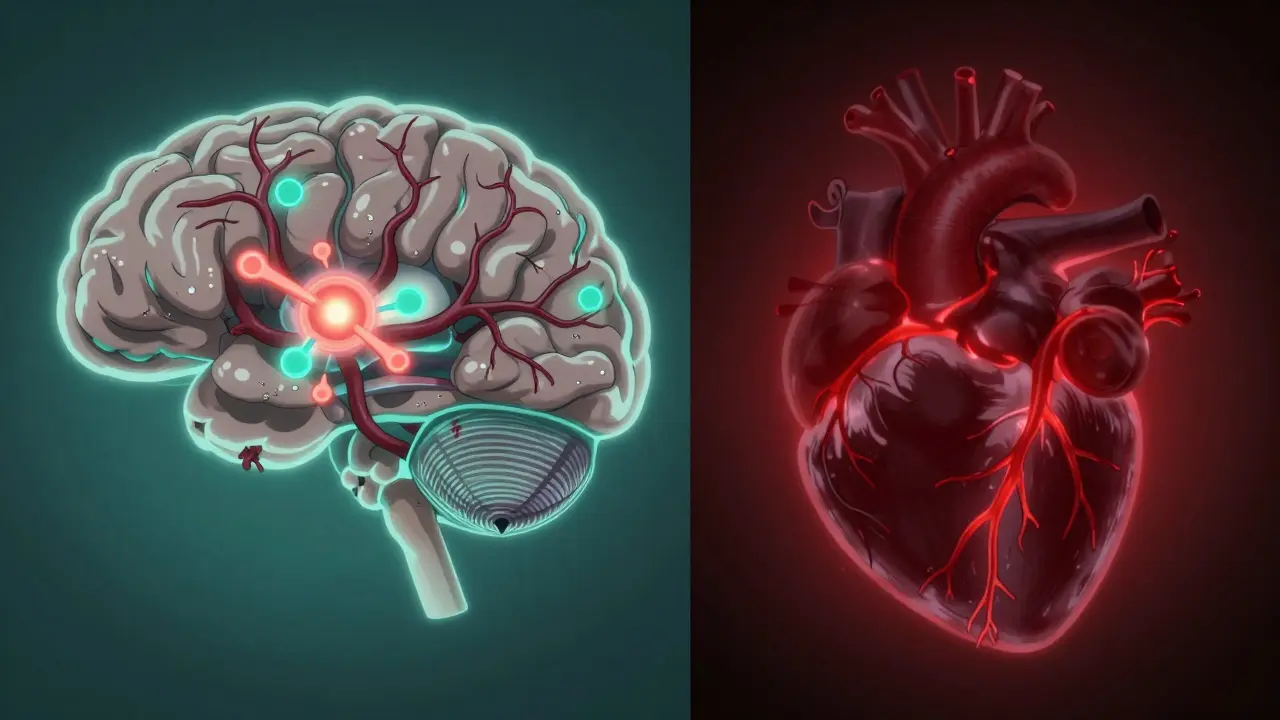
Triptans are not safe for everyone. Because they cause blood vessels to constrict (vasoconstriction), they are a no-go for anyone with a history of "plumbing issues" in their arteries. If you have Ischemic Heart Disease, a history of heart attack, or stroke, triptans can be dangerous.
Uncontrolled high blood pressure is another red flag. Forcing your blood vessels to tighten when your pressure is already spiking can put an immense strain on your cardiovascular system. Similarly, people with severe liver impairment should be cautious, as the liver is responsible for breaking down these medications.
Why Your Triptan Might Not Be Working
Ever felt like your medication is just a sugar pill? You aren't alone. About 30% to 40% of people don't get a great response from the first triptan they try. Here are the three most common reasons why:
- Bad Timing: Many people take their meds during the "aura" phase (the flashing lights or tingling before the pain). Research shows this is a mistake. Blood vessels are actually constricted during the aura; they dilate when the pain starts. Taking a vasoconstrictor too early can actually make things worse. Wait for the pain to kick in.
- Skin Sensitivity: There is a phenomenon called cutaneous allodynia-where your skin feels painful to the touch. If you have this, triptans are significantly less effective. Effectiveness drops from around 80% in people without skin sensitivity to only 30-40% in those who have it.
- The Wrong Match: Just because Sumatriptan didn't work doesn't mean you're "triptan-resistant." Because each drug has a slightly different receptor selectivity and absorption rate, switching to a different triptan often works. In fact, 30-40% of non-responders to one drug find success with another.

Side Effects and the "Triptan Trap"
Triptans aren't without their quirks. A common complaint is a strange feeling of chest or throat tightness. While usually harmless, it can be scary the first time it happens. Dizziness and fatigue are also common, affecting up to 10% of users.
The real danger, however, is the "Triptan Trap," known medically as Medication Overuse Headache. If you use these drugs too often-typically more than two doses a day or too many days a month-your brain becomes sensitized. You end up in a cycle where the medication that stops the migraine actually triggers the next one.
To avoid this, guidelines suggest a minimum 2-hour gap between doses and a strict limit on how many days per week you use them. If you find yourself reaching for a triptan more than twice a week, it's time to talk to your doctor about preventative therapy instead of just treating the acute attack.
Modern Alternatives: What's Next?
For those who can't use triptans due to heart issues or lack of efficacy, the medical world has evolved. We now have Gepants (CGRP receptor antagonists) and Ditans. Unlike triptans, these do not cause vasoconstriction, making them safe for people with cardiovascular risks.
Combination therapy is also gaining traction. Mixing a triptan with an NSAID (like naproxen) has shown better results than using either alone. For example, a combination of sumatriptan and naproxen has a higher rate of producing a pain-free state within two hours compared to just taking one of the two drugs.
Can I take a triptan if I have high blood pressure?
Only if your blood pressure is well-controlled. Triptans cause blood vessels to narrow, which can dangerously increase blood pressure in people with uncontrolled hypertension. Always check with your doctor first.
When is the best time to take a triptan?
The best time is at the very onset of the headache pain. Taking them during the aura phase (before the pain starts) is generally less effective and can sometimes worsen neurological symptoms.
What happens if I take a triptan and an SSRI together?
While many people do this safely, there is a theoretical risk of Serotonin Syndrome, where serotonin levels become dangerously high. Symptoms include agitation, rapid heart rate, and muscle rigidity. If you notice these, seek medical help immediately.
Why did my triptan work before but not now?
This could be due to a few things: you might be experiencing medication overuse headache (rebound headaches), you might have developed cutaneous allodynia (skin sensitivity), or the nature of your migraines may have changed.
Are there any triptans that are better for long migraines?
Frovatriptan is often preferred for longer attacks because it has a much longer half-life (about 26 hours), which helps prevent the headache from coming back as quickly as it might with short-acting options like sumatriptan.
Next Steps for Better Relief
If you're struggling with your current migraine routine, try keeping a headache diary. Note exactly when the pain starts, when you took your medication, and whether you had any skin sensitivity. This data is gold for your doctor.
If you have heart risk factors, ask your provider about Lasmiditan (a ditan) or gepants, as these avoid the vasoconstriction issues entirely. And remember, if you're using triptans more than 10 days a month, you're no longer treating attacks-you're likely fueling a cycle of chronic pain that requires a different approach.