
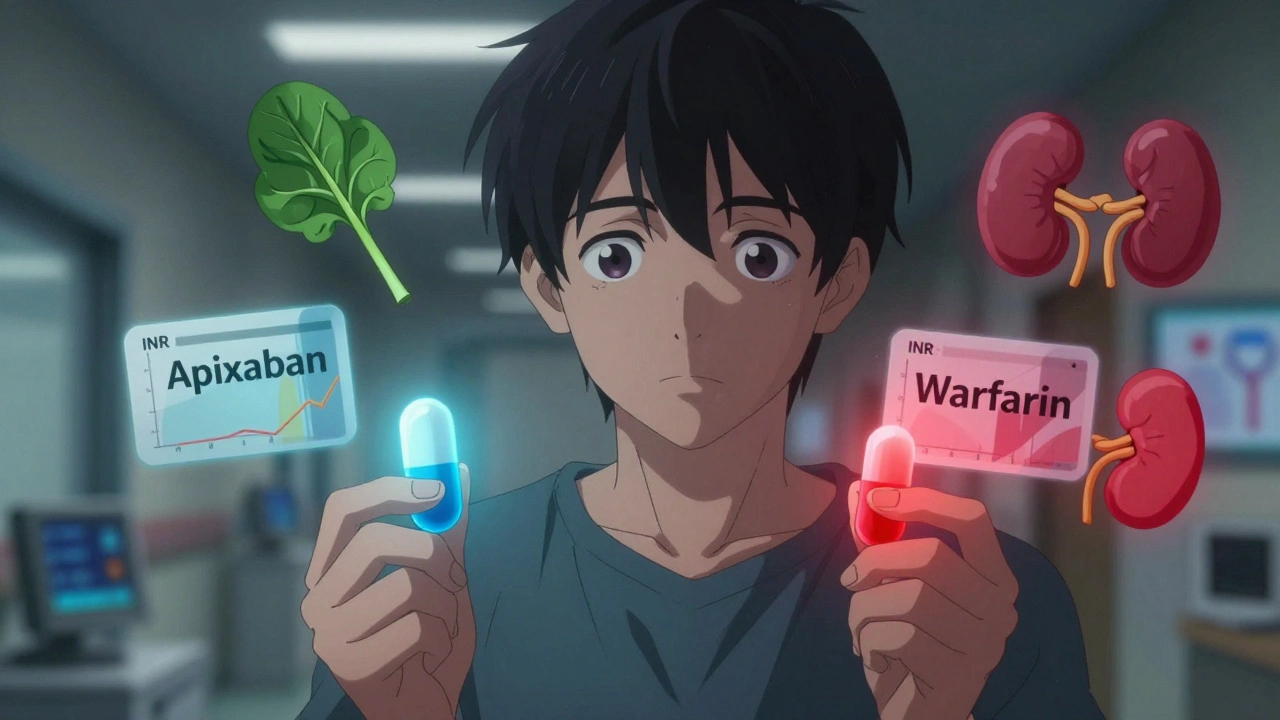
When you're on a blood thinner, the goal is simple: prevent clots without causing a bleed. But choosing between warfarin and the newer direct oral anticoagulants (DOACs) isn't just about picking a pill. It's about understanding your body, your lifestyle, and the real risks behind each option. In 2025, most doctors start patients on DOACs like apixaban or rivaroxaban - not because they're flashy, but because the data shows they're safer for most people. Still, warfarin hasn't disappeared. For some, it's the only option that works. Here’s what actually matters when comparing their safety profiles.
Why DOACs Are Now the First Choice
Since 2010, DOACs like apixaban, rivaroxaban, dabigatran, and edoxaban have replaced warfarin as the go-to for atrial fibrillation and deep vein thrombosis. Why? Because they work better and cause fewer dangerous bleeds. A 2023 study in JAMA Network Open found that patients on DOACs had 34% fewer recurrent clots than those on warfarin. Even more telling - intracranial bleeding (bleeding in the brain) dropped by about 50%. DOACs don’t need regular blood tests. You don’t have to worry about eating spinach or kale. You don’t need to adjust your dose based on an INR number. That’s not just convenient - it’s life-changing. A 2023 survey of over 1,200 patients showed 89% preferred DOACs because of fewer dietary restrictions, and 82% said they didn’t have to constantly schedule blood draws. The numbers back it up. In the U.S., DOACs made up 78% of all anticoagulant prescriptions in mid-2023. Apixaban alone accounted for nearly 4 out of every 10 prescriptions. That’s not marketing. That’s real-world experience.Where Warfarin Still Holds Ground
Don’t write warfarin off just yet. It’s still the only anticoagulant approved for people with mechanical heart valves. DOACs can cause deadly clots in these patients - no exceptions. If you have a mechanical mitral or aortic valve, warfarin is your only safe option. It’s also the standard for severe kidney failure. When your eGFR drops below 15 mL/min/1.73 m², most DOACs aren’t cleared from your body properly. Warfarin doesn’t rely on the kidneys the same way. For dialysis patients, warfarin remains the default, even though newer studies suggest some DOACs may be safer than we thought. And then there’s cost. Warfarin costs about $4.27 for a 30-day supply. Apixaban? Around $587. Rivaroxaban? $523. Even with insurance, many patients pay hundreds out of pocket. For someone on a fixed income, that gap can mean skipping doses - which is far riskier than sticking with warfarin.The Real Safety Differences
It’s not just about which drug causes fewer bleeds. It’s about what kind of bleeds. DOACs reduce the risk of life-threatening brain bleeds - the kind that cause strokes or death. Warfarin, with its unpredictable effects, is more likely to cause these. But DOACs aren’t magic. They still carry a risk of gastrointestinal bleeding, especially in older adults or those with ulcers. Apixaban has the lowest bleeding risk among DOACs. A 2022 study in Blood Advances showed apixaban caused 25% fewer major bleeds than rivaroxaban. If you’re over 75, have low body weight, or are on other medications that affect bleeding, apixaban is often the safest pick. Dabigatran, on the other hand, has the lowest rate of recurrent clots. If you’ve had a second blood clot after stopping treatment, dabigatran might be the better choice to prevent another. Warfarin’s biggest safety flaw? It’s too easy to get out of range. Your INR can swing because of antibiotics, vitamins, even a change in your coffee routine. Studies show only 65% of warfarin users stay in the therapeutic range most of the time. That’s why 35% of users end up with either a clot or a bleed - not because the drug failed, but because they couldn’t manage it.
Renal Function Changes Everything
Your kidneys matter. A lot. Dabigatran is cleared 80% by the kidneys. If your eGFR drops below 30, you need a lower dose - or to switch. Edoxaban and rivaroxaban are about half cleared by the kidneys. Apixaban? Only 27%. That’s why apixaban is often chosen for older patients with mild kidney decline. But here’s the twist: a 2023 study found that DOACs were still safer than warfarin even in patients with eGFR as low as 25 mL/min. Below that? The data gets shaky. For patients on dialysis, guidelines still lean toward warfarin - but new research is challenging that. One 2023 study showed DOACs reduced bleeding risk by 29% in advanced kidney disease patients with atrial fibrillation. That’s a big deal.Adherence: The Hidden Safety Factor
You can have the safest drug in the world - but if you don’t take it, it won’t help. DOACs win here too. A 2023 study in the American Journal of Managed Care found that patients on DOACs were 32% more likely to take their medication consistently than those on warfarin. For people under 45, the difference jumped to 41%. Why? Because DOACs are simpler. One pill, once or twice a day. No blood tests. No food rules. Warfarin requires discipline. Miss a dose? You’re at risk. Take too much? You’re bleeding. It’s a tightrope walk - and many people fall off. That’s why adherence rates for warfarin are so low. It’s not about willpower. It’s about design.
Reversing the Effects - When Things Go Wrong
Accidents happen. Falls, surgeries, emergencies. What if you need to stop the blood thinner fast? Warfarin can be reversed with vitamin K and fresh frozen plasma. It takes hours to work. DOACs have specific antidotes now. Idarucizumab (Praxbind®) reverses dabigatran in minutes. Andexanet alfa (Andexxa®) reverses apixaban and rivaroxaban. These aren’t available everywhere, but they’re in most major hospitals. That’s a huge upgrade from 10 years ago. Still, reversal agents are expensive. And they’re not always needed. Most DOACs clear from your system in 12-24 hours. If you’re not bleeding badly, sometimes waiting it out is safer than reversing.What Should You Do?
If you’re starting anticoagulation:- Ask if you have a mechanical heart valve or severe kidney failure. If yes, warfarin is likely your only option.
- If you’re younger, have mild kidney issues, or struggle with diet and blood tests, DOACs are almost always better.
- Apixaban is the safest DOAC for bleeding risk. Dabigatran is best if you’ve had recurrent clots.
- Don’t choose based on cost alone. Skipping warfarin doses because of monitoring stress is more dangerous than paying for DOACs.
- Ask your doctor about your kidney function (eGFR) and drug interactions. Many common meds - like NSAIDs or certain antibiotics - can raise bleeding risk with either drug.
- Don’t switch unless there’s a clear reason - like frequent INR swings or bleeding.
- If you’re struggling with diet or monitoring, talk to your doctor about switching to apixaban. Many patients transition smoothly.



Jordan Wall
December 3, 2025 AT 04:27Let’s be real-DOACs are the pinnacle of pharmaceutical elegance. Warfarin? A medieval relic with INR swings like a pendulum in a hurricane. I’ve seen patients on warfarin get their INR checked so often, their GP’s office has a loyalty card. Meanwhile, apixaban? One pill, no spinach anxiety, no blood draws. It’s not just better-it’s a civilizational upgrade. 🍃🩸
Gareth Storer
December 5, 2025 AT 00:05Oh wow, another ‘DOACs are magic’ manifesto. So what, we just ignore the fact that half the people on them forget to take it because ‘it’s so easy’? Then they fall, crack their skull, and the ER has to scramble for a $10k antidote that’s not even in their town. Warfarin’s ‘inconvenience’ keeps people accountable. You think your phone alarm is a substitute for discipline?
Pavan Kankala
December 6, 2025 AT 09:56They’re not choosing DOACs because they’re safer. They’re choosing them because Big Pharma paid every med rep, every conference speaker, every ‘independent’ guideline writer. The real data? Buried. The bleeding stats? Manipulated. And don’t get me started on the reversal agents-costing more than a used car. Wake up. This isn’t medicine. It’s a cash grab dressed in white coats.
Jessica Baydowicz
December 6, 2025 AT 11:36Y’all are overthinking this. If you’re scared of blood thinners, you’re not alone-but you’re not doomed. DOACs are like switching from a flip phone to a smartphone. Yeah, it’s pricier, but you stop stressing about every little thing. And if you’re on warfarin and it’s working? Don’t fix what ain’t broke. Just hug your doctor, ask questions, and breathe. You got this. 💪❤️
Yasmine Hajar
December 7, 2025 AT 07:57I’m a nurse who’s seen both sides. I had a 78-year-old grandma on warfarin who skipped her INR checks because she couldn’t afford the bus. She ended up with a stroke. Switched her to apixaban-she cried because she finally felt like she could live again. Cost? Yeah, it’s steep. But when you’re choosing between bleeding out and paying $20 a month co-pay? It’s not even a choice. This isn’t just medicine. It’s dignity.
Chase Brittingham
December 7, 2025 AT 18:37Interesting breakdown. I’d add that adherence isn’t just about convenience-it’s about cognitive load. Older adults managing 8 meds? Adding INR checks and dietary restrictions? That’s a recipe for error. DOACs reduce decision fatigue. That’s not marketing, that’s human-centered design. And honestly? If your doctor’s pushing warfarin without discussing kidney function or cost, find a new one.
Michael Feldstein
December 9, 2025 AT 00:31One thing I haven’t seen discussed much: what about patients who are allergic to DOAC ingredients? Or those with rare clotting disorders where warfarin’s mechanism still has unique benefits? The article’s great for the majority, but outliers matter too. I’ve got a cousin with antiphospholipid syndrome-DOACs failed her twice. Warfarin saved her life. Context is everything.
jagdish kumar
December 9, 2025 AT 14:02Life is a balance. Medicine is a mirror. We think we control our health. But the pill chooses us.
Dematteo Lasonya
December 10, 2025 AT 01:10Apixaban’s 27% renal clearance is a game changer for elderly patients with mild CKD. But I’ve seen providers skip checking eGFR before prescribing DOACs. That’s dangerous. Always confirm kidney function first. Also, NSAIDs + DOACs = bad news. Even ibuprofen. Read the label. Or ask your pharmacist. Seriously.
Gillian Watson
December 10, 2025 AT 03:49My uncle’s on warfarin. He’s 82. Lives alone. Pays $5 a month. No problems. He’s been stable for 7 years. Why change what works? New doesn’t mean better. Sometimes it just means more expensive.