
What Is Sleep Restriction Therapy?
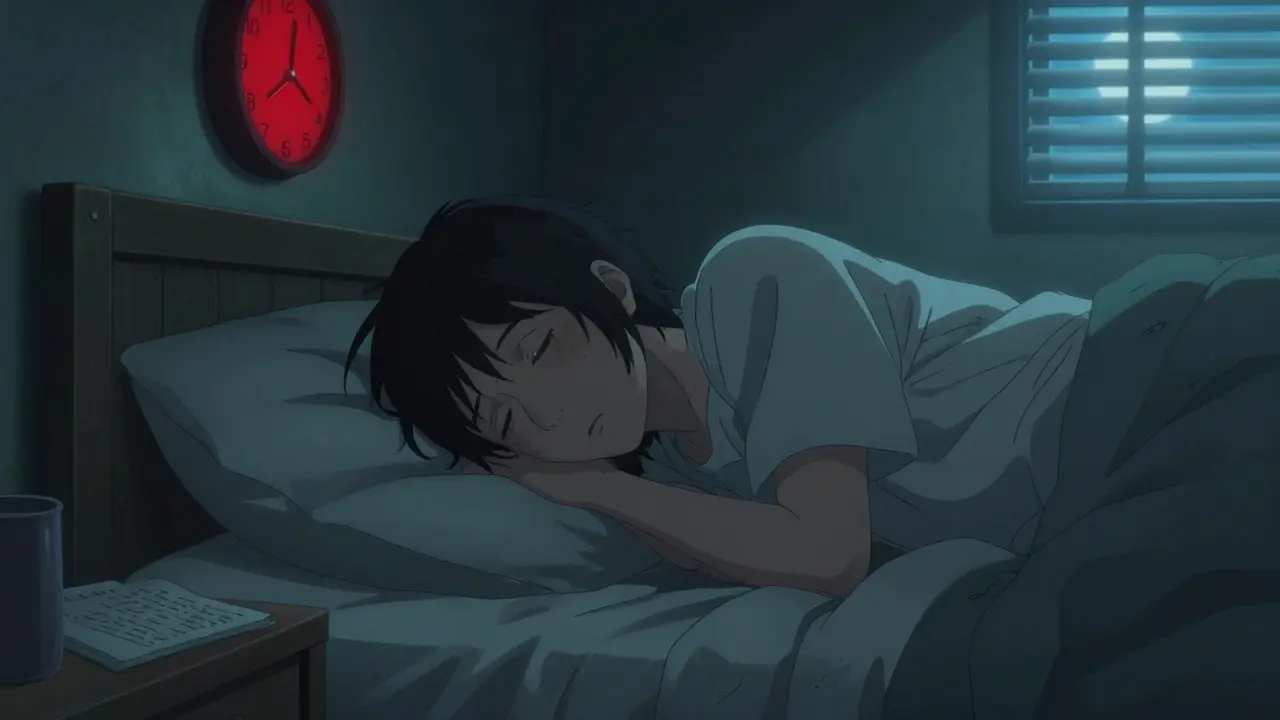
Sleep Restriction Therapy is a proven, non-drug method to fix chronic insomnia by cutting down the time you spend in bed to match how much you actually sleep. It’s not about sleeping less forever-it’s about resetting your body’s sleep clock. When you lie in bed for hours awake, your brain starts linking your bed with stress, not sleep. SRT breaks that cycle by making you sleep more efficiently in less time.
Developed by Dr. Arthur Spielman and now a core part of Cognitive Behavioral Therapy for Insomnia (CBT-I), SRT is backed by the American Academy of Sleep Medicine as a first-line treatment. Unlike sleeping pills, which lose effectiveness over time and cause dependency, SRT builds lasting changes. Studies show it improves sleep efficiency by 22-30% in most people, with 78% still sleeping better six months later.
How It Works: The Science Behind the Sleep Reset
Your body has a natural sleep drive-think of it like a battery that fills up the longer you’re awake. People with insomnia often spend 7-9 hours in bed but only sleep 5-6. That leaves too much time awake, weakening the sleep drive. SRT fixes this by forcing your body to build up that sleep pressure.
Here’s how: if you average 5.5 hours of sleep per night, your doctor or program will limit your time in bed to just 5.5 hours. You pick a consistent wake-up time (say, 6:30 a.m.) and only go to bed when you’ve been awake long enough to feel truly sleepy-likely around 1:00 a.m. No naps. No extra time in bed. Even if you’re tired during the day, you stick to the schedule.
As your sleep efficiency (the percentage of time in bed spent actually sleeping) climbs above 85-90% for three nights in a row, you get 15-30 minutes more time in bed. Slowly, you work your way up to 7-8 hours. The goal isn’t to sleep more hours-it’s to sleep better, faster, and stay asleep.
Step-by-Step: How to Start Sleep Restriction Therapy
- Track your sleep for 7 days. Use a sleep diary or app to record when you get into bed, when you fall asleep, when you wake up, and how many times you wake during the night. Don’t guess-write it down right away.
- Calculate your average total sleep time. Add up your sleep hours over the week and divide by 7. If you slept 5, 4.5, 6, 5.5, 5, 6, and 5 hours, your average is 5.3 hours.
- Set your initial time-in-bed limit. Round down to the nearest half-hour. In this case, you’d start with 5 hours in bed.
- Choose a fixed wake-up time. This is non-negotiable. Even on weekends. Your body needs consistency to rebuild its rhythm.
- Calculate your bedtime. If you wake at 6:30 a.m. and can only be in bed for 5 hours, your bedtime is 1:30 a.m.
- Stay out of bed unless you’re sleepy. No reading, no phone, no TV in bed. If you’re not asleep within 20 minutes, get up and go to another room until you feel drowsy.
- Wait for progress. Sleep efficiency will rise. You might feel tired at first-but that’s the point. After 1-3 weeks, you’ll start falling asleep faster and waking less.
- Gradually increase time in bed. Once your sleep efficiency hits 85-90% for three nights, add 15 minutes. Keep going until you’re sleeping 7-8 hours efficiently.
Why SRT Beats Sleeping Pills
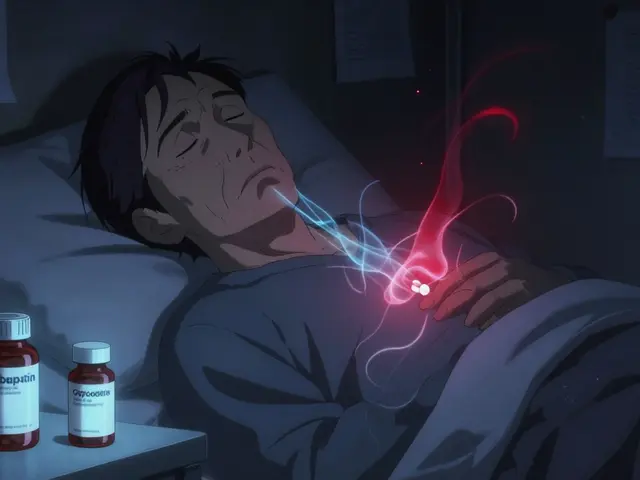
Medications like benzodiazepines or z-drugs might help you fall asleep faster in the short term, but they come with big downsides: dizziness, memory issues, dependence, and rebound insomnia when you stop. Studies show only 60-70% of users see improvement-and half of them relapse within months.
SRT, on the other hand, works differently. A 2023 meta-analysis found SRT improved sleep efficiency 47% more than basic sleep hygiene advice. In one study, postmenopausal women using SRT saw a 22.7% jump in sleep efficiency-double the gain from sleep meds. And the best part? The benefits keep growing. A 2023 study showed 68% of people who completed SRT still slept well a year later. Only 29% of those on pills did.
Doctors now recommend CBT-I (which includes SRT) as the first treatment for chronic insomnia. The American College of Physicians gives it a “strong recommendation.” It’s not just better-it’s the only treatment proven to last.
What to Expect in the First Few Weeks
Let’s be honest: the first 1-2 weeks are hard. You’ll feel tired. You might doze off at your desk or feel irritable. That’s normal. SRT isn’t about feeling rested-it’s about rebuilding your sleep drive. Think of it like physical therapy after an injury: it hurts at first, but you get stronger.
Most people report:
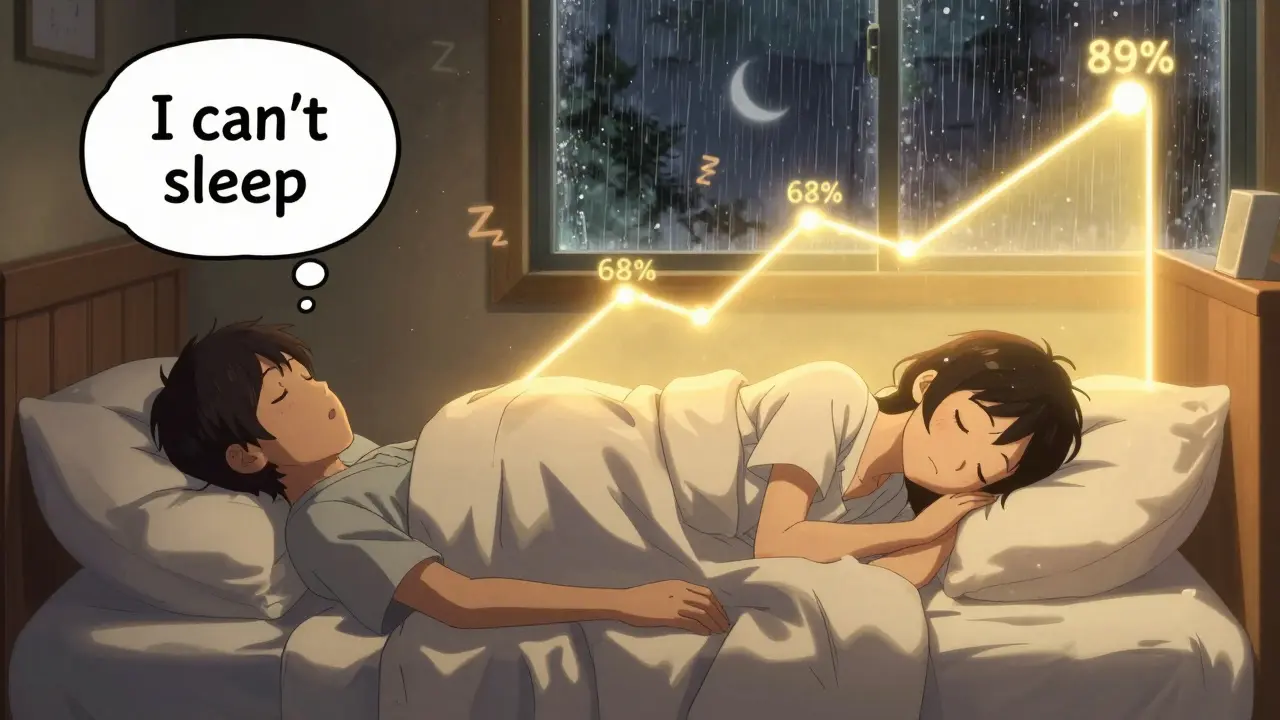
- Daytime sleepiness in week 1-2 (68% of users)
- Faster sleep onset by week 3 (falling asleep in under 15 minutes instead of 60+)
- Fewer nighttime awakenings
- More deep, restorative sleep
One Reddit user, SleepSeeker89, wrote: “After 3 weeks of strict SRT, my sleep efficiency jumped from 68% to 89%. I go to bed at 1:30 a.m. and wake up at 6:30 a.m. without a single wake-up.”
The key is sticking to your wake-up time-even if you slept poorly. Skipping it resets your progress. No exceptions.
Common Mistakes That Make SRT Fail
Most people who quit SRT do it because they make these mistakes:
- Napping. Even a 20-minute nap can undo your sleep pressure. No naps. Period.
- Extending time in bed on weekends. If you go to bed at 1:30 a.m. during the week and 11:30 p.m. on Saturday, you break the rhythm. Your body doesn’t care if it’s Friday or Sunday.
- Not tracking sleep accurately. Guessing your sleep time leads to wrong calculations. Use a diary or app like CBT-i Coach or Sleepio.
- Trying to force sleep. If you’re not sleepy by bedtime, get up. Lying there stressing makes it worse.
- Expecting instant results. It takes 2-3 weeks to see real change. Patience is part of the therapy.
According to Sleep Education’s 2023 analysis, 41% of failed attempts were due to “cheating” on weekends. Don’t be one of them.
Who Should Avoid SRT
SRT isn’t for everyone. It’s not recommended if you:
- Have untreated sleep apnea or restless legs syndrome
- Work night shifts or rotating schedules
- Have severe depression or bipolar disorder without psychiatric support
- Operate heavy machinery or drive long distances daily
If you have anxiety, SRT can feel overwhelming. That’s why it’s best paired with cognitive therapy-helping you reframe thoughts like “I’ll never sleep” or “If I don’t sleep, I’ll die.” Dr. Michael Grandner from the University of Arizona warns that without this support, SRT can worsen anxiety in some people.
If you’re unsure, talk to a CBT-I-certified clinician. There are about 1,200 in the U.S. and growing globally. Digital platforms like Somryst (FDA-cleared in October 2023) now offer guided SRT programs with clinical oversight.

How to Get Started: Tools and Support
You don’t need a therapist to start SRT-but you do need structure.
- Sleep diaries. Free templates are available from the Sleep Foundation and Sleepstation.org.uk. Write your times every morning.
- Digital tools. Apps like CBT-i Coach (free from the U.S. VA) and Sleepio (subscription-based) walk you through each step with reminders and progress tracking.
- Professional help. CBT-I programs with SRT typically last 6-8 weeks. Costs range from $50-$300 for digital programs, $300-$2,500 for in-person therapy. Some insurance plans cover it now-12 U.S. states require it as of February 2024.
- Workplace programs. 37% of Fortune 500 companies now offer CBT-I as part of employee wellness. Check your benefits.
Why This Works Long-Term
Unlike drugs that mask symptoms, SRT fixes the root cause: a broken sleep-wake cycle. It teaches your body to associate bed with sleep-not stress, not worry, not tossing and turning.
Dr. Colleen Carney’s 2023 review in the Journal of Clinical Sleep Medicine called SRT “the most durable insomnia treatment available.” The effects don’t fade-they strengthen. People who complete SRT often report sleeping better years later, even after life stressors.
And it’s not just for adults. Studies show teens, postmenopausal women, and even older adults with insomnia respond well. The key? Consistency. Discipline. And understanding that short-term discomfort leads to long-term freedom from sleepless nights.
Final Thoughts: Is It Worth It?
If you’ve tried melatonin, chamomile tea, and sleeping pills-and still wake up at 3 a.m.-SRT might be the answer you’ve been avoiding. It’s not easy. But it’s the only insomnia treatment that doesn’t just help you sleep… it teaches you how to sleep for life.
Start with a week of sleep tracking. Calculate your average. Pick your wake time. Stick to it. You don’t need to believe in it-you just need to do it. The results will speak for themselves.

Carlos Narvaez
December 25, 2025 AT 00:57Also, 1:30 a.m.? That's not a schedule, that's a cry for help.
Harbans Singh
December 25, 2025 AT 07:50One thing I’d add: don’t skip the sleep diary. Guessing your hours is like trying to bake a cake without measuring flour.
Justin James
December 26, 2025 AT 02:11And why is the wake-up time fixed? Because they’re training you to sync with the surveillance state’s circadian schedule. Wake at 6:30? That’s when the drones start buzzing. Don’t be a sheep.
Zabihullah Saleh
December 26, 2025 AT 23:15I used to think sleep was a reward for being productive. Now I see it as a surrender. The bed isn’t a battlefield. It’s a temple. And you don’t enter a temple with your phone, your worries, or your ego.
That’s why the 20-minute rule works. It’s not about sleep-it’s about letting go.
Winni Victor
December 28, 2025 AT 02:56Rick Kimberly
December 30, 2025 AT 00:44Additionally, the exclusion of polysomnographic validation in self-reported data introduces potential measurement bias.
Terry Free
December 30, 2025 AT 21:42And if you can’t wake up at the same time every day? Maybe you’re just lazy. Or worse-you’re addicted to your phone. Fix the behavior, not the algorithm.
Lindsay Hensel
January 1, 2026 AT 15:23What no one tells you is that the real work isn’t in the schedule. It’s in the quiet moments before bed, when you finally stop fighting yourself. That’s when healing begins.
Sophie Stallkind
January 2, 2026 AT 12:11Katherine Blumhardt
January 2, 2026 AT 13:19