
LPV/r Drug Interaction Checker
Check if your medication is safe to take with lopinavir/ritonavir (LPV/r). This tool helps identify CYP3A4-mediated interactions that could cause dangerous side effects or treatment failure.
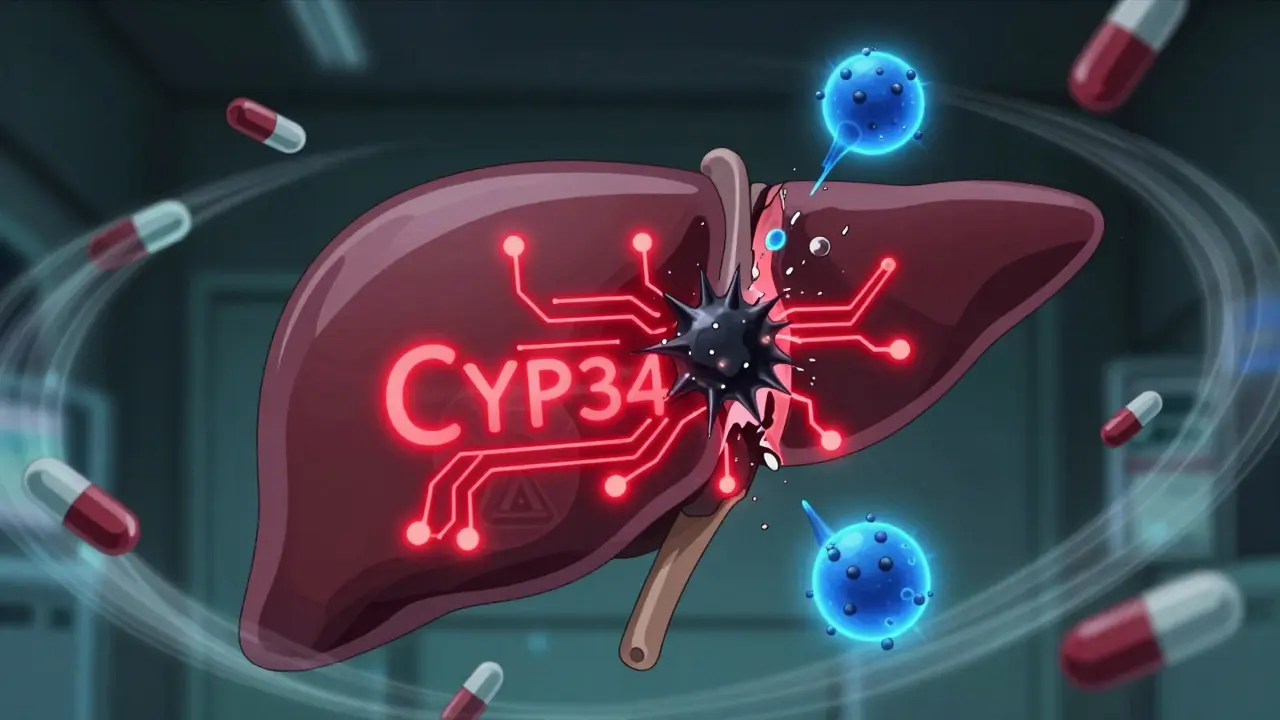
Lopinavir/ritonavir (LPV/r) isn’t just another HIV pill. It’s a pharmacological tightrope walk - a clever trick that saves lives but comes with a minefield of drug interactions. At its core, this combo uses ritonavir, not to treat HIV directly, but to sabotage the body’s ability to break down lopinavir. Ritonavir shuts down CYP3A4, the main liver enzyme responsible for clearing lopinavir from the bloodstream. Without this boost, lopinavir would vanish too quickly to work. With it, a single 400/100 mg dose twice daily becomes enough to suppress the virus. But here’s the catch: CYP3A4 doesn’t just handle lopinavir. It processes over half of all prescription drugs. When you block it with ritonavir, you’re not just helping one drug - you’re changing how dozens, even hundreds, of others behave in the body.
How Ritonavir Turns Off the Body’s Drug Detox System
Ritonavir doesn’t just block CYP3A4 - it breaks it. Unlike simple inhibitors that sit in the enzyme’s active site and wait for a drug to pass by, ritonavir is a mechanism-based inactivator. It gets metabolized by CYP3A4 into reactive fragments that stick to the enzyme like glue. These fragments either bind tightly to the iron in the enzyme’s center, destroy its heme group, or latch onto the protein structure itself. The result? The enzyme is permanently damaged. It can’t process anything else - not lopinavir, not statins, not painkillers, not blood thinners. And because the liver needs time to make new enzymes, this effect lasts for days after the last dose. That’s why even a small 100 mg dose of ritonavir can turn a normally fast-clearing drug into a dangerous buildup in the bloodstream.
Take midazolam, a sedative used before surgery. In someone not on ritonavir, a standard dose gives you a calm, sleepy feeling. In someone on LPV/r? That same dose can send you into deep, prolonged sedation - sometimes for hours longer than expected. Studies show midazolam levels jump by 500% when taken with ritonavir. That’s why anesthesiologists must cut the dose by 60-80%. The same goes for fentanyl. A routine pain patch can become lethal. The risk isn’t theoretical. It’s documented in hospital protocols from the University of Michigan and elsewhere.
The Double-Edged Sword: Inhibition and Induction
Here’s where things get messy. Ritonavir isn’t just an inhibitor. It’s also an inducer. While it crushes CYP3A4 activity, it simultaneously turns up the volume on other enzymes: CYP1A2, CYP2B6, CYP2C9, and CYP2C19. This means some drugs get broken down faster, not slower. Warfarin, a blood thinner, is a perfect example. Ritonavir speeds up its metabolism via CYP2C9, lowering its levels and making it less effective. A patient on stable warfarin therapy can suddenly see their INR drop - increasing the risk of stroke or clotting. Meanwhile, other drugs like statins (atorvastatin, simvastatin) get trapped in the system, raising the risk of muscle damage. One study showed simvastatin levels spiked 15-fold with LPV/r, pushing patients into dangerous territory for rhabdomyolysis.
This push-pull effect makes predicting interactions incredibly hard. You can’t just look at one pathway. You have to ask: Is this drug metabolized by CYP3A4? CYP2C9? Both? And is it a substrate, inhibitor, or inducer itself? That’s why the Liverpool HIV Interactions Database, updated in July 2023, lists over 1,200 potential interactions with LPV/r - more than double the number for newer combos like darunavir/cobicistat. And it’s not just numbers. It’s real patients. A 2008 study found that when LPV/r was given with rifampicin (a TB drug), lopinavir levels dropped by 76%. That’s not just a minor dip - it’s treatment failure. Hepatotoxicity jumped from 11% to 33% in those patients.
What You Can’t Take With Lopinavir/Ritonavir
Some drugs are outright banned with LPV/r. The European Medicines Agency and FDA warn against using them together. These include:
- Ergot derivatives (e.g., ergotamine) - risk of severe limb ischemia
- Alfuzosin - can cause dangerous drops in blood pressure
- Rivaroxaban - increased bleeding risk due to elevated levels
- Voriconazole - unpredictable levels from dual inhibition/induction
- Midazolam and triazolam - extreme sedation risk
- St. John’s Wort - induces CYP3A4 and can make lopinavir useless
Other drugs require serious dose changes:
- Tacrolimus - dose must be reduced by 75% to avoid kidney toxicity
- Methadone - metabolism increases, so dose often needs to go up by 20-33%
- Hormonal contraceptives - effectiveness drops by up to 50%; backup contraception is mandatory
- Statins - avoid simvastatin and lovastatin; use pravastatin or rosuvastatin instead
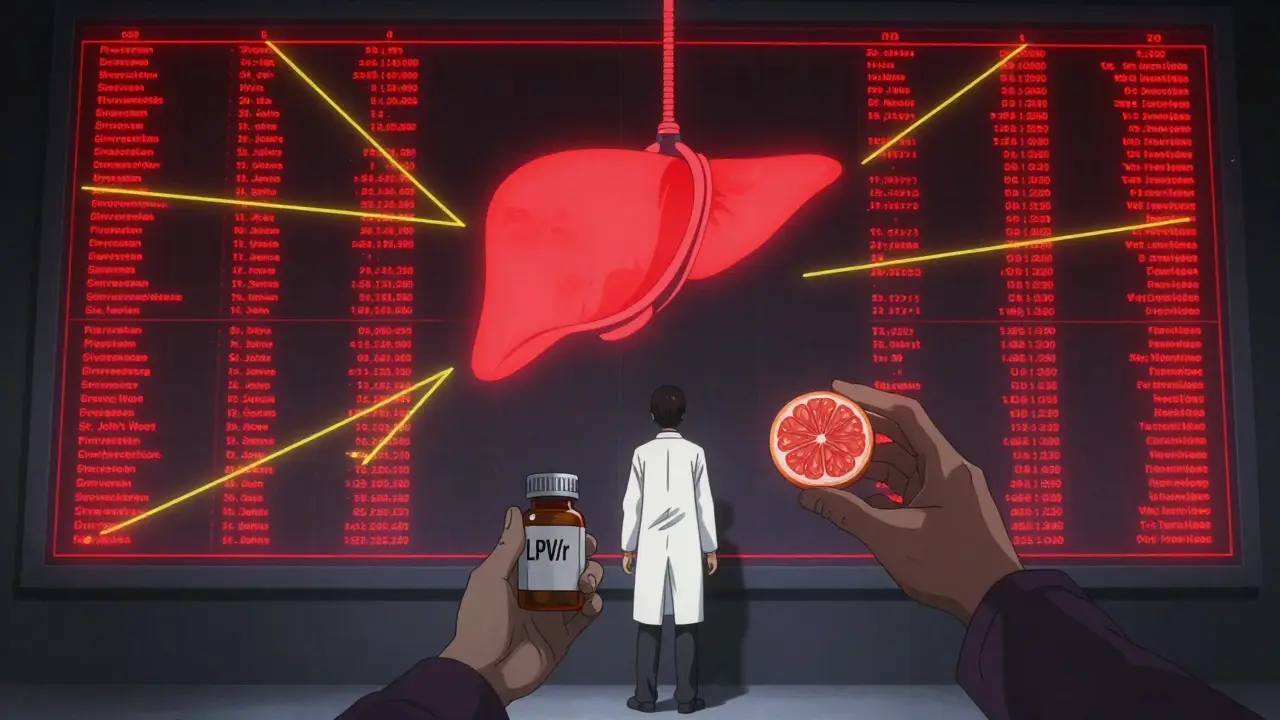
Even common OTC drugs like St. John’s Wort or grapefruit juice can interfere. Grapefruit juice inhibits CYP3A4 in the gut - adding to ritonavir’s effect and pushing drug levels even higher. It’s not just prescriptions. It’s everything.
Why This Combo Still Exists - And Where
So why keep using it? Cost. In low- and middle-income countries, LPV/r costs about $68 per person per year through PEPFAR programs. Newer drugs like dolutegravir cost nearly four times that. In places where funding is tight and supply chains are fragile, LPV/r remains a lifeline. It’s still on the WHO’s Essential Medicines List. But in the U.S. and Europe, its use has collapsed. By 2023, less than 5% of new HIV starts in the U.S. used LPV/r. Integrase inhibitors like dolutegravir and bictegravir are safer, simpler, and don’t come with this web of interactions. The 2022 meta-analysis found LPV/r regimens had 37% higher discontinuation rates due to side effects - mostly GI issues, but also liver toxicity and metabolic changes.
Even its role in COVID-19 was short-lived. The original Paxlovid combo (nirmatrelvir/ritonavir) used the same boosting trick to make the antiviral work. But the “Paxlovid rebound” phenomenon - where viral load creeps back up after treatment - hinted at a deeper problem. Ritonavir clears from the body faster than nirmatrelvir. Once it’s gone, CYP3A4 activity rebounds, and the antiviral gets cleared too quickly. That’s why some patients need extended courses. It’s a reminder: even in a pandemic, this mechanism has limits.
How Clinicians Handle the Risk
Every time a patient starts LPV/r, the real work begins: checking every other medication. That’s not a quick glance at the list. It’s a 15-20 minute deep dive into the Liverpool database or similar tools. Pharmacists often lead this effort. They flag every interaction - from antidepressants to antifungals to cholesterol meds. They don’t just say “avoid.” They say: “Switch to pravastatin.” “Use apixaban instead of rivaroxaban.” “Add a backup birth control method.” “Monitor INR weekly for the first month.”
For patients with liver problems, dosing gets even trickier. In Child-Pugh Class B cirrhosis, the dose drops to 400/100 mg once daily. In Class C, it’s not recommended at all. Kidney problems? Less of an issue - only 10% of lopinavir leaves the body in urine. But liver failure? That’s the red zone.
And genetics matter. Early data from NIH-funded research (NCT04905629) shows people with a specific gene variant - CYP3A5 expressers - clear lopinavir 28% faster. That means they may need higher doses just to stay effective. But increasing the dose? That raises the risk of toxicity. It’s a balancing act no algorithm can fully solve.

The Bottom Line: A Tool, Not a First Choice
Lopinavir/ritonavir is a brilliant hack of human biochemistry. It made HIV treatment possible in the early 2000s. But it’s not a modern solution. It’s a legacy tool with heavy baggage. In high-income countries, it’s been replaced by safer, simpler, cleaner drugs. In resource-limited settings, it’s still vital - but only if you have the systems to manage its interactions. For clinicians, that means time, training, and tools. For patients, it means asking: “What else am I taking?” - and being ready to change it.
If you’re on LPV/r, don’t assume your pharmacist or doctor already checked everything. Bring your full list - supplements, OTC meds, even herbal teas. Don’t start anything new without checking. And if you’re prescribed something new, ask: “Will this interact with my HIV meds?”
There’s no shortcut. The science is clear: CYP3A4 is a gatekeeper. Ritonavir locks it. And once it’s locked, you never know what else might be stuck inside.
Can I take ibuprofen with lopinavir/ritonavir?
Yes, ibuprofen is generally safe with lopinavir/ritonavir. It’s metabolized mainly by CYP2C9, and while ritonavir can induce this enzyme slightly, the effect isn’t strong enough to cause concern at typical doses. However, if you’re also on warfarin or have kidney issues, talk to your doctor - ibuprofen can raise blood pressure and affect kidney function, which may compound risks.
Why is ritonavir used in such a low dose?
Ritonavir is used at 100 mg - far below its own therapeutic dose - because it’s not meant to fight HIV. It’s there to block CYP3A4 and boost lopinavir levels. At higher doses, ritonavir causes severe nausea, diarrhea, and liver stress. The 100 mg dose is the sweet spot: enough to inhibit metabolism effectively, but low enough to avoid its own side effects.
Does ritonavir affect birth control?
Yes. Ritonavir reduces the effectiveness of hormonal birth control - including pills, patches, and implants - by up to 50%. This happens because it induces enzymes that break down estrogen and progestin. If you’re on LPV/r and using hormonal contraception, you must use a backup method like condoms or an IUD. Do not rely on pills alone.
Can I drink alcohol while taking lopinavir/ritonavir?
Moderate alcohol is usually okay, but heavy drinking is risky. Both alcohol and lopinavir/ritonavir stress the liver. Combining them increases the chance of liver damage, especially if you already have fatty liver or hepatitis. Avoid binge drinking. If you drink regularly, get your liver enzymes checked every 3-6 months.
Is lopinavir/ritonavir still used for COVID-19?
No. The original Paxlovid combo (nirmatrelvir/ritonavir) was authorized for emergency use in 2021, but it’s not the same as LPV/r. Paxlovid uses ritonavir to boost a different antiviral, and while it’s still used for high-risk COVID-19 patients, LPV/r itself was proven ineffective in large trials like RECOVERY in 2020. It is not recommended for COVID-19 treatment.
What happens if I miss a dose of ritonavir?
If you miss one dose, take it as soon as you remember - unless it’s close to your next scheduled dose. Don’t double up. Missing doses can cause lopinavir levels to drop, increasing the risk of HIV resistance. But because ritonavir’s enzyme inhibition lasts for days, occasional missed doses are less likely to cause immediate treatment failure than with other drugs. Still, consistency matters. Set phone alarms. Use pill organizers.
What Comes Next?
Research continues into better boosting agents. Cobicistat, used in newer HIV drugs, is more selective - it only inhibits CYP3A4, without the induction effects. That’s why darunavir/cobicistat has fewer interactions than LPV/r. But cobicistat isn’t perfect. It still causes kidney and lipid issues. The real future lies in drugs that don’t need boosting at all - like cabotegravir, given as a monthly injection. For now, LPV/r remains a tool in the toolbox, but one that demands extreme care. Every interaction check isn’t just paperwork. It’s a safety net. And in this case, you can’t afford to skip a stitch.




Ryan van Leent
December 18, 2025 AT 02:27Erica Vest
December 18, 2025 AT 13:37Adrienne Dagg
December 20, 2025 AT 06:20Sajith Shams
December 21, 2025 AT 13:54Isabel Rábago
December 22, 2025 AT 11:01Chris Davidson
December 23, 2025 AT 19:38Matt Davies
December 24, 2025 AT 09:41Marsha Jentzsch
December 26, 2025 AT 09:38jessica .
December 26, 2025 AT 13:18Alisa Silvia Bila
December 27, 2025 AT 01:03Anna Sedervay
December 27, 2025 AT 05:00Edington Renwick
December 27, 2025 AT 15:54Dikshita Mehta
December 29, 2025 AT 04:03Erica Vest
December 29, 2025 AT 04:39